

Don't Throw Away Empty Toilet Paper Rolls, Use Them For DIY Garden Mulch
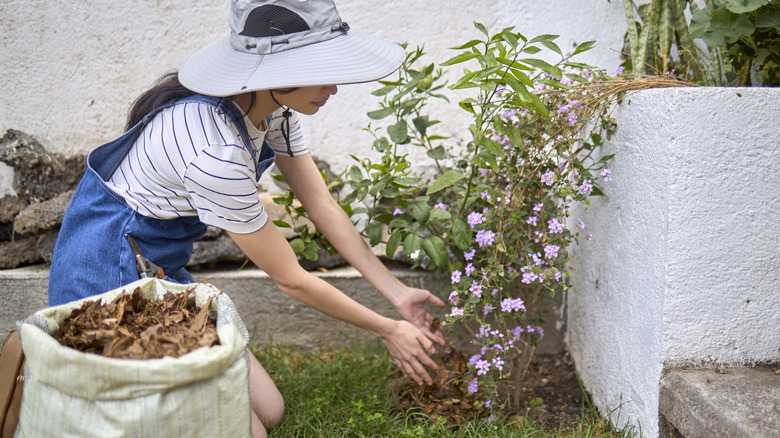
If you're looking for an easy way to upcycle scrap cardboard and save a little money, while spending more time in the garden, you might start with a simple household staple. Empty toilet paper rolls may seem best destined for the recycling bin, but they can be repurposed into a surprisingly effective DIY garden mulch. With just a bit of prep, these cardboard tubes can help enrich your plants while reducing waste.
If you've spent any time in the garden, you already understand the importance and purpose of mulch. It helps retain moisture, suppress weeds, moderate soil temperatures, and break down necessary nutrients for your plants to feed on. Store-bought mulch can provide a visually pleasing makeover to any garden bed, but it tends to be quite expensive, especially with larger gardens and flowerbeds. Homemade alternatives not only offer the same benefits at little to no cost, but provide you with an opportunity to repurpose household waste.
Virtually all cardboard toilet paper rolls are ink-free and made from biodegradable paper fibers, designed to break down naturally over time. Instead of sending empty rolls to the recycling plant, you can take advantage of these carbon-rich fibers by shredding the rolls into small pieces and layering them in your garden, intermixed with other organic mulching materials if you wish. At first, the cardboard will create a dense layer to block sunlight and banish any pesky weeds lurking beneath the soil. Then as it breaks down, cardboard mulch contributes carbon which helps your soil regulate available nutrients and with moisture retention. The decomposing former tubes also offer cellulose, something beneficial microbes love to munch on.
Best practices when preparing your homemade mulch
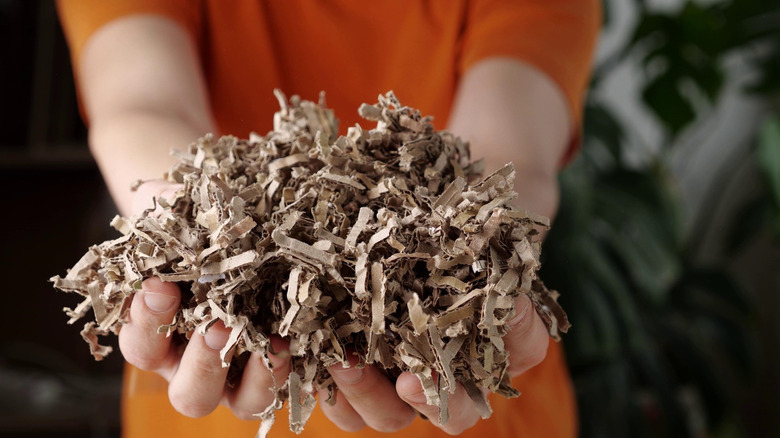
Turning empty toilet paper rolls into mulch is a fairly simple process with very little prep. Begin by gathering up any loose cardboard you have around the house. Discarded toilet paper rolls are ideal since they're thin and easy to manage, but you could add boxes, paper, and other cardboard into the mix as well, as long as there's no toxic ink, tape, or glossy wax on them. As you amass your toilet paper rolls, cut them into tiny strips roughly 1 to 2 inches in size. This can be accomplished by hand, via a sturdy strip-cut paper shredder, or using a quality set of pruning shears. Then, gather your cardboard confetti and wet it until slightly moist, creating something of a loose paper-mâché construction. Because cardboard is a carbon-heavy "brown" when it comes to composting or mulching, consider mixing the shredded cardboard with nitrogen-rich grass clippings. This aids in decomposing cardboard mulch's natural fibers, and offers a greater diversity of nutrients for your growing plants.
When you're ready, add the whole affair into your garden as you would any store-bought mulch. Try to aim for a depth of 2 to 4 inches for best results. This depth should offer enough weed-suppressing power and moisture retention to give your plants the best chance at survival as the materials in your mulch break down. Just remember to leave a small gap around the base of your plants, so that air, sunlight, and moisture can continue to reach the collar and roots. If you feel you have enough mulch, you have other options for those cardboard tubes, like creating simple DIY seed starting pots.