

What To Do If You Spot A Bear Cub In Your Yard
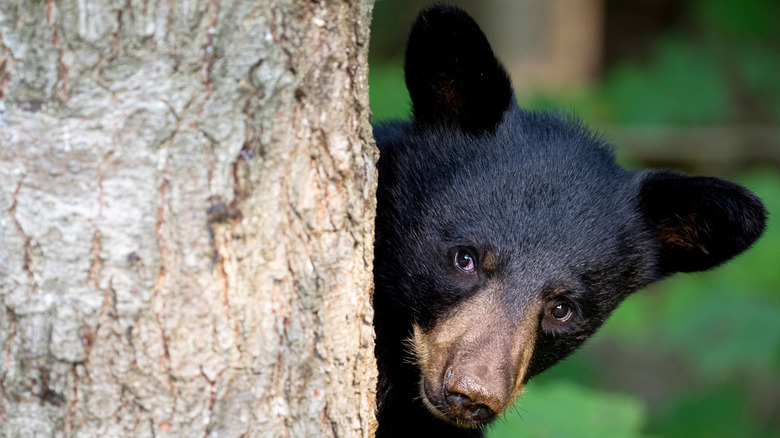
Spotting a bear cub in your yard can be a delightful wildlife moment, so long as it is just passing through and not looking for an easy meal. In either scenario, it's critical to prioritize your safety and discourage the cub from foraging on your property. First, avoid any close interaction with it. In most cases of a solo cub, the mother is nearby but out of sight. If she knows humans or pets are nearby, mama is likely waiting for them to leave so she can reunite with her young. If you spot a cub from the safety of your home, discourage it from hanging out by banging pots or shouting firmly.
Approaching a cub, attempting to feed it, or any interaction can put both people and the animal in danger. In fact, mama grizzly bears are notoriously protective and may attack if they perceive any threat to their babies. In that case, it's best to remain indoors or in a secure vehicle, keep children and pets inside.
As a rule, bears should not become accustomed to spending time near your home. A bear that is comfortable in developed areas is more likely to access unnatural (and unhealthy) food sources such as trash bins, composts, BBQ grills, chicken coops, bird feeders, even a beer cooler. As the National Park Service sadly points out, "a fed bear is a dead bear," because bears conditioned to return to a food source can become aggressive and destructive, sometimes requiring euthanasia. If that's not enough incentive, in many states, feeding bears (even accidentally) is illegal, and you can incur serious fines. If you keep your yard and sheds clear of food sources, the only bear cubs you'll see in your yard are just wandering the neighborhood and will quickly (and safely) move on.
Don't give bears a reason to be in your yard
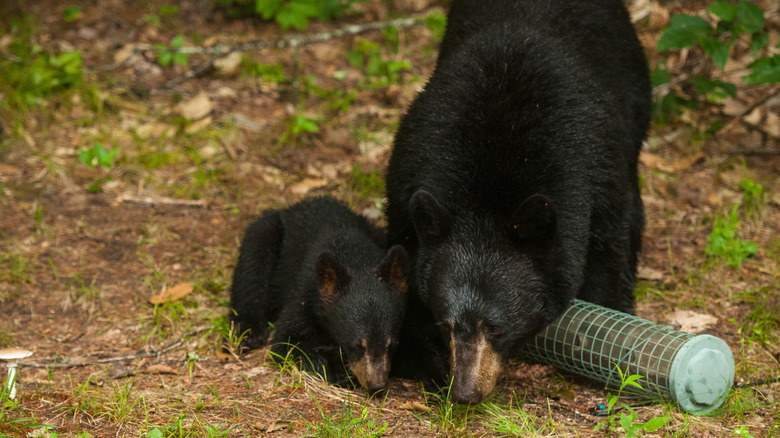
If you happen to be outside when a cub wanders into your yard, remain calm and stand your ground while making your presence known by saying, in a low and confident tone, "hey bear!" Wave your hands, and make yourself appear as large as you can. Don't run, chase, or scream at close range, in case the cub's mother is nearby, who might perceive a threat. Having bear spray readily accessible when moving between buildings or vehicles in bear country can be a useful defense if you unexpectedly encounter an adult bear at close range. However, be sure you know what bear spray is and learn how you use it before you need it.
Once the cub has moved on, remove things that are attracting bears to your yard to reduce the likelihood of a cub's return. If your yard has fruit trees or gardens, promptly pick ripe fruit, and clean up fallen fruit from the ground to decrease the chances of attracting curious or food‑conditioned bears. Fallen fruit may also be what's attracting skunks to your yard, so it's worth doing anyway.
It's helpful to alert neighbors so they can bear-proof their property and head inside, as well. Call local wildlife authorities if a cub's behavior or health seems off. Repeated visits in which the cub does not respond to human noises or continues to forage for human food/waste may also warrant a call, as this cub may already be habituated, and cub and mother may need to be relocated.