

If These Birds Won't Stop Damaging Your Lawn, They May Actually Be Helping
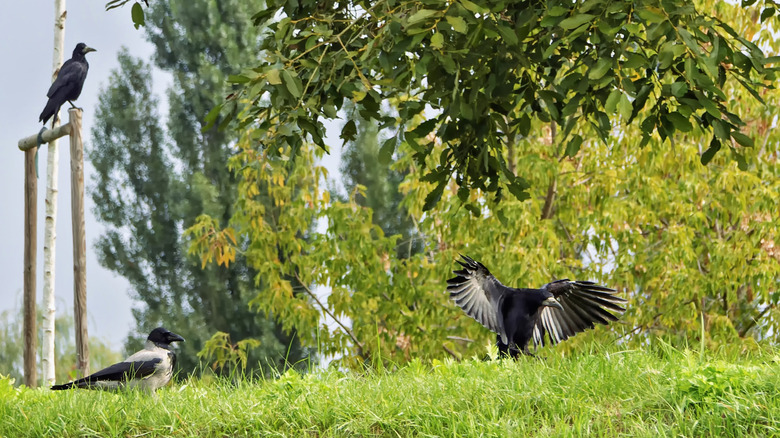
It all starts innocently enough. One day your lawn looks fine, then a few days later, you notice a few unsightly holes, then a few more, and a few more. At first, you probably wonder what's digging up your lawn, or why. And then, you catch the culprit in the act: Birds. More specifically, it's crows, but they're not being malicious, they're on the hunt for larvae and beetle grubs. Even if you use a hack to keep crows away from your birdbath, they might still come around when they know there's food to be found.
If you see these holes, or patches of torn-up lawn, it's not without reason; it means the grubs are already there, and in significant numbers. The crows may be doing some good by eating beetle larvae they find, but it's also a sign there's something more going on beneath your grass. The same grubs or beetle larvae might be things that are attracting skunks to your yard. What's more, the subterranean critters themselves may be damaging your lawn more than crows or skunks.
European chafer beetle larvae — an invasive species in many states — dwell beneath lawn grass, often curled into a C-shape. The problem with these grubs is that they stick around for about nine months, munching on the roots of your lawn grass, before they take on their adult beetle form. Other critters might also be attracting the crows, such as crane fly larvae. Crows eat a number of beetles, grubs, and caterpillars, any of which could be harming plants around your yard, in addition to your lawn.
How to end the grub-and-crow cycle
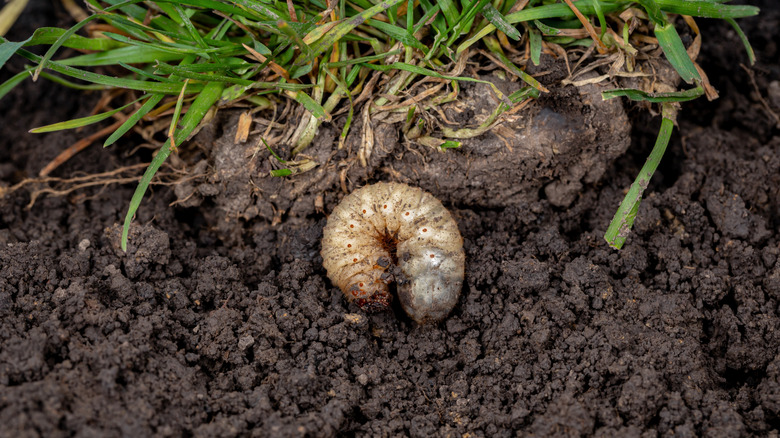
If you've seen crows digging up something worm-like in your yard, those things are grubs. European chafer larvae are white and about ¾ of an inch long. They look similar to other white grubs that may also be below the grass. A healthy lawn can handle about five European chafer larvae per square foot. If your grass is brown in sections and almost looks dead, this is a sign of grub damage, and you've got an infestation. The lawn may even roll up easily like a rug when you yank on it. Tug the grass and there's a good chance you'll see grubs beneath it. Whether they're chafer grubs or another type, they're among the worm-like things you never want to find in your garden. And it's why the crows are punching holes into the lawn you've worked so hard on.
The best way to get rid of the crows and any other creatures searching for grubs is to deal with the grub problem itself. Beneficial nematodes are one way to do this that's completely natural and won't harm pets or people. They are microscopic roundworms that emit bacteria inside a grub, effectively killing it over the course of a couple of weeks. They're applied by mixing nematodes with water and using a sprayer when the ground temperature is between about 42 and 95 degrees Fahrenheit. Regular deep watering during the summer (which happens to be the European chafer beetle's mating season) is also an effective deterrent. Once there are few or no grubs in your yard, the crows will stop digging up your lawn and move on.