

Mistakes To Avoid When Preparing Your Hydrangeas For Harsh Winter Weather
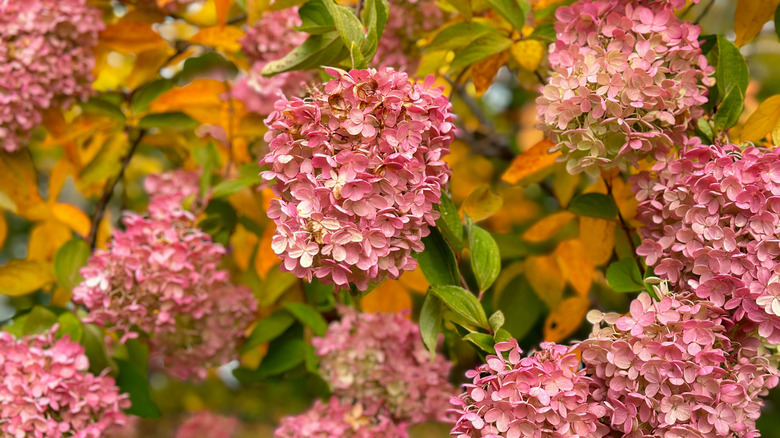
Hydrangeas (Hydrangea spp.) are the living gifts that keep on giving. Each year, bountiful, gorgeous blooms cover the plant with bouquet-style poufs of color. Even as those colors fade or transform at the end of the growing season, the flowers are still visually interesting and last quite a while. Though it's not required, many varieties benefit from deadheading those faded blooms in late summer. Whether you deadhead or not, you don't want to wait too long to prune, depending upon the hydrangea variety. It can be a mistake to heavily prune certain varieties before or during winter, especially those that bloom on old wood. In fact, these types of hydrangeas (think bigleaf and oakleaf, for example) are one of those plants you should think twice about pruning in winter.
To prune or not to prune (and when) depends upon what you've planted. But there are tips for all hydrangeas before the first frost hits, including the watering schedule. Regardless of the variety, give the ground around your hydrangeas a good final soaking for the winter (unless it's been a particularly wet fall) so the roots stay moist. You also want to mulch before it gets too cold. In fact, it's of the top tips to prepare hydrangeas for winter. This insulates the roots and helps the soil retain moisture. Then put your pruning shears away, and keep an eye out for new shoots and buds.
Avoid pruning old-wood varieties in winter
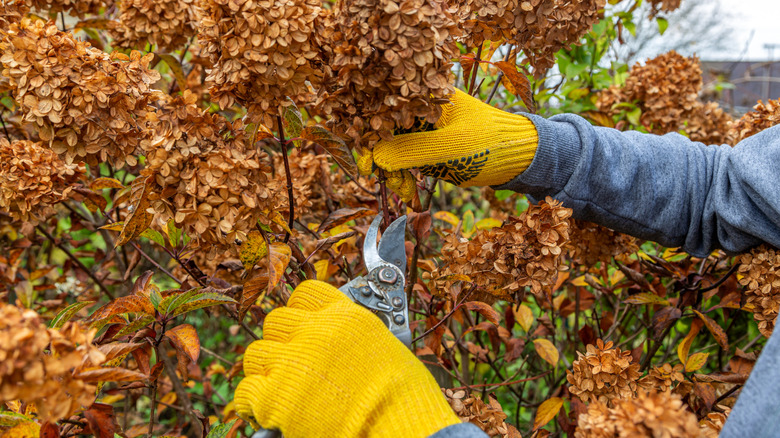
Your pruning schedule comes down to whether you're dealing with old-wood or new-wood hydrangeas (that is, where on the plant it buds each spring). Varieties such as bigleaf (macrophylla), mountain (serrata), and oakleaf (quercifolia) create buds on old, brown wood, while varieties such as smooth (arborescens) and panicle (paniculata) grow their buds on new, green stems each spring. Old-wood hydrangeas should not be trimmed late in fall or winter because that could snip off new buds in the making. In contrast, prune new-wood hydrangeas in late winter or early spring before you see any signs of new growth.
Mopheads (macrophylla), a popular bigleaf variety with the massive blue, pink, or purple clustered blooms, add to the confusion: They bloom on both new and old wood. They're officially considered an old-wood variety, and can be lightly pruned at the end of summer as the blooms die, but watch for buds already forming in August for next spring! Come April or May, any dried, dead-looking stems that don't have buds can be cut down to and inch or two above the ground.
Some gardeners argue that old-wood hydrangeas don't need any pruning at all (unless diseased or damaged), but the plants can get unwieldy over time. Generally, deadhead them in late summer after the blooms are spent, then remove any dead, overlapping, wandering, or crowded stems at this time. This not only times out pruning before that new winter growth appears, it helps promote airflow, and lets the plant divert all available energy into new growth for the next season.