

How To Keep Your Hosta Plants Happy Even During The Coldest Of Winters
We may receive a commission on purchases made from links.
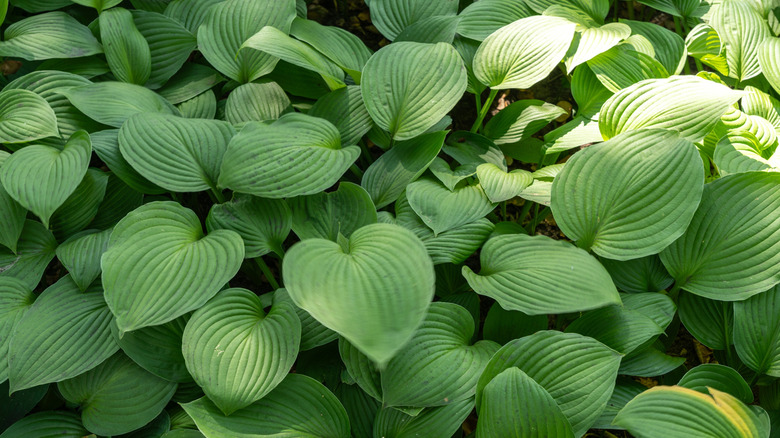
During the warmer months, hostas are shade-loving plants that can attract hummingbirds and add a bit of color and character to your yard. They are also considered low-maintenance plants. While hostas are known as being cold tolerant, they are not completely immune to the effects of winter. So, one of the things you need to know about your favorite hosta plant is how to keep it happy even in the coldest of winters.
Given that most hostas can survive in extremely frigid temperatures, you may be wondering why it is necessary to do anything at all to help them through the coldest times of the year. However, there are conditions that can affect a hosta's cold tolerance. Knowing these issues can help you prepare your hostas for cold conditions. One is the time of year in which they were planted. If they were planted late, their root structure may not be adequately developed to handle the extreme cold. Because of this, you may want to reconsider planting hostas in the fall. Instead, plant them in the spring or late summer, or in early fall, a month or more before first frost, to ensure they get established.
Regardless of when they were planted, there are a few other things that can reduce hostas' ability to handle the cold. As a rule, plants in containers will be more susceptible to the effects of cold weather than those in the ground. Additionally, if the temperature begins to oscillate between warm and cold, resulting in a freeze/thaw cycle, hostas can be more vulnerable. During winter, hostas also become a preferred food source for voles and other pests, regardless of how cold the weather gets.
Trimming, mulching, and storage is key in cold weather
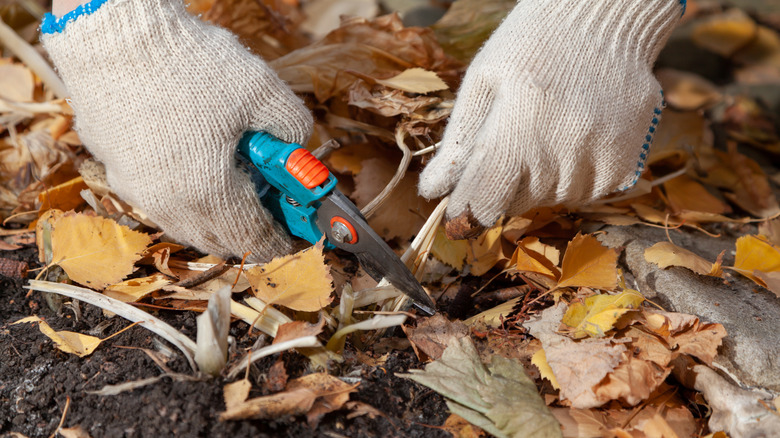
The simplest way to make sure your in-ground hostas are protected from severe winter weather is a two-step process. After the first frost (when leaves have fully dried out), cut back your hostas so only a few inches of stem are protruding above the ground. Secondly, add a nice layer of mulch to the plant's crown. Typically, a couple of inches is adequate. If your area experiences extremely low temperatures, you might want to consider adding a bit more. This is an insulation layer, so remove it come spring.
For hostas in containers, you will still trim and mulch them, as with in-ground plants. Then, when severe cold temps are on the way, you have a few options for keeping them warm. What you don't want to do is move them fully indoors, where it's too warm for them to go dormant. Instead pick a shed or unheated garage. Whether they are sheltered inside or left outdoors, group or huddle all the containers together. It is also helpful to cover both the container and the plant with a breathable fabric such as burlap or frost cloth for added insulation. Another option is to dig holes and bury your containers in the ground for winter.
Both in-ground and container-grown hostas need pest protection over the winter. For one, when you trim the hostas back, be sure to remove and dispose of all the leaves and trimmings. This will limit the number of pests such as snails that ride out the winter near your hostas in order to feed on them in the spring. Additionally, to keep voles and similar pests away from in-ground hostas, cover them with something like the Dukelai mesh plant protector.