

Repurpose Old Vintage Books For A Simple Plastic Nursery Pot Upgrade
We may receive a commission on purchases made from links.
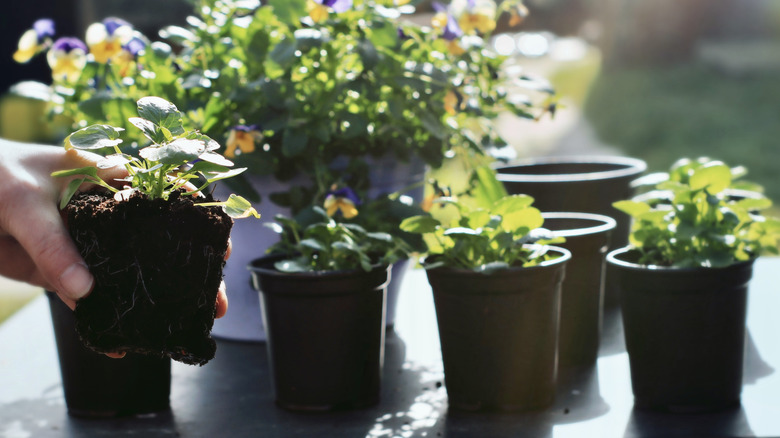
Most plant lovers wind up with more plastic nursery pots than they know what to do with. Since these containers are quite practical, it's a shame to toss or recycle them — even though they aren't the prettiest containers to display. Instead of storing them in a corner of your shed or garage, why not give them a beautiful makeover to add style to your porch or garden? With a little imagination, those plain plastic pots can be transformed into beloved accents that can share interesting stories about your love for plants or gardening.
Creating repurposed planters for the garden is great for the environment and your wallet. And one of the prettiest ways to do this is by decorating them with the pages of vintage books. This simple project can give new life to well-loved books that have seen better days. It's also a fun excuse to browse your local thrift shops, flea markets, or garage sales for hidden gems. Think beyond just novels — children's books, old gardening manuals, cookbooks, or even old magazines are often filled with whimsical illustrations, botanical drawings, or typography that can lend a sweet, retro look to your pots. Even better, this stylish DIY will give you a chance to upgrade those boring planters without spending much on tools. All you'll need are a few torn-out pages, some scissors, a paintbrush or foam craft brush, a pencil or other object to curl your pages, and a water-resistant glue, such as Mod Podge. You may also want to use rubber stamps and ink, or stickers to decorate your pot.
How to decoupage your planter
To get started with your first embellished pot, tear out a handful of pages and cut them into strips about 2 to 3 inches taller than your pot. Curl their tops by wrapping them around a pencil. Working in sections a little wider than your strips, apply glue with the brush to sections of the pot's exterior and along the outer edge of its bottom. Press the lengths of paper onto your first glued area, resting the curled edge along the lip of the pot so the curls fold under and away from the pot. Neatly fold the extra length of the strip under the base. Add a bit more glue if needed to secure it to the underside of the pot. Continue gluing strips around the pot, overlapping them slightly to ensure that the paper hides the plastic completely. As you go, brush a thin layer of glue over them to seal their edges. If you like, you can also tear extra small strips to decorate and use as labels.
Once the pot is fully covered, apply an even coat of glue over the entire surface to protect it. This extra layer is especially helpful if you plan to display your pot outdoors. To prevent water from damaging the paper, slip a tin can or glass jar about the same size as your planter inside it to act as a liner. Then fill it with potting soil and tuck in some foliage, maybe a fuss-free plant like mint or a small snake plant. The result is a unique, bookish planter perfect for dressing up a porch, brightening a windowsill, or gifting to a friend.