

Hummingbirds Will Flock To Your Yard After Planting This Bright Blue Flower
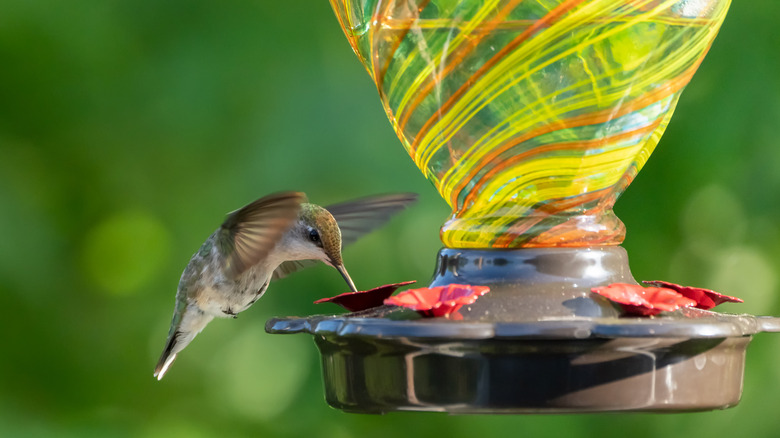
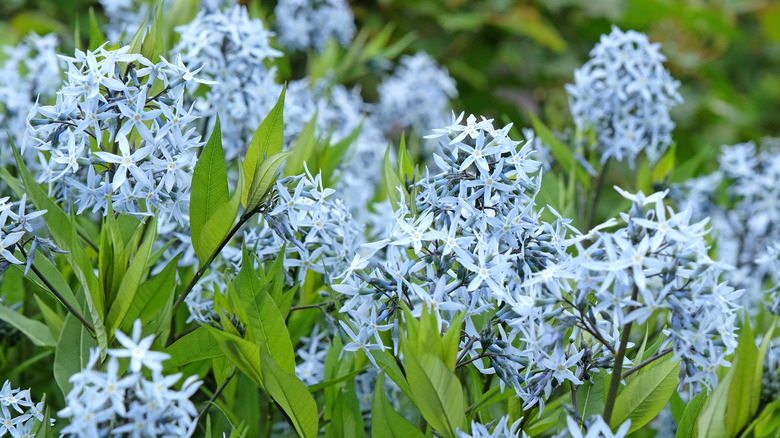
A recent study by NatureServe found that about one-fifth of native pollinators in North America are at an elevated risk of extinction due to loss of habitat, climate change, and pollution. While hummingbird species are relatively stable compared with many bats and butterfly species, you can still help by turning your yard into a pollinator-friendly haven, providing food sources, water, shelter, and places for them to nest. One colorful flowering plant you can add that will bring all the hummingbirds to your yard is the eastern bluestar (Amsonia tabernaemontana), which sports light-blue flowers and plenty of nectar that hummingbirds adore. It's also a deer-resistant plant thanks to the sap, which herbivores (and even many pest insects) avoid.
The eastern bluestar is a lovely perennial that's easy to take care of, making it a great choice for newbies to add to their fuss-free list of plants great for gardening beginners. The light blue clusters of star-like flowers bloom from late spring to early summer, providing a long-lived food source for hummingbirds and other pollinators like carpenter bees, hummingbird moths, and butterflies. Eastern bluestars grows in tight clumps about 2 to 3 feet in height and width, making them the perfect size for compact spaces and gardens. As the weather cools throughout the fall, the foliage turns a rich yellow, giving your garden a decidedly autumnal atmosphere.
How to grow eastern bluestars to attract more hummingbirds
When planting eastern bluestars, look for a place in your garden that receives full sun or partial shade. Ideally, full morning sun and with light afternoon shade work well to protect the plant from hot afternoon sun. If your bluestars get too much shade, they will produce fewer flowers and have less color. Eastern bluestars prefer moist, well-draining soil with a lot of organic matter mixed in. When planting them in containers, make sure they have plenty of drainage holes so there is no pooling or standing water around the roots. The plants are fairly drought-resistant once established, but make sure you water them properly during that first year, and watch out for the major mistakes you should avoid when watering your garden, such as overwatering and underwatering.
You won't need to add much, if any, fertilizer to your bluestars. You can use a slow-release 10-10-10 fertilizer in early spring, or add mulch and compost around the base of the plants, avoiding the stems and root crowns, so the plants don't smother. If they have healthy blooms, the vibrant flowers' abundant nectar will attract ruby-throated hummingbirds (and other species) in no time. Once the plants have finished blooming for the season, you should do some pruning work and cut the stems back by about half or one-third of their size, which encourages them to grow bushier. If you want to do major pruning, wait until late winter or early spring when the plants are dormant, and then you can cut them to the ground.