

Encourage Blooms By Pruning These Berry Shrubs During January
We may receive a commission on purchases made from links.
There are many reasons to plant berry shrubs in your yard. They are among the types of plants that attract birds and other wildlife. Berry shrubs can also add depth, color, and texture to your yard, and provide a bounty of delicious, nutritious snacks. While berry shrubs are also prized for being low maintenance, they do still take some care, particularly if you want to control how they grow and look in your yard. While maintenance varies among the different varieties, there are at least a handful of berry shrubs that you should prune during January in order to encourage more blooms, and thus more berries.
Among the berry shrubs which benefit from January pruning are gooseberries, as well as both blackcurrants and redcurrants. Additionally, blackberries and varieties of raspberries that bear fruit during fall should be pruned during late winter. The reasons are simple and essentially the same reasons why winter is the best time to prune fruit trees.
During winter, these berry shrubs are still dormant, so it is less stressful for the plant and the risk of disease is reduced. Equally important, it encourages not only growth, but productive new growth, once the shrubs emerge from their dormant state. This all results in more blooms and berry production. By contrast, not pruning your berry shrubs during winter can lead to overgrown shrubs that produce very little fruit.
Prune your berry shrubs with a purpose
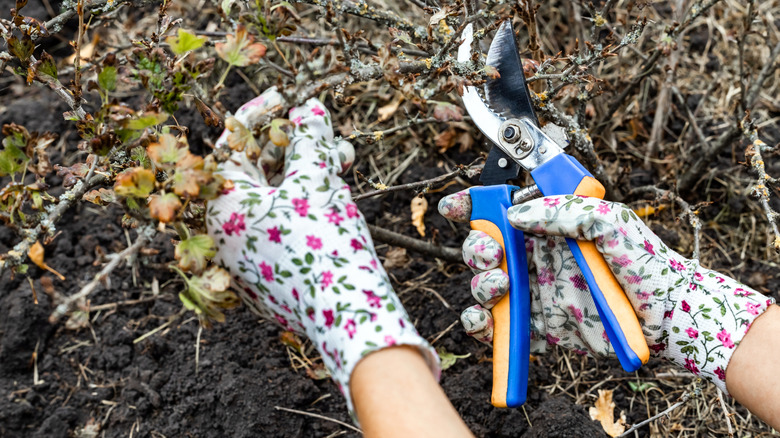
When it comes to currants and gooseberry, you can expect fruit to be borne on canes that are 1, 2, or 3 years old. During the initial pruning of these shrubs, all of those canes should be pruned at around 6 buds with clean, sharpened pruning shears, such as the Fiskar's Bypass pruning shears. This should be done for all of the canes, so long as they are healthy. Any dead, diseased, or damaged canes should be completely removed. During the initial 3 years of growth, you should aim to have 4 or 5 healthy canes of each year class.
After your shrubs are fully established, the annual January pruning becomes primarily a matter of removing older, non-berry producing canes, along with dead wood and damaged or diseased canes. Also remove any obviously weak new growth canes, any that have succumbed to disease, as well as those lying too close to the ground. Any cane that is completely removed should be cut off at ground level. For mature plants, the goal should be having three or four healthy canes from each berry-producing year class, so that the plant has no more than a dozen total canes.
When it comes to winter pruning for blackberries and raspberries, it is important to tell the difference between a floricane and primocane stalk. A floricane is a cane that produces berries. Primocanes only produce foliage, but will turn into floricanes the following year. When pruning these shrubs, you will cut out all dead wood, including floricanes that have already produced fruit and turned a light yellow in color. Thin the primocanes, which are darker brown and slender, so that only the healthiest six to eight canes remain. These should be trimmed to around 2 feet or so.