

National Park Service's New ID Rule: What To Know Before Visiting In 2026
With the new year comes new rules, at least in regards to the National Park System. There have actually been a number of changes to policies, rules, and regulations regarding national parks in recent years. For example, many national parks have adopted a cashless pay system. However, this year one of the national park rules you may not know about — at least not yet — doesn't affect how you pay, but how much you pay. As of January 1, 2026, the National Park Service's new ID rule is in effect and, depending on where you live and whether you can prove it, it may end up costing you much more than before to visit national parks.
There are actually several ways in which the new ID rule can impact visitors. The stated purpose behind the rule is to make non-residents who frequent U.S. national parks contribute more to the park system by paying higher fees. The rationale, per the government, is that U.S. citizens and legal residents already contribute a larger share via the taxes they pay each year. With that in mind, the new pricing for America the Beautiful National Park Passes is $80 annually for U.S. citizens and now $250 per year for non-residents.
Those who do not purchase an annual pass are apt to see an even larger increase in pricing, at least if they visit one of the more popular parks. That is because non-residents who visit one of the 11 top visited parks will be required to pay $100 per person per day if they do not have an annual pass. Those parks include: Acadia, Bryce Canyon, Everglades, Glacier, Grand Canyon, Grand Teton, Rocky Mountain, Sequoia and Kings Canyon, Yellowstone, Yosemite, and Zion National Parks.
Forgetting your ID could cost you
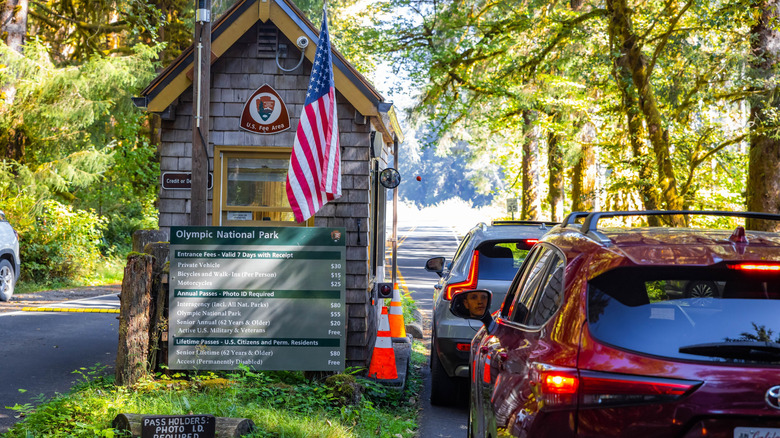
While non-residents will be tabbed to pay higher fees starting this year, citizens and legal residents can enjoy a free day pass on one of 8 "patriotic fee-free days" in 2026: Presidents' Day, Memorial Day, Flag Day, Independence Day weekend, National Park Service Birthday, Constitution Day, Teddy Roosevelt's Birthday, and Veteran's Day. Previously, these days were free for all visitors. However, in order to enjoy these perks, and avoid paying higher fees, you will be expected to prove your legal status. To that end, one of the mistakes to avoid when visiting a national park will be forgetting your ID.
In order to receive U.S. citizen and resident pricing, you will need to show a valid, U.S. government-issued photo identification. This could be a state-issued driver's license, state ID, or passport. This does not mean that all passes must be bought in person. In fact, one of the additional changes the National Park Service announced for 2026 is a fully digital park pass option. Both physical and digital passes can be purchased online. When ordering online, you will only be required to enter your zip code to receive the U.S. citizen and resident pricing. However, you will need to present your government-issued ID at the park entrance gate whenever you use these passes. Anyone who does not have a valid government-issued photo ID to verify their residency status will have to pay the higher non-resident prices.