

What To Know Before Using Pea Gravel For Your Backyard Patio
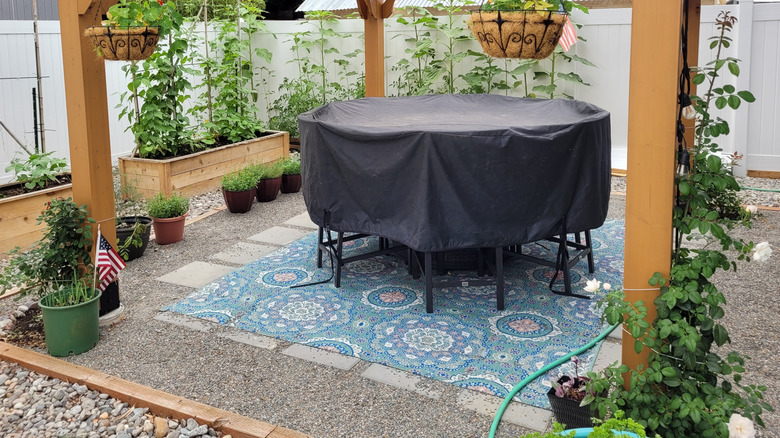
Pea gravel is often used for backyard patios, and for good reason, as it has lots of advantages. For one, it's fairly inexpensive, which is ideal for DIY installations. It typically costs $25 to $80 per cubic yard. Besides the reduced cost, it takes less time and effort to install than a concrete or paved patio and requires minimal maintenance. Pea gravel is also soft underfoot compared to coarser materials such as crushed stone, which tends to have jagged edges.
Though this pea-sized, fairly smooth gravel is an attractive option for these reasons, it's not without its drawbacks. Some of the stones tend to get lost over time due to their small size and they're prone to shifting, making positioning patio chairs on pea gravel a bit tricky. Weeds can also grow through pea gravel over time, so extra measures might be needed to keep weeds away if you don't want to remove them by hand. There's a fair chance you'll need to replenish the stones after a few years, so there are upkeep costs. Knowing these drawbacks can help you avoid common mistakes when using gravel in your yard.
The downsides of a pea-gravel patio
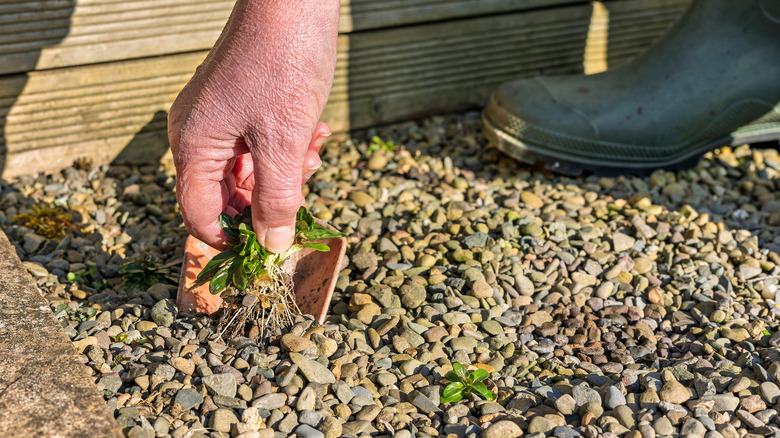
Due to the small size of the stones, pea gravel tends to end up in the yard or whatever else is adjacent to the patio if you don't contain it, and sometimes even if you do. It's easy for pea gravel to scatter a bit under foot traffic or to move out of place from heavy rains. With that in mind, you definitely want to consider the safety concerns with gravel that ends up on the lawn. In some ways, crushed stone is better for a patio than pea gravel because the jagged stone edges lock together, preventing shifting.
Adding a solid border material such as decorative bricks could keep some of the pea gravel in place, but a few stones will still likely scatter at times. Placing a landscaping or geotextile fabric on the ground before adding pea gravel also helps keep the stones from sinking into the ground. Geotextiles are permeable, which prevents patio flooding. Another advantage of using landscaping fabric is it helps keep gravel weed-free by preventing them from sprouting. You may still have to pull weeds from time to time, but they'll come up a lot easier than weeds rooted in the dirt. Other debris, such as leaves and twigs, may settle in the gravel as well, so you'll have to manually remove them. Raking the gravel helps comb it back into place. Once you pour some into place, rake it level to fill in low spots for an even surface.