

Hummingbirds Will Flock To Your Garden With A Colorful Plant Combo
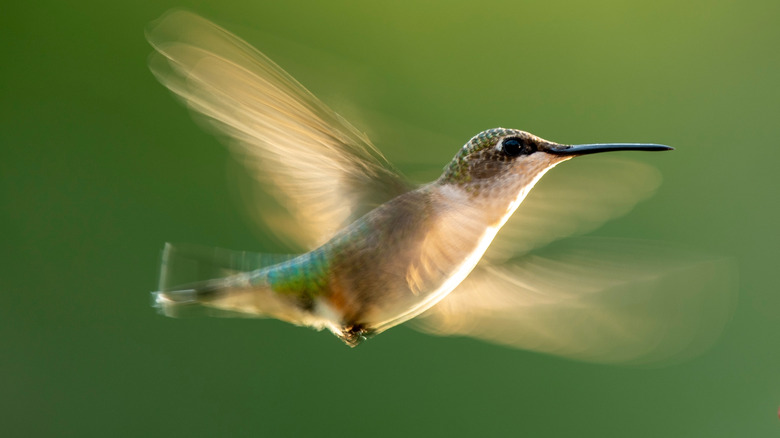
Seeing a hummingbird is like catching a glimpse of an elusive, incredible creature, and the dopamine rush can boost your mood for the entire day. The more nectar-filled flowers you have around your yard or garden, the greater the likelihood that hummingbirds will stop by to refuel. One way to encourage hummingbirds to hover in your yard a while is to plant two of their favorites side by side in your garden. When you plant this dynamic duo in the fall before the first frost, you can ensure spring and summer blooms next year.
Both salvia (Salvia spp.) and dianthus (Dianthus spp.) bring these gorgeous birds to your yard, and the blooms themselves are beautiful, too. Salvia and dianthus look nothing alike, so you can mix and match varieties of each for show-stopping displays of color, size, and shape that will add visual interest to any garden. And they each thrive in similar conditions, making them great neighbors. For even more chances to turn your yard into a hummingbird hub, add some of these stunning plants that attract hummingbirds to your garden.
Using salvia and dianthus to attract hummingbirds to your garden
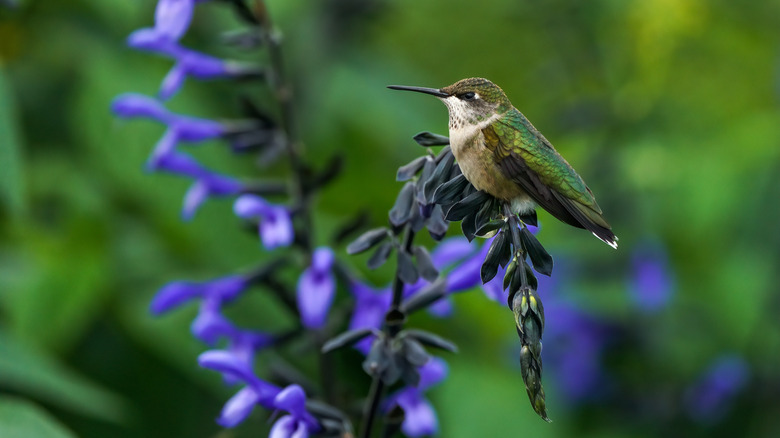
Salvia, also known as sage, is one of those plants that's beneficial for multiple reasons. Aside from its tubular flowers that hummingbirds love, its leaves are also fragrant and useful for culinary purposes. Numerous flowers grow on each spike, with colors ranging from blue to red, pink, white, and even yellow. Many bloom in summer, while some continue into fall, which could get your garden ready for migrating hummingbirds. Depending upon the variety, salvia thrives in USDA Hardiness zones 3 to 10, which covers a lot of territory. Check your zone to ensure a variety you like suits your climate. Salvia prefers full sun and well-drained soil, which means its colors will really stand out on a sunny day. 'Lake Como' is one gorgeous salvia variety that can fill your yard with hummingbirds. Its tube-shaped blooms range from lavender to nearly indigo for a stunningly beautiful pop of garden color.
Dianthus also comes in hundreds of varieties, and many of them have multiple hues on their blooms, ranging from white to pink to red. Most thrive in zones 5 through 9. Like salvia, it prefers full sun and well-drained soil, so you could plant them in the same flowerbed, with salvia at the back since it will likely grow taller. Dianthus is a low-maintenance plant that tolerates drought. It can be grown anywhere from rock gardens to container gardens, making it as versatile as it is lovely. It also looks completely different than salvia: Dianthus grows in bouquet-like mounds of flowers, so it offers nice contrast to the more vertical salvia. Dianthus blooms are highly fragrant; some are said to smell like cloves. Its blooms are often lacy or frilly, in shapes reminiscent of carnations rather than the typical tube-shaped flowers that hummingbirds love.