

How To Choose And Install A Snake-Repelling Fence In Your Yard
We may receive a commission on purchases made from links.
Many people fail to realize that the very things they're doing to improve their backyards may also be attracting snakes to that yard. From installing a water feature to putting out birdfeeders, your outdoor projects can become an open invitation to serpents, including some dangerous types of snakes. As a result, those who don't want snakes slithering through their yard often practice good lawn care routines and even grow low-maintenance snake-repelling plants. However, one of the best ways to safeguard your lawn against stakes is to put up a fence, although it can't just be any old fence. You have to choose the right materials and construction style to ensure you install a fence that properly repels snakes from your yard.
The reason not just any fence will work is that snakes can actually climb them, as well as slither through low-lying openings. Snakes can also slip under or tunnel beneath most fences. While this may make it seem pointless to put up a fence, you can still create one that functions as an effective snake barrier by accounting for what snakes are and are not capable of doing. For starters, while they can climb, they need surfaces that are textured to do so. They're also only able to climb vertically for about half their body length at most.
With that in mind, your fence needs to be made from the right materials, set upright or sloped outward, and extend high enough to prevent or at least highly discourage snakes from making their way over. However, it also needs to be low enough to prevent them from coming under, and free of gaps or holes they can slide through. If the barrier is solid and unbroken, it can effectively steer the snake away from your yard.
Best materials for a snake fence
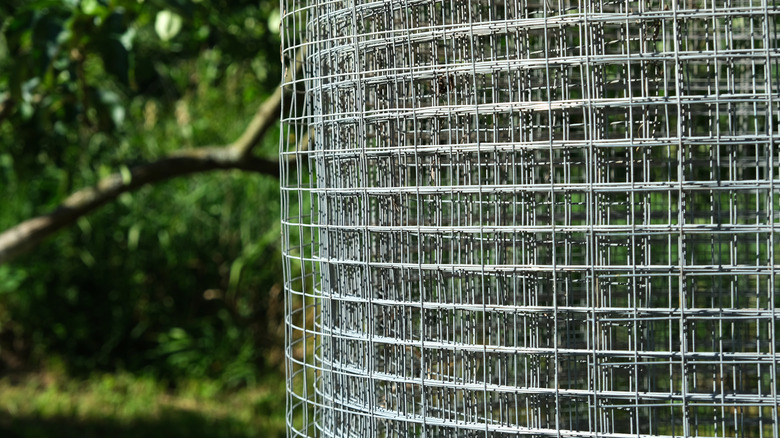
Snake fences can be solid and made of vinyl, wood, concrete, or metal, but they can also be made from open material like wire mesh. If utilizing solid materials, they should be smooth and without texture or any grip that would aid a snake's attempt to climb it. When utilizing open materials, the size of the openings is critical. Wire mesh that is made from aluminum or galvanized steel, such as GoldPeak Hardware Cloth, is a good choice. However, the openings in the mesh should be no more than a quarter-inch.
A snake fence is often a combination of these products, usually as a result of people modifying existing fences. This typically involves adding wire mesh to a fence of solid materials. An example would be covering a wide-gap rot iron or wood picket fence with wire mesh. Wire mesh can also be used to cover gaps or holes in solid concrete or wood fences. You may want to consider additional, complementary material like gravel, as well. Gravel is a known snake deterrent and can be used to line the base of your fence for added protection.
How to build a snake fence
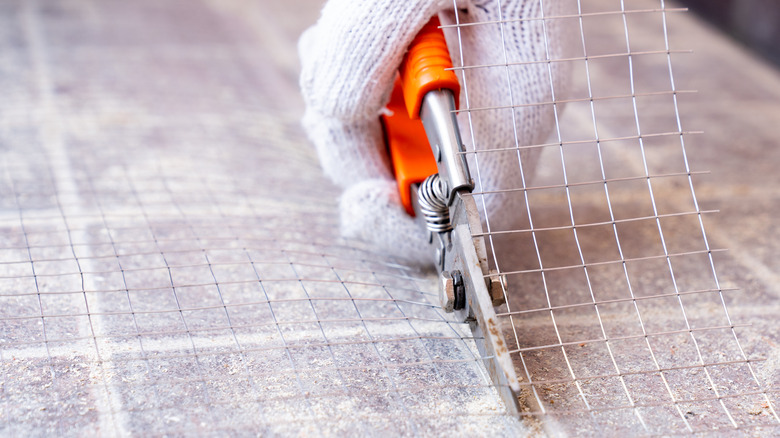
When you get ready to build your snake-proof fence, the first step is to mark out the area where your fence will go and clear that area. Next, dig a trench along the entire fence line. The depth of this trench should be around six inches or so, which will allow you to bury the fence at the same time you install it. Once that is done, sink your fence posts. Allow them to set if you are using concrete to hold them in place. At that point, if you are using wire mesh, roll the mesh along the perimeter. Sink the mesh into the trench, then attach the mesh to each fence post, stretching it before you secure it. Then backfill the trench and add a layer of gravel if you choose.
If you are constructing a wooden privacy fence, you likely will not want to bury the wooden planks, as this would expedite potential wood rot. Instead, leave a couple of inches of clearance between the bottom of the fence and the surface of the ground, just as you normally would. Once the wooden fence is completely built, go back and attach mesh wire to the bottom of the fence, extending it down to the bottom of the trench. Finally, backfill the trench.
Modifying an existing fence for snake repellent purposes entails digging a trench at the base of the fence. For wooden fences, follow the same steps as above for attaching wire mesh to the bottom of the wood planking. For wide-gap metal fences, such as hog panel, rot iron, or wooden picket, extend the mesh up the existing fence at least 36 inches and down into the bottom of the trench. Securely fasten the mesh to the fence, stretching it as you go. You'll be veritably serpent-free in no time.