

The Best Method For Cleaning Your Tube Bird Feeders
We may receive a commission on purchases made from links.
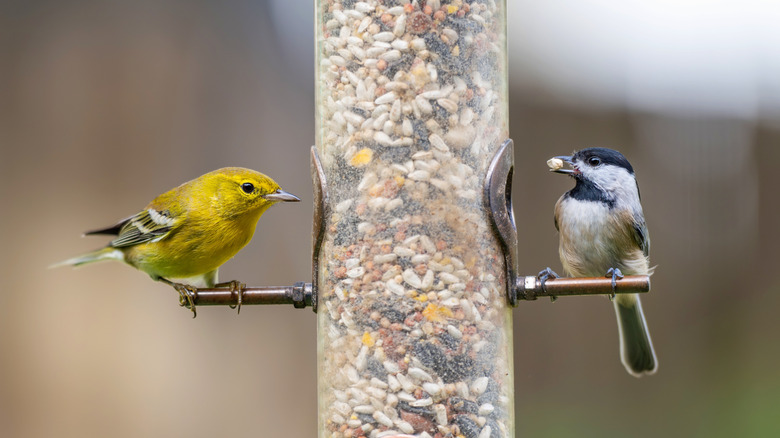
Watching birds visit your backyard bird feeder is a rewarding experience, since you're helping a group of birds survive. It's also a peaceful way to unwind and get back to nature a bit, away from electronic devices. Adding bird feeders is one way to attract more songbirds to the yard, too. The one part of feeding the birds that's not mentioned so much, however, is maintaining those feeders. Bird feeders of any sort require cleaning from time to time to help keep the birds healthy. Feeders end up with all kinds of unwanted matter on them over time, such as moldy or waterlogged seeds, bird droppings, or even just dirt that accumulates from being exposed to the elements and to bird feet and beaks. A dirty feeder also helps spread bird diseases, so cleaning that feeder really matters. Thankfully, most bird feeders are fairly easy to clean, especially tube feeders. Tube-style bird feeders might be a bit narrow to reach into for cleaning, but a simple soak and a brush or two gets the job done with ease.
Plan to clean the feeder every two to four weeks, or more often if numerous birds use it or the weather has been hot and humid for a while. If the seed has been exposed to heavy rain and it still sits for some time, it's also a good idea to dump that wet seed before it gets moldy, and then clean the feeder. And if you're wondering how often to clean a birdbath, it's even more often: Every few days.
How to easily clean a tube bird feeder
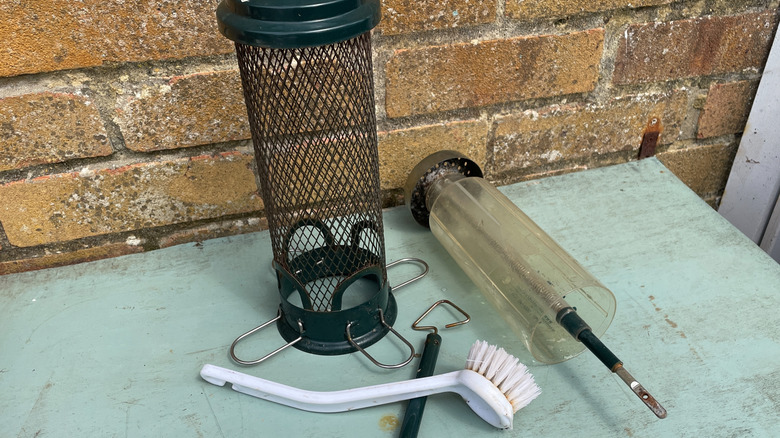
Before cleaning that tube feeder, put on rubber gloves to avoid germs, remove the feeder lid, and dump out any old seed stuck in the feeder. If it's caked inside, a squirt from a hose may free it. Some tube feeders aren't designed to be taken completely apart; those hard plastic areas around the seed ports are designed to stay put on some models. Instead, give those a quick scrub for starters to remove debris and dirt that's trapped around them. One of the best cleaning tools for a bird-feeder port is an old toothbrush, as the small head size is just right for getting into crevices. Rinse the tube and cap inside and out with a hose, using the toothbrush and, if needed, a scrub brush or rag to remove caked-on matter.
Give the tube feeder and lid a good soak in warm water with a squirt of mild soap. Swish the parts around a bit and use a long bottle brush, such as the 17-inch brush by Mosolan, to reach all the way through the seed tube. Soaking the feeder a bit also helps loosen any seed that's stuck in the bottom. After a few minutes, rinse the feeder and let it dry thoroughly before adding seed, as the moisture could cause mold otherwise.
When the feeder seems extra dirty or you've noticed mold, mildew, or a foul odor, it's time to disinfect it after the initial rinsing and soap-based cleaning. Fill a plastic tub with one part bleach to nine parts water, or one part vinegar to four parts water. Let the feeder and its cap soak for about 15 minutes, rinse, then let them dry thoroughly. It's a good idea to disinfect the brushes you used for this process in a fresh bleach or vinegar solution. Wash your hands thoroughly afterwards.