

Keep Birds Coming To Your Yard All Winter With A Berry-Rich Garden Layout
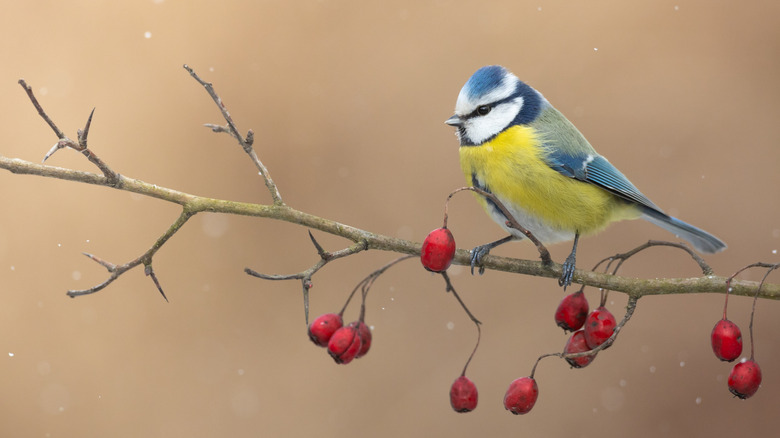
If you're missing your feathered friends this winter, there are some adjustments you can make to your yard and garden to encourage them to visit more often. One simple way to attract more birds is to hang a bird feeder, but for a more permanent solution consider creating a berry-focused garden layout. The idea is to create a dedicated area in your garden, like a personal berry patch, but for the birds.
How you design your berry garden is up to you, but there are some things to keep in mind. Consider what berry plants you'll be growing. There are many options, but in general you should look for native plants with berries or fruits that birds enjoy. It's also important to consider when each plant grows berries. If you want birds to visit all year long, you'll need shrubs that fruit in each season, creating a succession of food sources over time.
The sizes of your plants are also important. Varied sizes of bushes, small trees, and plants help create visual interest and a more dynamic garden environment. Taller plants can provide shade for smaller plants, and smaller plants can help crowd out weeds to protect the larger plants. However, you do need to consider where each plant will go. If you arrange your tallest berry shrubs at the front of the bed, you won't be able to see or reach any of the smaller shrubs and plants. Likewise, if the smaller plants need a lot of sun, they shouldn't be planted in the shade of the taller plants. Finally, if you opt for non-native plants, make certain they thrive in your USDA Hardiness Zone: There's no point in having a scrubby bush that bears little or no fruit each year.
Berry bushes and trees
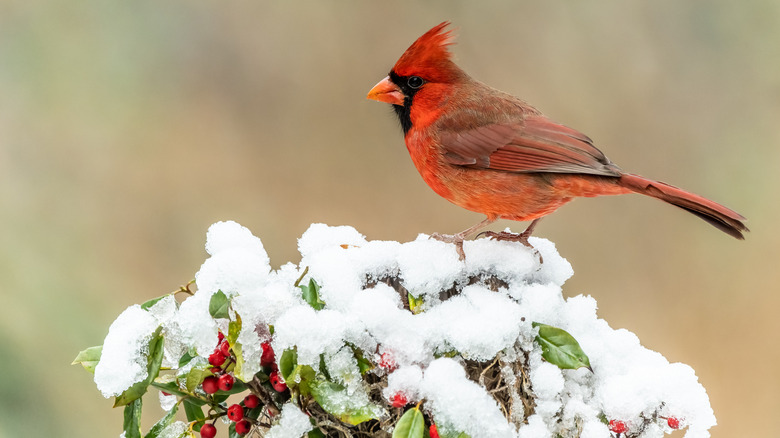
Larger trees and shrubs should be added first, since they take up the most room. For winter berries, holly bushes are a classic option. American holly (Ilex opaca) trees, also called winterberries, are the perfect option for homes in zones 5 through 9 with plenty of space. They can get quite large, but grow slowly. If you're limited on space, yaupon holly (Ilex vomitori, zones 7 through 9) and snowberries (Symphoricarpos albus zones 3 through 7) will also keep birds coming to your yard. These three cover most hardiness zones in the U.S., but for more southern climates, consider planting Toyon (Heteromeles arbutifolia), a native shrub of California that is hardy in zones 8 through 10. Be aware that American and yaupon hollys are considered to have a high flammability potential and shouldn't be planted up against houses or other structures.
If you have the space for them, add small trees like dogwoods (Cornus florida) and serviceberries (Amelanchier spp.) for fruit (technically not berries, but berry like) in summer and fall. Dogwoods grow in zones 5 through 9 and serviceberries are hardy in the impressively wide range of 2 through 8. For shrubs, blueberries are one delicious fruit that will attract more songbirds! There are a wide variety of blueberry species, fruiting anywhere from late spring into fall with options hardy in nearly every zone from 2 to 10, making them a versatile option. For a summer food source, look to the northern spicebush (Lindera benzoin), while chokeberries (Aronia spp.) provide fruit in the fall (though birds generally wait till late winter to gobble them up). Spicebushes are hardy in zones 5 through 9, while chokeberries are hardy from zone 4 and lower.
Smaller berry plants
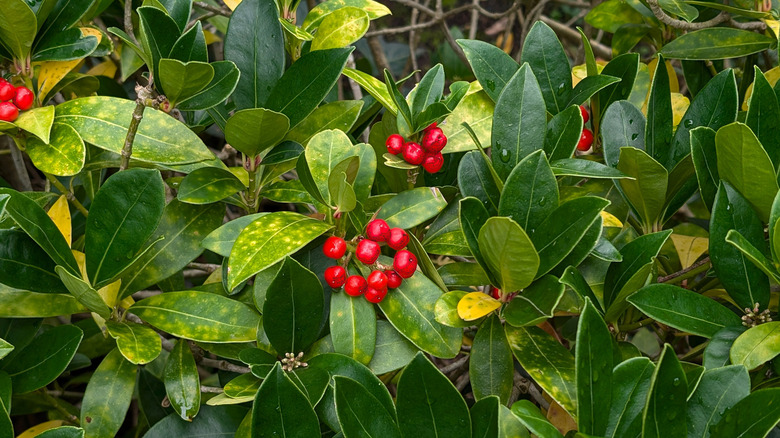
Smaller berry plants can fill in the gaps between the larger ones and often make good border plants. Some excellent choices for low-growing winter berry plants include American wintergreen or boxberry (Gaultheria procumbens) and compact Oregon grape (Mahonia aquifolium 'Compactus'). American wintergreen is a groundcover that's hardy in zones 3 through 7, and you can even grow American wintergreen in a container. Oregon grapes are another native shrub, and while they can grow up to 10 feet tall, the compact variety stays under three feet. For something even smaller, try its cousin the creeping Oregon grape (Mahonia repens), which grows as a ground cover. Oregon grapes are hardy in zones 5 through 9. All three produce berries during late fall and winter that your local songbirds will love.
If you want to add ground cover plants that fruit in other seasons, consider planting creeping blueberry (Vaccinium crassifolium) or partridgeberry (Mitchella repens). Both are low-growing, native to parts of the U.S., and produce berries that birds enjoy snacking on. Creeping blueberry is hardy in zones 6 through 9, while partridgeberry can be grown in zones 3 through 8. Creeping blueberry fruits throughout summer, and the berries are edible to humans as well. Partridgeberries ripen in late summer into fall.