

How Excessive Rain And Flooding Can Impact Your Lawn Long-Term
We may receive a commission on purchases made from links.
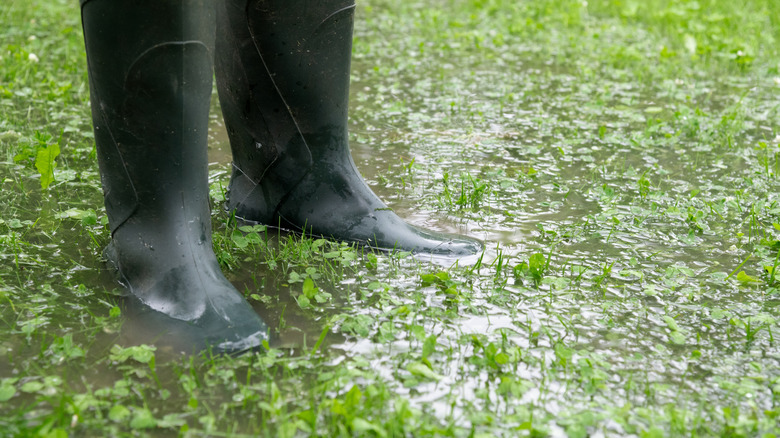
It is, of course, essential for your lawn to get adequate water so your grass thrives. Knowing that, many homeowners are meticulous about how much, how often, and the ideal time of day they water. Of course, there are times when Mother Nature contributes to the amount of water your lawn receives, so adjusting your lawn watering schedule to avoid common mistakes. Unfortunately, this can often be a case of too much of a good thing, especially if it involves excessive rain and flooding. Massive amounts of water can damage your lawn in a variety of ways, including long-term impacts such as eroding soil, killing grass, and allowing various diseases to attack your lawn.
Localized heavy rains, even those which don't result in flooding, can cause long-term issues for your lawn. For one, if you just seeded your lawn, the seeds may be washed away. It can also wash away topsoil, especially if you had bare soil prepped for grass seed. Additionally, any recently applied fertilizer or insect repellants will also likely be carried away with the runoff.
So, if you seeded, reseeded, or fertilized before a heavy rain, you will likely have to repeat those processes once the ground has sufficiently dried to avoid long-term issues with your lawn. Additionally, if you were planning to overseed your lawn, you should wait until there is no rain in the forecast and for the ground to dry following a heavy rain event. Overseeding in soggy ground typically leads to poor germination. If you know your area has a specific rainy season, it's likely best to avoid these sorts of lawn maintenance during the thick of the season.
Flooding can cause even more damage
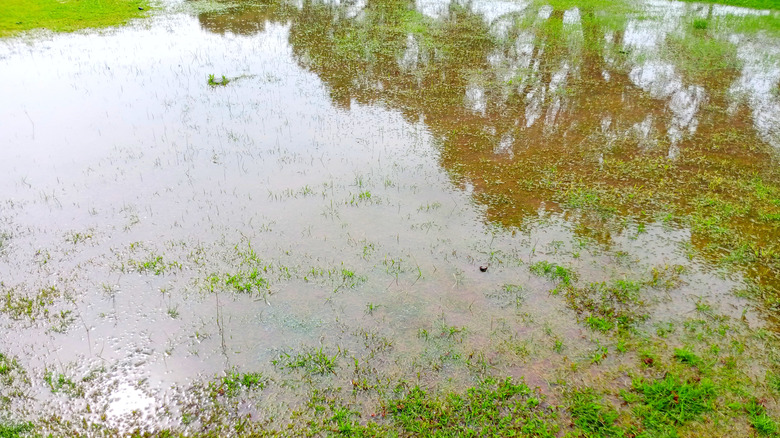
While any heavy rain event can cause long-lasting harm to a lawn, flooding has an even greater potential to do so. Damage caused by flooding can be categorized as primary or secondary. Neither are good. Primary damage is caused by the water itself: How deep it is, how long it stays, and the temperature. Secondary damage is caused by issues stemming from the original flooding, such as fungus, moss, disease, emerging weeds, and excessive sediment on top of your lawn.
With significant standing water, or even heavily saturated soil, the grass beneath is slowly suffocating. This process is accelerated in high temperatures. As a result, you should try to remove standing water as quickly as possible. If your lawn is prone to flooding, between rain events you may want to consider installing a rain garden, swale, or even consider a French drain. It is also a good idea to fill in any low spots and, in more extreme cases, change the grade of your yard.
Once the water's recede, take steps to ensure your yard recovers from the flooding and protect it from any secondary damage. Debris or dirt brought by the storm can continue to smother grass even after flood waters recede, so pick up any foreign objects as soon as the lawn is dry enough to walk on. The same goes for any silt, soil, or sand deposits — these should be cleared away immediately. It may be necessary to aerate and fertilize your lawn, and keep a vigil for signs of disease or fungal infections. To head off a weed outbreak, which is common post-flood, it's also a good idea to proactively apply a weed killer like Ortho WeedClear lawn weed killer.