

A Must-Try Trick That'll Help Protect Your Potted Plants From Frost

Frost happens, even if sometimes it seems too early in the year to occur, or it feels like it shouldn't happen where you live. Even if your favorite potted plants are still out enjoying sunshine on the porch or patio, it's time to pay attention to those cold-weather forecasts the minute you hear any hints of the word "frost." When there's a chance of temperatures dropping for a short while, it's time to huddle your potted plants together for warmth. Yes — plants can stay warmer nestled up against each other. This tactic works in much the same way as cuddling up with a favorite pet on a chilly night, as it's mutually beneficial to all involved. Choosing a location close to your house and sheltered from the wind, and covering the huddle zone with thick plastic also helps prevent plants from freezing (make certain the cover isn't touching the plants).
The plant huddle trick works best when you're only expecting a minor, temporary dip to near or below freezing. At freezing (32 degrees Fahrenheit), frost can occur. It's important to remember that frost can happen even if the atmospheric temperature is above freezing. That's because the temperature you see on your phone is taken several feet above ground level, which can be much colder. So it can be 40 degrees out, but freezing at ground level. A light freeze — anywhere from 29 to 32 degrees F — is enough to kill delicate potted plants, and anything below 24 degrees F or lower can harm or kill numerous plants. If you're expecting deep-freeze levels of cold over a few days and some snow, it's best to bring your potted plants inside to protect them from damage.
How to set up a potted-plant huddle
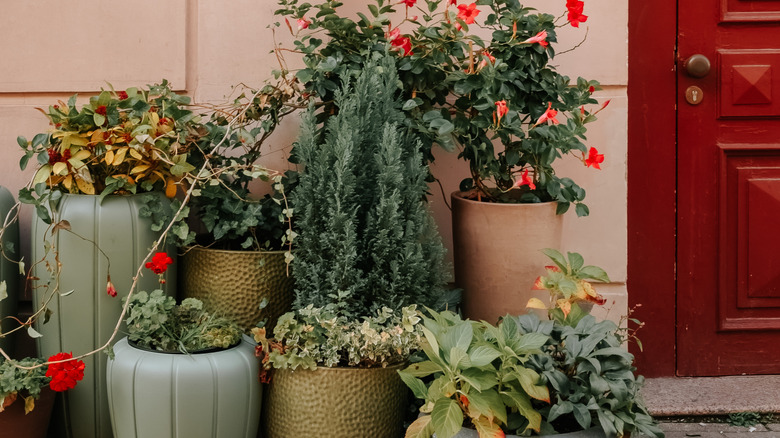
To prep your plants for their cuddle huddle, clear a spot in a protected area, ideally along a south-facing exterior wall of your home for maximum sun, and cluster them all together. also Potted plants are particularly susceptible to cold or frost damage because they don't have the warmth of the ground to protect their roots, so the huddle keeps things from getting too chilly, especially for the inner plants. You'll also want to determine which direction prevailing winter winds come from around your house, and protect the plants from chilling winds, which can drop temperatures. If you have shrubs fairly close to the house and can put the potted plants behind them, the shrubs could help block the wind a bit, too.
Add a layer of straw or mulch over each potted plant for extra protection, or create a mini greenhouse-style safe zone with a sheet of clear, durable plastic. Use wood stakes or even old tomato cages to create the framework that keeps the plastic from touching the plants (plastic touching the leaves can cause those leaves to freeze). It's quite similar to using plastic wrap and tomato cages to create a private greenhouse for your tomatoes.
If sub-freezing temperatures are expected to last more than a couple of days, or the thermometer will dip far below where your plants can get damaged, it's best to bring them inside until the worst of it is over. If you still have plants growing in the ground, some of them could use some help staying warm, too. Here are some tricks to prevent frost on your late-season vegetable plants.