

What To Do If Your Neighbor's Tree Falls On Your Yard
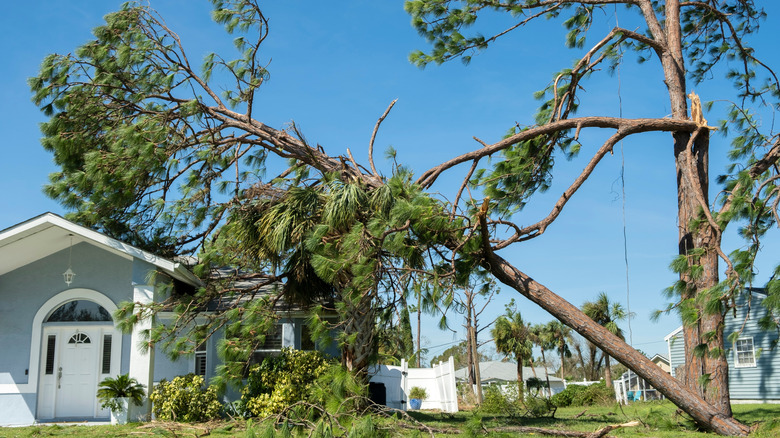
Having a tree near the property line is a common source of trouble, with many people confused about who can prune it and who's responsible for any damage it causes. You may know what to do if your neighbor's tree is dropping leaves in your yard, but what if the entire tree comes down? The first step is to assess the damage and make sure everyone is okay. After that, it becomes a question of who pays for the damage and who is responsible for removing the tree.
If the tree was knocked down by a storm or some other kind of accident, your homeowner's insurance should cover some or all of the cost. There are some exceptions, though. For example, if the tree fell during an earthquake and you don't have earthquake insurance, they may not pay at all. If there's no damage, you may or may not get reimbursed for cleaning services. For concerns about what your policy covers, it's best to contact your insurance agency to ask. When the tree falls, take pictures of the damage and file a claim.
However, the situation changes if your neighbor was negligent. If the tree has been at risk of falling for some time and your neighbor knew but didn't do anything, then it is your neighbor's fault. That doesn't mean you should go chasing your neighbor for money. File a claim with your insurance and let them talk to your neighbor's insurance. If you do need to talk to your neighbor, keep things polite.
Removing the fallen tree
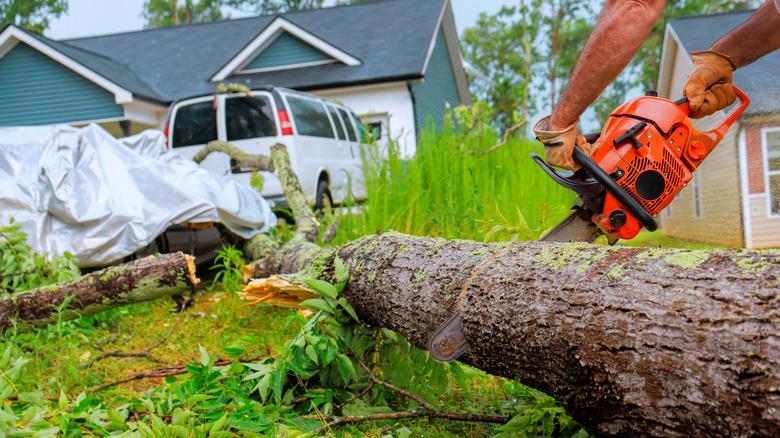
Whether it's your insurance that pays or your neighbor's, the tree still needs to be removed. Depending on the amount of damage and the type of insurance you have, you might be reimbursed a specific dollar amount for the tree removal or nothing at all. While this can be frustrating, removing the tree is usually pretty simple. If the tree is large or in a precarious area such as near power lines, it might be an outdoor renovation that requires professionals. A specialist will have the knowledge and equipment that makes cutting and hauling the tree much easier. If the tree is small enough that you can handle it yourself, be safe and wear protective gear while cutting the tree into more manageable pieces.
You're not responsible for any part of the tree that is on your neighbor's property, and vice versa, but coordinating the tree removal can make things easier. You'll also need to decide what to do with the wood. It can be hauled away, but you might want to keep and use it. Depending on the type and size of the tree, it might make good firewood or be useful for a number of DIY projects, from homemade furniture to cute wooden birdhouses. Whatever you do with it, don't move it onto your neighbor's property unless they've specifically said it's okay. Once the tree has been dealt with, you can start repairing any damage that needs fixing.