

A Must-Try Trick For Loosening Up Compact Clay Soil In Your Yard
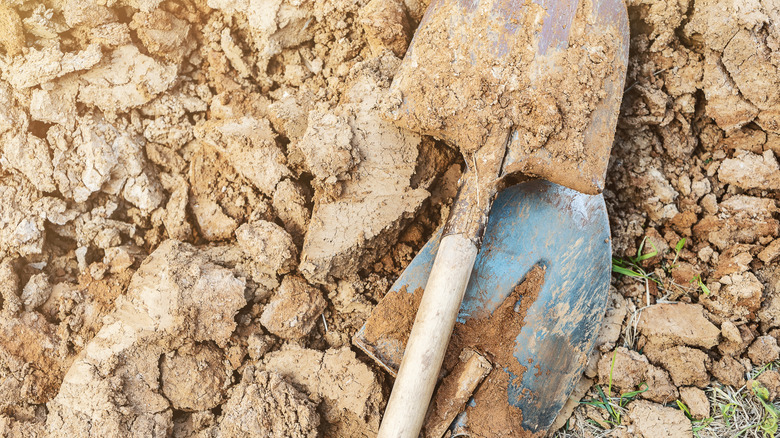
In an ideal world, you would have plenty of loamy soil in your garden — a balanced blend of clay, silt, and sand. Loam is considered the "gold standard" for gardeners because it combines the best qualities of each. It's loose enough to dig with ease, holds water without becoming soggy, drains well, and creates the best environment for seeds to germinate and roots to spread. Unfortunately, many gardeners discover that their soil leans toward one extreme or another. A sandy mix, for example, drains so quickly that it struggles to retain the water and nutrients plants need. On the other end, clay-heavy soil presents its own set of challenges. Because its particles are fine and tightly packed, this type of soil can be hard as concrete when dry and sticky when wet. Digging into compacted clay is often tough, and it also can be difficult for plants to grow in. You can use a basic mason jar to easily test your garden soil to determine its composition.
The good news is that having less-than-ideal soil, including clay, isn't a lost cause. Traditionally, gardeners add compost, shredded leaves, or other organic matter yearly to gradually improve their soil's structure. Another option is to build a raised garden bed to fill with high-quality soil, but that can be costly and physically demanding. Not all is lost. You could simply use a common pantry staple to loosen and improve the dirt in your garden so your plants can thrive: cornstarch.
Using cornstarch to amend clay soil
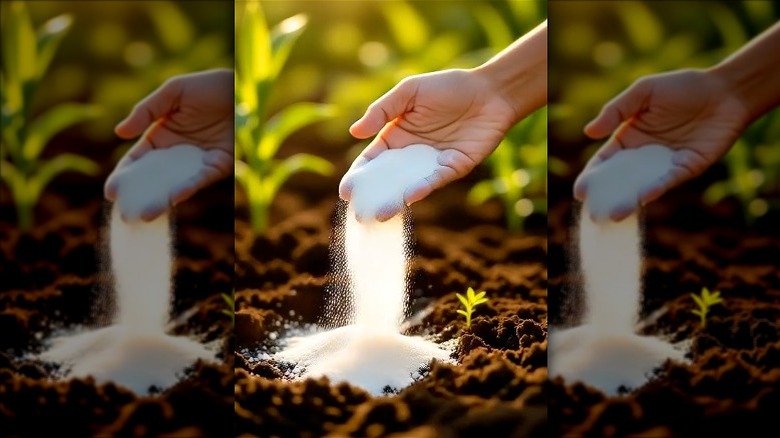
Enter cornstarch. While it's best known as a thickener for sauces and soups, this humble pantry staple can play a surprising role in the garden — especially if you're dealing with heavy clay soil. While clay is naturally rich in nutrients, its density can make it difficult for roots to access the food and water it needs. You can take advantage of clay's nutritious content by mixing a bit of cornstarch into your soil — the starch will naturally loosen the soil and help it to better retain moisture so your seeds or plants can get established. Alternatively, you could mix cornstarch with some water first to create a paste to add to the base of your plants; the thick mixture will retain water like a sponge.
If you try this method, test it first in a small patch of your garden. Use it sparingly, because if you add too much at once, it will bulk up, creating a sticky, gooey mess. An added bonus is that ants can't digest cornstarch, so they'll often spare plants in treated areas. Keep in mind that cornstarch isn't an instant cure for clay soil. For lasting results, it's best to combine it with organic matter such as compost or shredded leaves to steadily improve its health over time. To make your workload easier, consider amending the soil little by little in small spots, such as when you plant new seeds — instead of tackling your entire garden at once. With a little patience, cornstarch can be a simple, natural ally in creating healthier soil for your garden.