

Are You Allowed To Cut Your Neighbor's Overgrown Bushes? What To Know Before Pruning
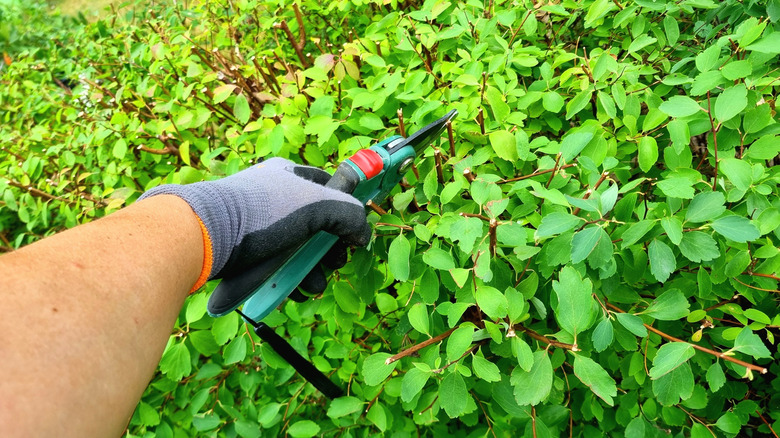
That feeling of accomplishment you get after tackling a backyard project is great, but it can be ruined when you noticed your neighbor's bushes aren't as tidy as your lawn. Your first thought might be to grab a hedge trimmer and help out. After all, these tools are one of the most efficient and popular ways of clearing overgrown brush. But before you start manicuring your neighbor's plants, be sure you're following the rules.
Much like when leaves from your neighbor's tree fall into your lawn, it's important to consider property laws and local rules in your municipality. Knowing what the rules are can help you defend yourself from disgruntled neighbors and go about backyard projects without breaking the rules. Whether you're worried about a neighbor's overgrown tree branches or you've chosen to propagate vines along your fence line you're subject to these laws. And while the laws vary by state, homeowners typically have the right to cut any branches that lie within their property line.
Take care not to over prune or trespass when cutting bushes
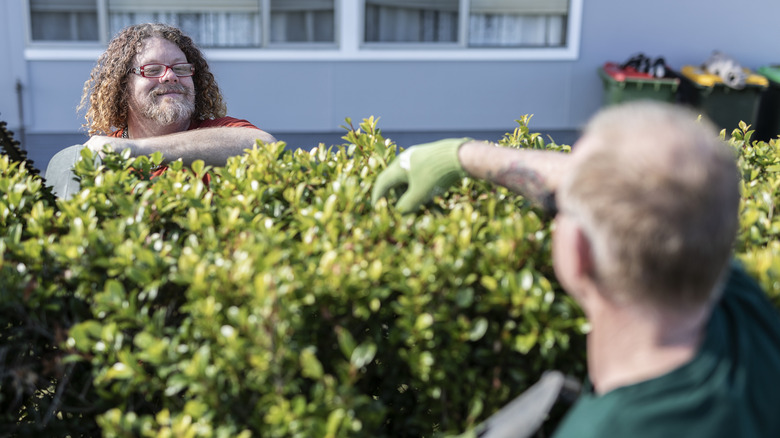
When making a plan for ridding your outdoor space of invading bushes, it's best to nail down the exact boundaries of your property line. Cutting past your line can open you up for litigation at worst and awkward neighbor disputes at best. These boundaries are important because even as you trim encroaching vines and branches, it's widely considered trespassing to cross into your neighbor's yard to do he work. Many law experts advise asking your neighbor for permission and giving ample notice before doing any work involving their shrubs, trees, and plants.
The extent of the pruning job is also important as excessive cutting is widely considered a breach of law. Most rules prevent homeowners from trimming parts of a plant considered central or pivotal to its structure and function. Parts of the plant under this category include stems, trunks, and major branches. Homeowners are also prohibited from cutting a plant in a way that affects the neighbor's property value. This included trimming a hedge or adjusting a bush's position in a way that obstructs a neighbor's view or removing a privacy hedge, creating a clear view into their space. In short, harming or killing a bush is against the law, even if it's encroaching on your property. Keep in mind that you're responsible for any clean up and debris removal once you've finished landscaping.
Law professionals say that these rules are more of a framework for understanding one's rights. Ultimately, homeowners should familiarize oneself with both their homeowner association rules and local laws before speaking with their neighbors and commencing any work.