

Cold Frames Or Hoop Tunnels: Which Is Best For Protecting Your Plants From Frost?
When cooler temperatures threaten to stunt or halt your garden veggie production, there are a few simple structures that, constructed over garden beds, can extend the growing season. Cold frames and hoop tunnels are two tricks for protecting your vegetable plants from frost. They help extend the season into the fall and winter, and can help jump-start your garden in the early spring. Deciding which style is best depends on your crops, coverage needs, climate, and the amount of time and money you want to spend on these structures.
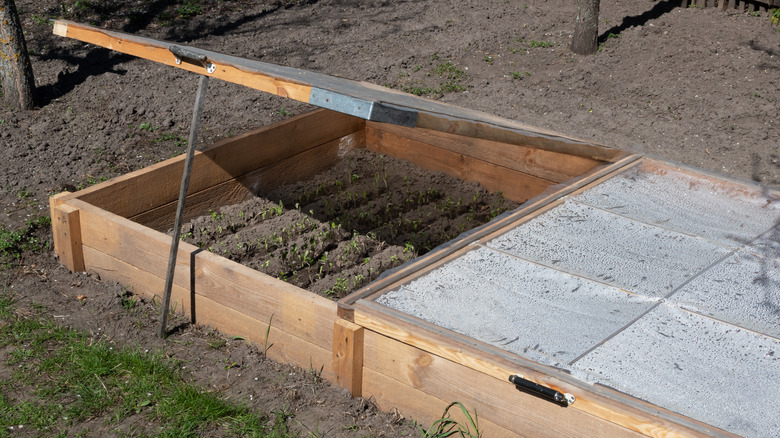
Cold frames are simple, bottomless box structures set directly on the ground. They usually feature a wooden frame and a transparent lid of glass, acrylic, or polycarbonate to let light through. Many DIY cold frames feature a hinged top to control the internal temperatures by propping it open or closed as needed. This is crucial because ventilation prevents excessive heat or moisture buildup, which can harm plants. They should be monitored regularly, even on cloudy days, to ensure plants aren't overheating
The compact design absorbs solar heat during the day and slows the loss of heat at night, keeping the soil and air inside warmer than the outside, reducing the risk of frost damage. Generally, one can expect the temperatures to be 5-10 degrees warmer than the outside. This makes cold frames ideal for extending seasons into the fall, hardening off warm-season seedlings like peppers and tomatoes so you can successfully move vegetable seedlings outside. Cold frames also work well for growing small batches of cool-weather crops such as lettuce and spinach, protecting them from freezing.
Hoop tunnels are used for total crop protection
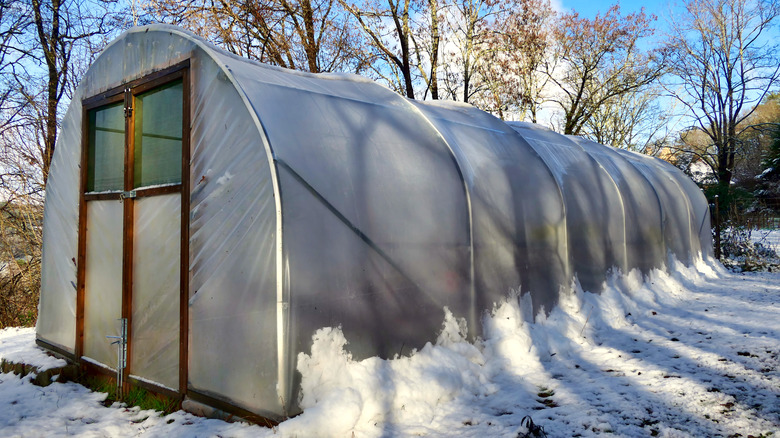
Hoop tunnels — or hoop houses — use flexible plastic tubing, PVC pipes, or metal hoops to support a covering of transparent or translucent landscape fabric or thick, flexible plastics. They range from just a few feet tall to full-sized walkable structures (High tunnel hoop houses). Low hoop tunnels have a portable design that forms a long arch directly over your garden beds. The benefits of these tunnels are that they are flexible, quick, and easy to construct. You can expand, store, and move them easily as well. Leave the structure up all season by rolling and tying back the fabric in spring. These structures work well for gardeners wanting to protect entire beds or rows from frost damage. The hoop structure can also be used with bug netting in the summer.
The mechanics of hoop tunnels work pretty much the same as cold frames. They slow heat loss and can raise internal temperatures by 2-8 degrees above ambient air. Most gardeners use them for larger or taller crops. These structures shed snow to a point, but should be monitored if you get severe storms or heavy snow. In a snowy areas, ensure the support hoops are sized for your area's snow-load, are closely spaced, and that the fabric doesn't sag.
What's nice about this option is that hoop tunnels break down and store efficiently, without taking up much space in your garden shed if leaving it up isn't ideal. But if cold frames and hoop tunnels are not sufficient for your gardening needs, consider a more permanent structure, like the range of cheap to chic greenhouses from Costco.