

Shoveling Or Salting: Which Should You Do First When Clearing Off Snow
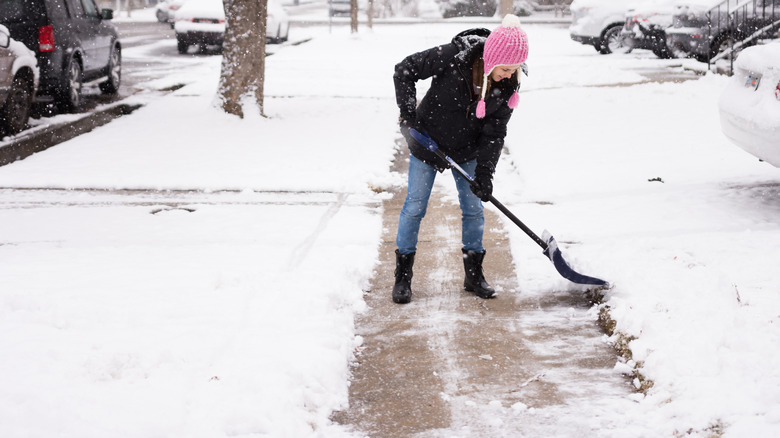
Which comes first: the shoveling or the salting? It's like the chicken or the egg, only with more practical implications. Both shoveling and salting help keep your driveway and sidewalks clear, but as with many things, there's usually a particular order that makes things more efficient. Always shovel first, then put down the rock salt or other de-icing product so it can do a better job. Spraying cooking oil on your shovel can make snow removal easier, since the snow won't stick as much.
Salt poured directly onto snow might melt a small amount of it, but it's really inefficient and wasteful to do it that way. It would take massive amounts of salt to melt a pile of snow that needs to be shoveled, and having that much salt on the ground means quite a bit will later end up in storm drains or in the soil, where it's harmful to your lawn, plants, and the water supply. Salt is good for melting thin layers of ice, though, so it could help for those few areas that aren't easily chipped away after you shovel. If your driveway is so long that you use a lawnmower with a plow blade to clear snow, you can use your lawnmower to spread salt in winter, too — after you've cleared that snow.
Salting your driveway: how, why, and when
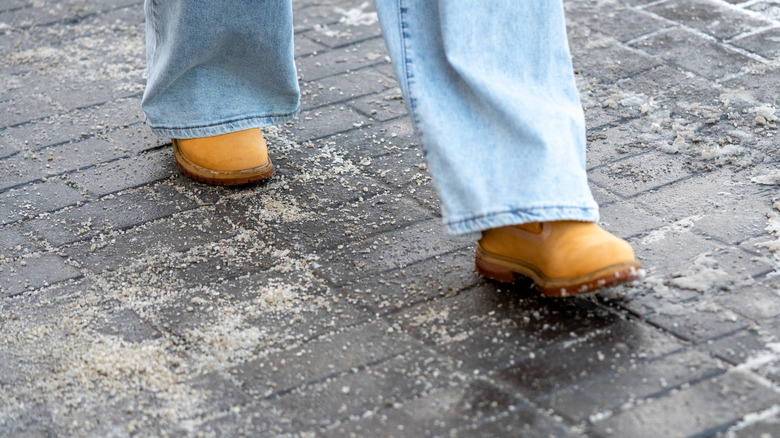
The key to effective use of salt is to keep things to a minimum. Surprising as it may sound, it only takes about a mug of salt to treat 10 sidewalk squares or about a 20-foot length of driveway. Apply the salt only after you've cleared as much snow and ice as possible from the driveway, walkway, and front steps. Use the salt only in areas where ice is visible or where it's often a problem, such as a spot on your driveway where icicles drip from your home and the water refreezes. Spread salt out evenly, rather than in clumps, for maximum effectiveness. Even when done properly, the salt requires either sunshine or friction, such as driving over it, to be activated so it can melt ice in those areas.
Applying salt ahead of predicted snow or freezing rain only works if the ground is comparatively warm, as may be the case when there are a series of days where the temperature is well above freezing before it drops. Also, if heavy snowfall happens after you've salted the driveway and then you shovel, you're just scooping and throwing some of that salt along with the snow. Salt would then end up not only in the soil, but also waterways and even underground water sources. In either case, salt changes the pH of the surrounding area, which could be detrimental to the environment.
Keep in mind, too, that rock salt (sodium chloride) only works if it's about 15 degrees Fahrenheit outside or warmer, so applying it in colder weather affects the environment eventually, but won't help the snowiest situations. Using an alternate de-icing product such as magnesium chloride is one of those hacks that make snow and ice removal easier. Magnesium chloride can work down to negative 13 degrees Fahrenheit, plus it's safer for plants and the environment.