

Stuck In Your Car During A Winter Road Trip? Here's What You Should Do
We may receive a commission on purchases made from links.
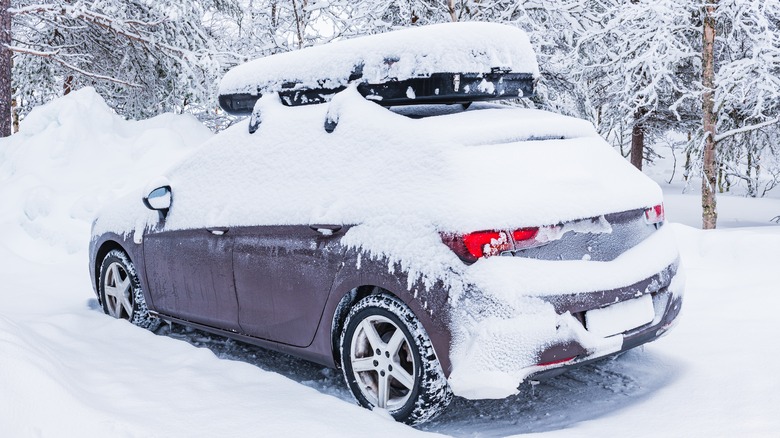
Winter weather can present plenty of challenges. This is particularly true if you happen to be driving during inclement conditions. Heavy snow and sleet, high winds, limited visibility, and dangerous black ice on wintry roads are all issues that can leave drivers stranded on the highway this time of year. That is to say nothing of mechanical failures, like dead batteries and frozen fuel lines, which often spike during the worst of winter weather. Regardless of how or why it happens, if you find yourself stuck in your car during a winter road trip, it can be much more than an inconvenience. This is a situation that can quickly turn dire. Here's what you should do in order to stay safe.
First and foremost, if you are stuck in your car during a winter road trip, you should stay inside your car. While it may be tempting to trudge off through the snow in search of help, it is incredibly easy to get disoriented and lost in such conditions. The only exception would be if you are right next to or in front of a building which you know is open and accessible. Additionally, staying in your vehicle provides you with shelter from the winter weather and makes it much easier for others to find you.
To help stay warm, run your vehicle and heater for about 10 minutes every hour. This brings us to one of the reasons why you may need to get out of your vehicle, at least briefly, when stuck during a winter storm. In order to avoid carbon monoxide poisoning, make sure your vehicle's exhaust pipe is clear of any snow or other obstructions. Also keep a window cracked while the car is running, for the same reason.
Call for help and increase your visibility
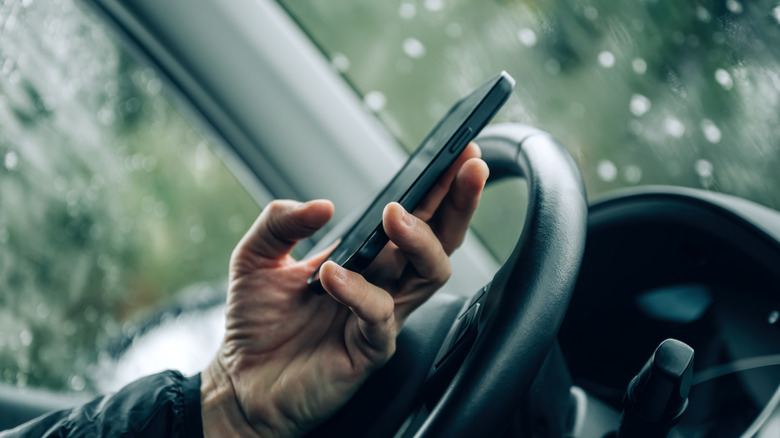
As soon as you realize you can't move, you should call for help. The simplest way to do this is dialing 911. However, there are times when you cell signal may not be the most reliable, whether due to severe bad weather or a remote location. So, you need to be aware of how to call for help when there is no cell service. Most newer phones allow you to select a satellite option for emergency calls only. Before heading out on a winter weather road trip, it is a good idea to know how to access and activate that feature in case of an emergency.
Once you have put out a call for help, take steps to increase your vehicle's visibility. One thing you can do is tie a bright-colored T-shirt or cloth to your car's antenna. Preferably, this would be red, although any color is better than nothing. Additionally, as long as it is not snowing or raining, open your hood. Even without mechanical issues, this is a sure-fire way to signal you need help. At night, turn on your vehicle's interior lights when the car is running. Be sure to turn them off once you turn off the motor, however, so as not to drain your battery.
You should also be careful not to drain your phone's battery. While stranded, you should only use it to call for help. It is also a good idea to place it on low battery mode if your phone has such a feature. As when hiking where there's poor cell service, don't set your phone to airplane mode (since you can't send or receive texts or share your location). After doing all this, monitor for passersby or rescue crews.
Stay warm and utilize your emergency supplies
While you are waiting to be found, it is important to stay warm. In addition to turning on your car for 10 minutes each hour, you can use not only the clothes you're wearing, but also your emergency supply kit and other items you may have in your vehicle. To that end, what you need to stay safe if you are stuck in your car actually starts before you even leave the house. One of the best ways to be prepared for a stress-free road trip at any time of year is to have a well-stocked emergency supply kit, like the Everlit survival car emergency kit.
In addition to supplies such as a first aid kit, jumper cables, flashlights, and flares, you should keep a few bottles of water and some high-calorie snacks in your vehicle. When freezing weather is on the way, add some blankets and extra clothing. Throwing a bag of kitty litter in your car is also a good way to be prepared for slick road conditions, as sprinkling some kitty litter on the road can help your tires gain traction if you spin or get stuck.
If your vehicle is well-stocked with emergency supplies, use them to stay warm while waiting for help. Add extra layers of clothing, and cover yourself with the blankets or an emergency blanket. You can also use the extra clothing and blankets to fill empty areas of your vehicle that are holding cold air, cover areas where cold air is seeping in, and insulate your windows. Additionally, staying hydrated and eating high-calorie snacks will help you maintain your body temperature. Also, avoid eating snow for moisture, as it can lower your body temperature, putting you at risk for hypothermia.