

Salt Or Sand: Which Is The Best Option For Tackling Your Icy Driveway?
We may receive a commission on purchases made from links.
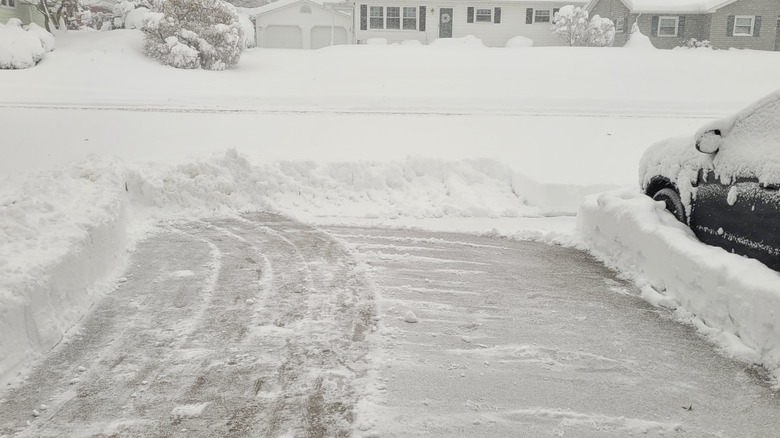
As winter settles in, virtually every portion of the U.S. and Canada will see freezing temperatures at some point over the course of the season. Regardless of how long freezing conditions last, the result can be a slippery driveway, as a layer of ice can form in just a few hours. As water ices and melts on driveways, it doesn't just make it treacherous for driving and walking, the cyclical freeze-and-thaw pattern can also cause damage such as cracks and potholes in your driveway. To combat the ice and slippery conditions, many people turn to either salt or sand. However, which is the best option for tackling your icy driveway? Turns out the answer could be either, neither, or both.
The first thing to understand when it comes to choosing between salt and ice to deal with an icy driveway is that each serves a different purpose and is effective in different conditions. Additionally, each has its own unique set of negative impacts on your lawn, garden, drainage, and/or infrastructure. With that in mind, the decision typically comes down to what you are trying to accomplish, what the prevailing weather may be, and what negative effects you are willing to accept. It also may come down to what is available at that particular moment, as each of these products can be in short supply when freezing weather is on the way. To that end, there are also alternatives to both which may be either more readily available or have more acceptable consequences.
Salt melts ice, but is chemically corrosive
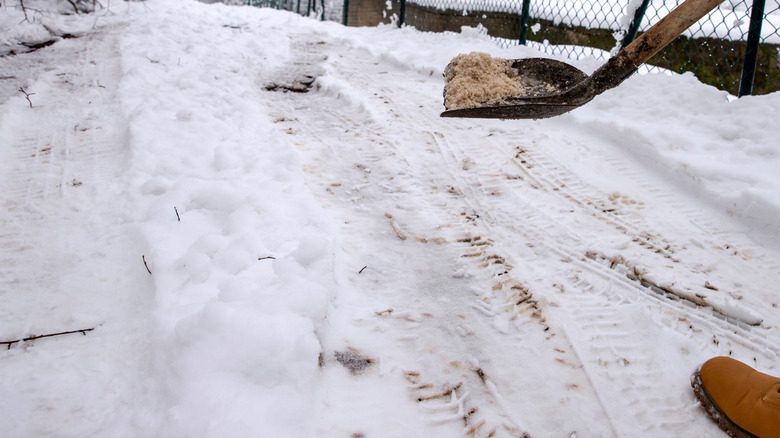
Salt, in particular rock salt, is commonly called upon when ice forms on roads, sidewalks, and driveways. This is because salt can be used to both prevent ice from forming as well as melt it once it forms. The secret to the success of ice is that it enables water to remain in a liquid state at a much lower temperature. While the freezing of water is typically 32 degrees Fahrenheit, ice lowers it to around 14 degrees. If the temperatures fall below that, salt will not be effective for melting ice.
To prevent ice from forming on your driveway, simply sprinkle a healthy dose of salt over it before the temperatures drop. If you didn't apply salt ahead of time, you can quickly melt ice and snow by applying a layer of salt on top. Unless the ice is exceedingly thick, it usually only takes around 15 minutes for salt to melt it.
Although rock salt is relatively inexpensive and quite effective in the right temperature range, there are downsides. Too much salt can cause severe harm to grass and plants, alter soil composition, and even pollute nearby water sources. Rock salt can also stain, damage, and corrode metal, wood, and concrete. There are chemical alternatives (mostly other salt compounds), but many have the same harmful side effects. Another type of salt, magnesium chloride, is an effective ice melt that isn't quite as harsh on the surroundings and can be used at colder temperatures. But, in most conditions, if you need a quick way to melt ice (say, on porch stairs first thing in the morning for safety), salt is a good option.
Sand provides safer traction over the ice
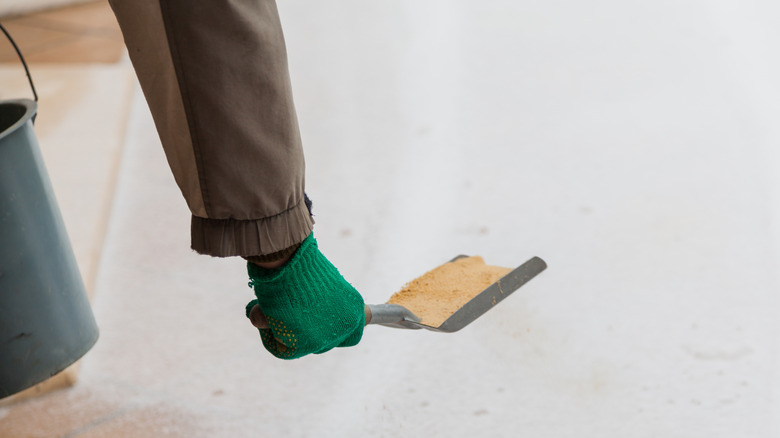
While sand is often used by road crews to address icy conditions, it is important to note that sand does not melt ice. What it does do is provide some texture to the otherwise slick surface of an icy road, sidewalk, or driveway. This provides traction for tires or boots, preventing slips and slides. Additionally, sand's traction benefits work at any temperature, so it can be particularly helpful in conditions which are too cold for salt.
Although sand does not cause the same harm to plants or materials that salt does, it does need to be cleaned up after conditions improve. Excessive amounts of sand can block drainage paths and clog up drains, and becomes a safety issue for bicycles and motorcycles. Additionally, in order to be effective, sand needs to be reapplied each time a new layer of ice forms or snowfall accumulates. There are alternatives to sand as well, such as kitty litter or various commercial ice traction products. Some of these will also need to be cleaned once temperatures rise, while others, like EcoTraction volcanic ice traction granules, are can simply be swept into your lawn, as they either biodegrade or benefit the soil in other ways.
It is also a common practice to use salt and sand in conjunction with one another to melt ice while providing traction. Wood ash, used as an ice melt, will accomplish this dual function as well, although it can be very messy. But, again, if the temperatures drop too low for salt or other ice melts to be effective, using sand to get traction may be your only option.