

How To Adjust Your Lawn Mower's Blades For Perfect Grass
We may receive a commission on purchases made from links.
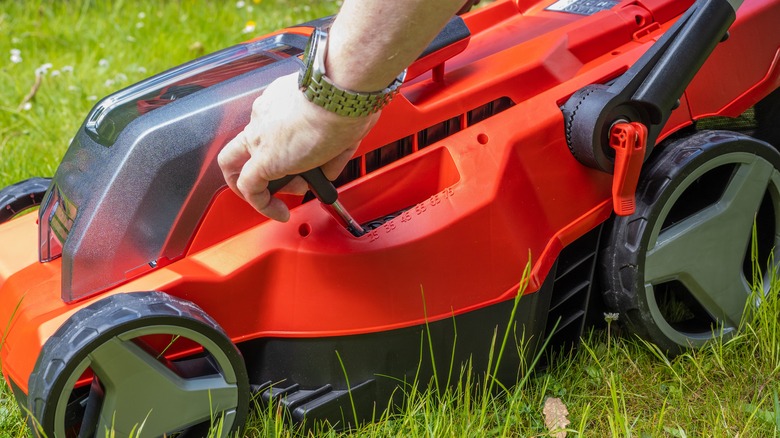
It is fairly well known that cutting your grass the correct height is one of the best ways to maintain a healthy lawn. However, there are many lawn care myths about what the proper height should be. So, how do you know how to adjust your lawn mower's blades for perfect grass? Well, there is more to it than just knowing how to move the wheel height adjustment lever up and down. While a number of sources suggest growing your grass taller to allow it to establish a healthier root system, determining the best length for your lawn is based on several factors, including the type of grass, geographic region, growing conditions, and time of year.
The first thing you should do is establish a baseline for the correct height based on the type of grass you have in your lawn. Popular warm season grasses such as Bermuda and Centipede are cut the lowest, typically only an inch or 2. Zoysia usually does best when maintained at 1.5 to 2.5 inches. Although St. Augustine is a warm season grass, it thrives when cut higher, more typical of cool season grasses. It should be trimmed anywhere from 2.5- to 3.75-inches high. Most cool season grasses, including Kentucky bluegrass, perennial ryegrass, and fine fescue should be cut around 2 to 3.5 inches. Tall fescue should be allowed to stretch out a bit more and grow to 3 to 4 inches in height.
Seasons and specific conditions call for adjustments
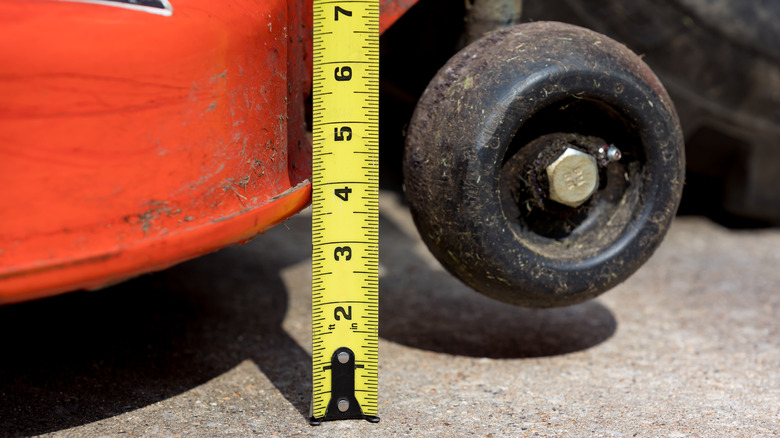
Once you have a baseline established, don't just lock your mower height in and leave it. That height is the optimum for mowing during the growing season with ideal conditions. However, as seasons and situations change, your mower blade height should as well. Typically, the baseline heights work well during summer and fall, assuming no special circumstances arise. They also should be followed during spring, with the exception of the initial mowing session of the year, when you should set your mower a bit lower.
Winter is when the biggest adjustment comes into play. On the final mow before prepping your lawn mower for winter storage, you should adjust your mowing height. If you have cool season grass, you should cut it lower during that final session to help prevent snow mold, other winter diseases, and rodents. Warm season grasses, on the other hand, should be cut at the same height or a little higher before winter weather sets in, to help protect it from winter weather conditions.
Additionally, specific situations and conditions will sometimes call for a mowing height adjustment. For instance, if you are experiencing an outbreak of grubs in your yard, you should allow your grass to grow a little taller. Cutting the grass a bit higher is also an effective mowing technique for controlling weeds. You should also leave your grass a bit longer when experiencing drought conditions, as the taller blades will help shade the soil and roots, conserving moisture. Leave shaded grass longer as well so the blades can capture more sunlight for photosynthesis. Regardless of the height you determine is right for your lawn, always follow the one-third rule when mowing and utilize a grass gauge so you know when it is time to give your lawn a trim.