

The Beautiful Pear Tree That's Actually An Invasive Nightmare For Your Yard
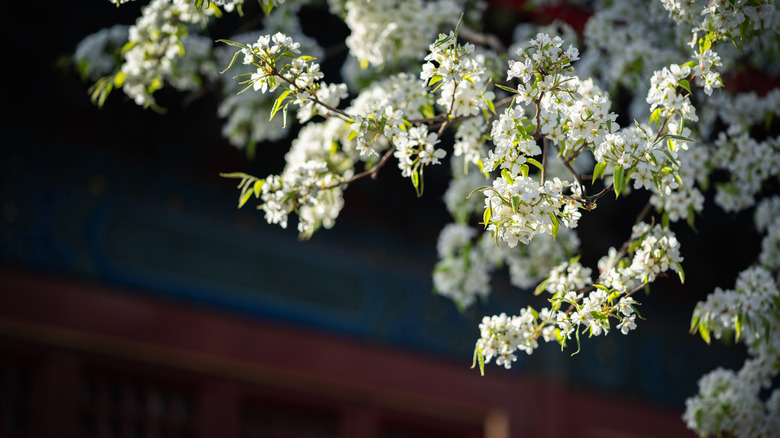
Diversifying your garden is one of the great joys of cultivating a prized outdoor space. Part of this development is finding unique plant varieties from fruiting trees and evergreen shrubs to ornamental grasses, which make a great addition to your lawn. But it's important to do research on the native species in your region because choosing to plant invasive plants can be massively detrimental. Particularly, you should avoid planting a particular species of pear as it can devastate your landscape.
The Callery pear (Pyrus calleryana) is known for its beautiful white buds and sweet fruits, but it has also been known to destroy whole areas of grasslands. In fact, the Callery pear is listed as an invasive species as it is native to Southern China and has spread rapidly since its introduction in the United States. It is one of many beautiful but invasive flowering species you should think twice before planting in your garden. A member of the rose (Rosaceae) family, which includes apples, the tree is also known as the Bradford Pear. This species is able to spread quickly due to its high volume of seeds, which spread via birds and become incredibly abundant, creating dense wooded patches, driving out native species. The tree is also able to live in multiple environments, thriving in USDA Hardiness zones 5 through 9.
This stinky tree is difficult to eradicate once it takes root
The Callery pear was first introduced in the United States early in the 1900s as a solution to problems with fire blight among native pear species. This use case was short-lived as cross-pollination caused the plant to fall prey to the same shortcomings. The tree did gain popularity as a hardy ornamental tree, with large blooms and colorful fall leaves. However this reputation has changed over time as the tree has become known for the smell of its flowers, which resembles rotting fish. Its flowers and fruits draw flocks of birds to the tree, who then rapidly spread it seeds, compounding the problem.
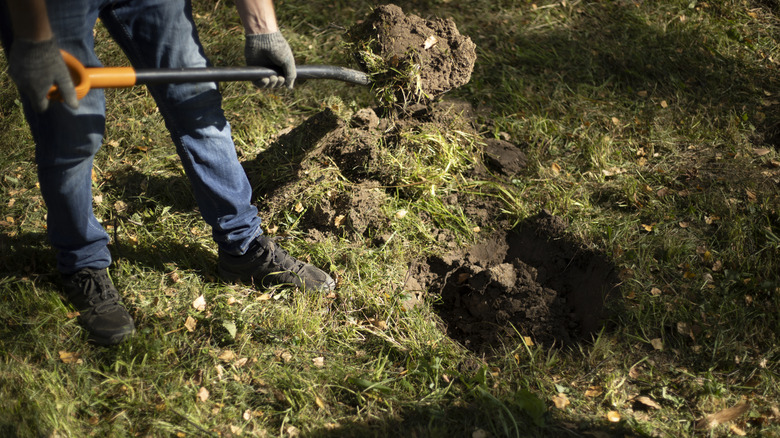
While fall is the perfect time to plant a pear tree in your backyard, making sure it is a common pear (Pyrus communis) is pivotal. Unlike the common pear, the Callery pear has narrow branch crotches and a weak growth pattern, causing these trees to split and fall, which can lead to property damage. The tree is also very difficult to eradicate once it has established a root structure. Herbicide is usually required to remove the tree once you've cut it down. If you don't completely eradicate its stump and roots, there is a high likelihood it will regrow.