

Common Mulch Upgrades That Aren't Worth Your Time Or Money
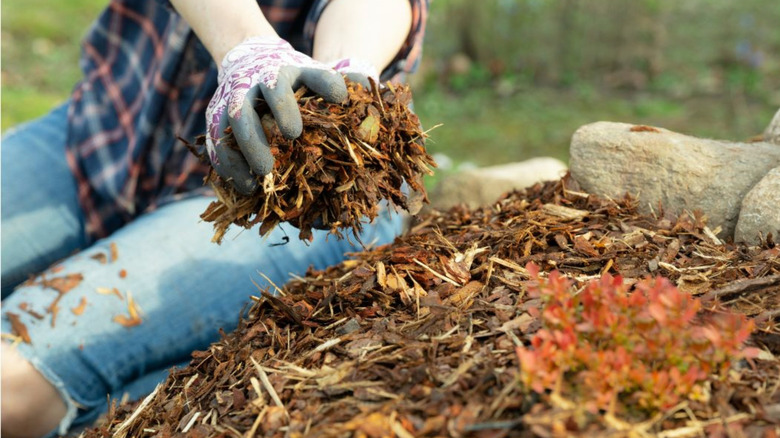
Mulch is a useful garden tool, but it comes in many different forms. Choosing the best mulch for your garden can be tricky, but there are a few types of mulch you can rule out. While they might be considered upgrades, these mulches are either unhelpful or flat-out harmful to gardens, while sometimes costing more than a simple wood chip or shredded bark mulch. One mulch you can skip altogether is dyed wood mulch.
Dyed mulch consists of shredded wood or wood chips that are colored either red or black. The color can create a nice aesthetic, but the mulch can actually be harmful to your plants. The dyes themselves are generally considered safe for plants, although they can fade over time and become unappealing. The issue is actually that most dyed mulches are made from recycled scrap wood. Repurposing wood is usually great for the environment, but some of this wood comes from construction or other industrial sites where it was treated with or exposed to chemicals. These chemicals can seep into your garden over time, poisoning your plants, especially the more vulnerable young and weak plants.
Synthetic mulches are problematic
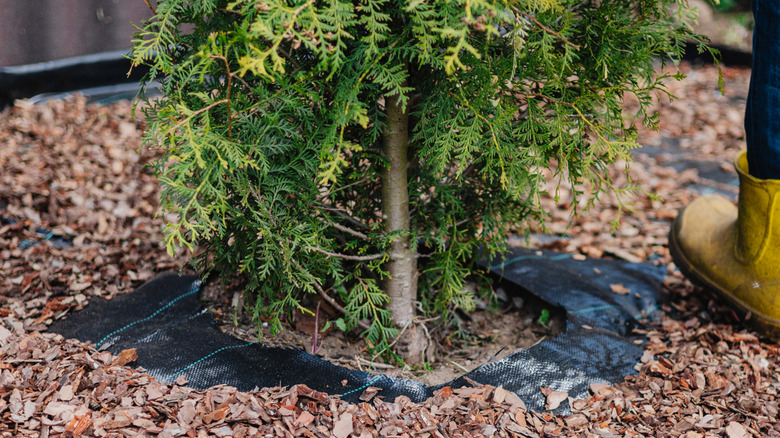
Synthetic mulch can be made out of most manmade materials, with rubber, plastic, and cardboard being a few of the most common. The prices of these can differ depending on the exact specifications, but many of them are more expensive than regular wood chips. While they can last longer without breaking down, they are often not biodegradable (though cardboard will break down eventually). Even if you're careful to clean up the old mulch when it's time to replace it, you may still end up with shreds of plastic or rubber in your soil.
Additionally, these synthetic mulches aren't always effective. Solid sheets of plastic or cardboard can limit water or air flow, impacting the long-term health of your soil and plants. While it can still be useful in the short term, you should be careful not to overuse it. Rubber mulch can sometimes contain harmful chemicals. Rubber will also break down over time, but unlike bark or straw, the components of rubber can still harm plants. While it isn't as large an issue, synthetic mulches are also generally unattractive. Sheets of black plastic or fragments of rubber often look at odds with gorgeous, sweet-smelling flowers, although that's more a matter of taste.
Using rocks for mulch can be a big hassle
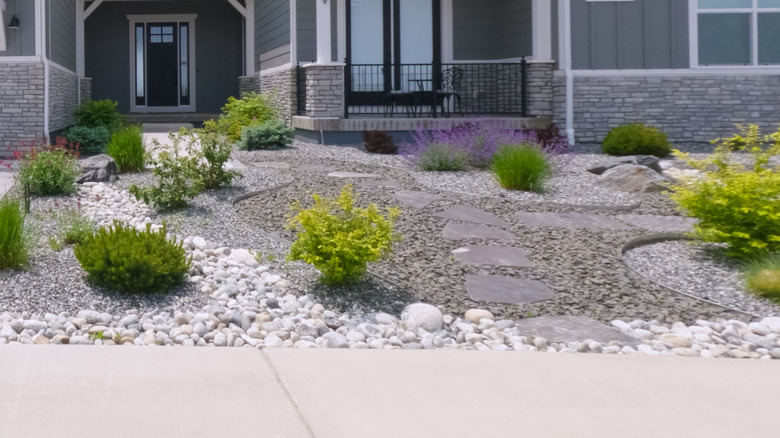
Rocks are another popular mulch choice, and they create a certain neat and tidy aesthetic that's difficult to achieve with straw or bark. They're also less likely to be washed away by wind or rain, since they're heavier. However, this option is also more trouble than it is worth. While they can keep weeds away, they're a little too good at absorbing heat from the sun. They can hold that heat even after the sun sets or is covered by clouds, making the soil too hot and causing water to evaporate faster.
While rocks let water and air through better than synthetic mulch, other things simply settle on top, namely fertilizers and organic material. If you want to give your plants compost, you'd need to move the rocks first. That also makes cleaning up after pruning or a storm more frustrating. Cleaning it all up can be a huge hassle, but if you don't clear the twigs and leaves from the rocks, your garden won't look as nice, and it won't benefit your plants.
Additionally, while they aren't as likely to be moved by wind or rain, rocks can still shift and slide over time. If even a few of them do, they could potentially damage your lawn mower, which is a safety concern you should know before using gravel in your landscape.