

Things That Are Attracting Raccoons To Your Yard
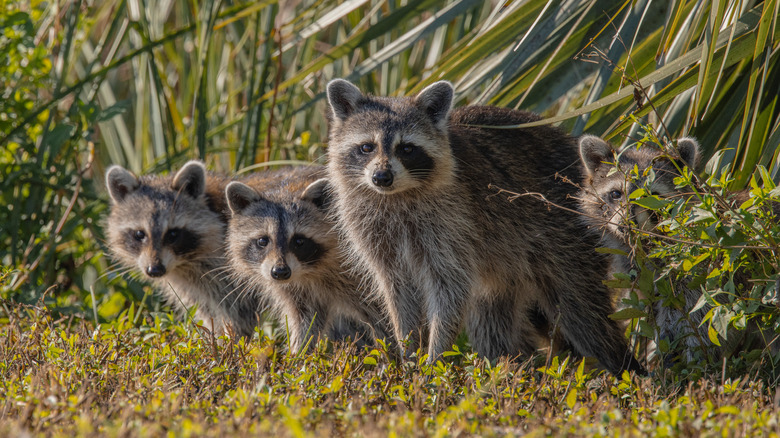
Raccoons might look adorable from afar, but when they show up in your yard night after night, whatever cute factor they had quickly fades. These masked intruders are surprisingly smart and capable wild animals, with a voracious appetite. They are always on the hunt for a convenient meal and a cozy place to crash. More often than not, it's something totally ordinary that catches their attention, like a bird feeder or a compost bin. Once they've locked onto your property as a reliable food source or shelter, they become recurring nuisances — causing damage, threatening pets or poultry, and even trying to break into your home. Thankfully, most raccoon visits are far from random. They're a direct result of specific attractants you can often control.
If you're struggling with nightly trash raids, torn-up turf, or stolen tomatoes, the first step toward reclaiming your space is understanding what's going on. Why exactly are these animals showing up in the first place? By removing or modifying those conditions bringing them around, you send a clear message that there's nothing worth sticking around for. From securing your garbage to making a few changes in your garden, there are practical, proven steps homeowners can take to cut off access and ultimately reduce the appeal of their yard, and you can go back to enjoying your outdoor space without surprise nighttime visitors from these little ninjas.
Unsecured garbage and compost
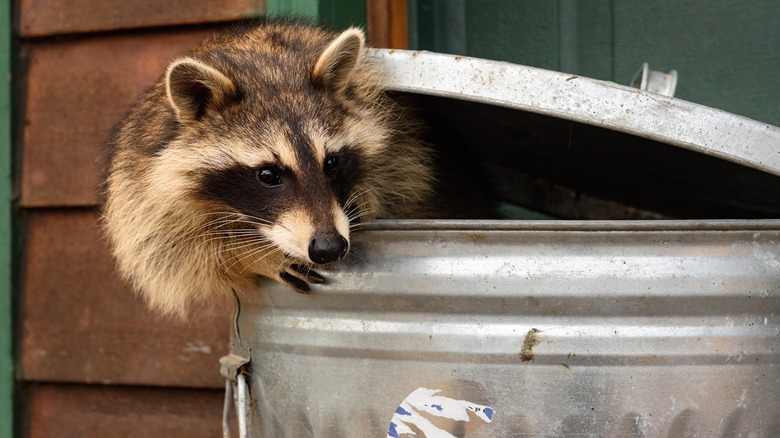
Did you know that raccoons have a keen sense of smell? If they catch even the faintest whiff of unsecured garbage or compost, it's like ringing the dinner bell. They're particularly drawn to high-fat and high-protein scraps, and meat and dairy emit strong odors even in small amounts, making them even more tempting. Once they figure out they can count on the menu at Chez Garbage, you can expect they'll return every night, often tearing open bags, tipping bins, and leaving behind a mess in the process. Compost piles are equally tempting, especially if meat or bone have been added. It's precisely the reason meat is one of the things that should never be added to home compost piles. This kind of easy access actually conditions raccoons to treat your property as a dependable feeding ground, and such a situation can escalate to more aggressive behavior, such as breaking into your home.
To nip this attraction in the bud, your best bet is to rethink how you store waste outdoors. If you can, invest in wildlife-resistant trash bins that are specifically designed with stronger locking mechanisms and tight-fitting lids to keep odors in and rummagers out. If that isn't an option, you can always secure standard lids with heavy-duty bungee cords. Storing your bins in a secure location, like a garage or shed, definitely helps. If you compost, keep it enclosed in raccoon-proof containers, and avoid adding meat, fish, or dairy as much as possible. It also helps to cover fresh scraps with materials like leaves or sawdust and turn frequently to reduce odors. Doing this will significantly lower the risk of raccoons showing up in the first place.
Pet food left outside overnight
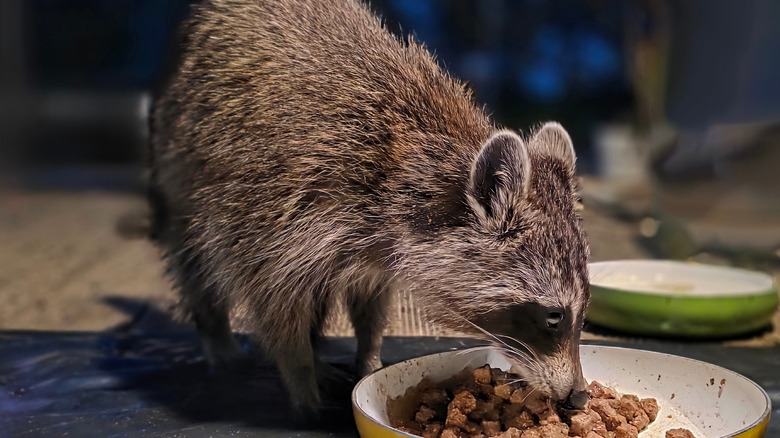
For these nocturnal opportunists, pet food left outside is not unlike striking gold — the kind their instincts simply won't allow them to ignore. High in protein, fat, and engineered to be loaded with calories, kibble and canned food are exactly the kind of nutrient-dense meals raccoons crave, especially when more natural food sources are harder to come by. The scent alone can draw them in from a surprising distance, and once found, they'll return. Just remember: Raccoons quickly adapt to human behavior, so if they realize your porch or patio delivers free snacks, you can expect to see them more often, and possibly in greater numbers.
But the fix is straightforward: Cut off the reward, and you break the habit. It's as simple as that. Start by setting a hard rule to bring all pet food indoors before dusk. Raccoons aren't picky, so their sense of smell will lead them straight to even a few stray pieces of kibble left behind. If, for whatever reason, your pets need to eat outside during the day, keep an eye on them while they eat and clean up right after. For households with outdoor animals, such as farm pets or feral cats, use feeding stations that can be secured at night. Once that food source disappears, so should your pest problem, as they wander off in search of easier pickings.
Low-hanging bird feeders and spilled seed
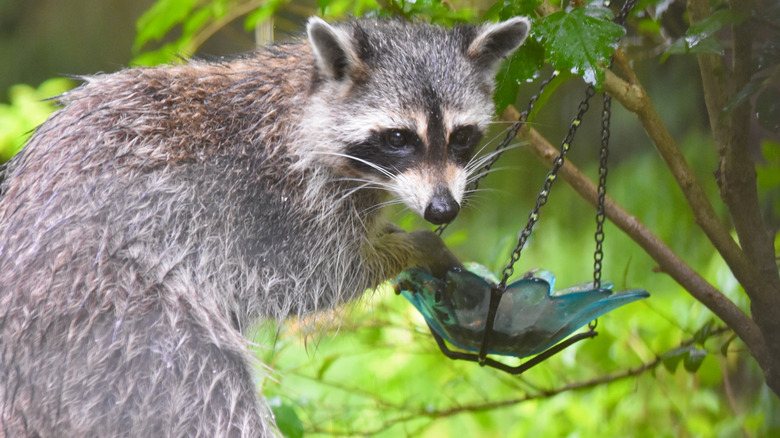
Although bird feeders are designed as a method for attracting birds to your yard, it's not uncommon for them to attract other animals as well, including raccoons. This is especially true when they're placed low or near surfaces that provide access, like decks or trees. It should come as no surprise that these arboreal animals are exceptional climbers, but many don't give them enough credit for how equally capable they are at problem-solving. A feeder dangling from a branch is the sort of puzzle raccoons live for. Even if the feeder itself is genuinely out of reach, the ground below can be just as attractive, thanks to a steady rain of spilled seed that birds leave behind.
The solution is all about smarter setup and consistent cleanup. For one, picking the right spot for your bird feeder is key: Mount your feeders on tall, smooth poles at least six feet high, or suspend them from wires between posts if your unwanted guests are particularly persistent. You can install baffles — cone- or dome-shaped barriers that make climbing more trouble than it's worth (make sure and use a larger diameter for the larger varmint). Whatever you do, avoid hanging feeders from trees or structures that raccoons can easily scale.
Lastly, make it a habit to sweep or rake beneath feeders every few days to remove spilled seed and debris. You can lay down trays or mats underneath to make clean-up even easier. You may even want to bring your feeders in at night, when raccoons are on the prowl.
Grubs and lawn insects
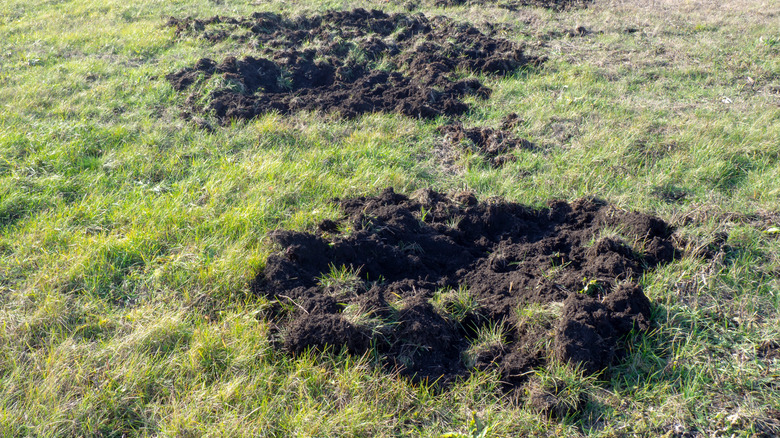
Ever wake up to your turf looking like someone's been rolling it up like a carpet? Chances are, the culprits are raccoons trying to Hakuna Matata up some grubs in the middle of the night. With their sharp sense of smell and strong paws, these masked bandits can easily detect insect larvae like white grubs and earthworms buried just below the surface of the soil in your lawn or garden. These protein-rich morsels are too tempting for raccoons to ignore — especially in late summer and early fall when this particular prey is most active near the surface — and the damage they can do to your lawn is extensive. According to Iowa State University Extension, raccoons are a top offender for this kind of lawn destruction, along with skunks. Where the striped carnivores push their noses in and make multiple holes with their claws, raccoons tear out and roll back whole chunks of sod at once.
Stopping all that destruction at its source can be tricky since the key is removing a raccoon's incentive to dig in the first place: the grubs. Your best bet is to apply a preventative treatment in the spring or early summer. It's best to use beneficial nematodes (grub-killing critters) specifically labeled for safe lawn use. These microscopic organisms target larvae in the soil, but they're particularly good at doing that without harming grass, pets, or other local wildlife. Another option is to dethatch and aerate your lawn at the right time to reduce damp conditions where grubs thrive. In that respect, using lawn mowing tips to reduce the grubs in your lawn. not only improves curb appeal but also interrupts the food chain that raccoons depend on.
Edible plants and fruit trees
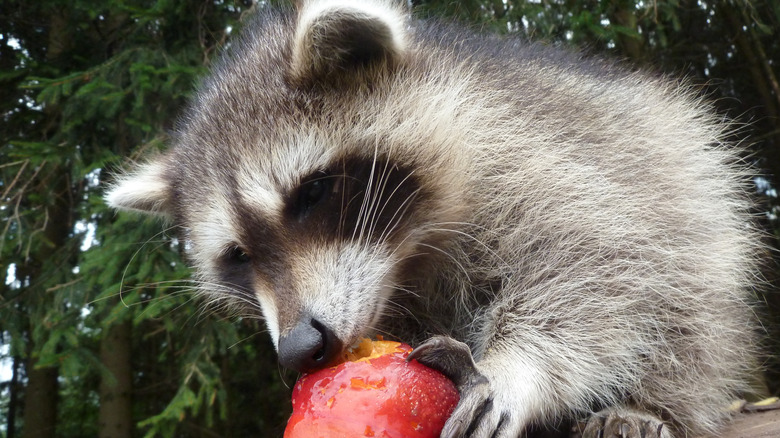
As omnivores, raccoons are only too happy to treat a thriving garden or fruit treat like their own personal farmer's market. Even unripe fruit is fair game, especially when it's easily accessible and in the process of ripening within reach. They are clever, and with their nimble hands, raccoons can easily climb trees, pull down stalks, and even peel back husks to get what they want. If you've got crops or fruit trees that are constantly getting raided, there's a good chance a raccoon's marked your property as a convenient pit-stop. Unless you're actively trying to rewild your yard or garden, your best bet with edible plants is consistent vigilance and smart barriers.
To protect your produce, it's really important to shift your focus to active defense. For gardens, that means a woven wire fence, 6 to 8 feet high. You can wrap metal flashing or sheeting around tree trunks to prevent climbing, though this doesn't always work as well as you'd think. You can also try a single or double electric wire about 6 to 8 inches off the ground. If you've got fruit trees, harvest them regularly and try not to leave what's ripe still hanging or fallen on the ground.
Access to water features
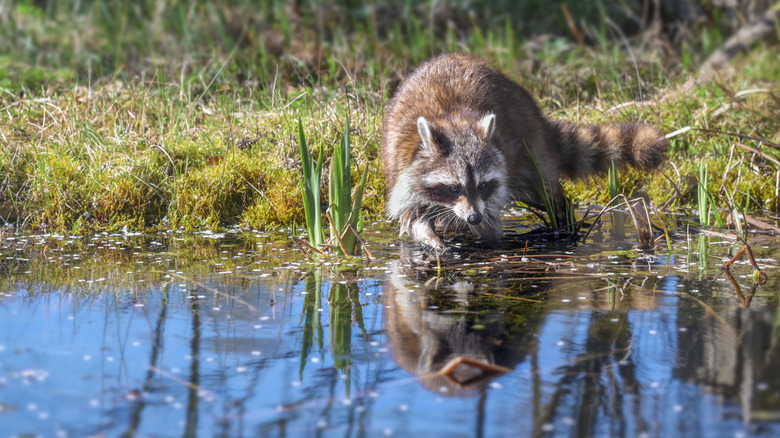
Depending on the type of water feature you're sporting on your property, a raccoon could view it as just an easy water source or as a hunting ground. You see, raccoons employ a special technique called "washing" behavior, which allows them to use their paws to explore and manipulate objects under water. It's more than a little impressive to observe, but what's important to keep in mind is that these marauders will happily scoop up fish, frogs, tadpoles, and crayfish if given the chance. Since raccoons are nocturnal hunters, you might not even realize what's happening until after your koi are basically on milk cartons.
Your best bet here is to find ways to limit access and make water features as uninviting as possible. For bird baths or fountains, the fix can be as simple as covering or draining them each night. Larger ponds can be trickier. You might not be able to convince your visitors that there's no prey in your pond, but if that prey is too hard to get to, they're more likely to look for easier food elsewhere. To accomplish that, add things like rock overhangs, aquatic plants, or even submerged shelters where fish and frogs can hide. You might consider fencing, though that can be unattractive. You can also install motion-activated lights or sprinklers since raccoons are likely to be scared off by a sudden change in the environment.
Unsealed entry points
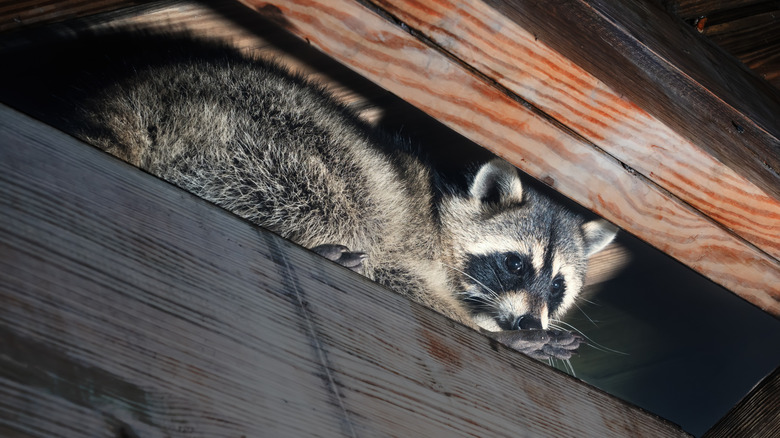
Like all animals, raccoons need food, water, and shelter to survive. While almost any hidey-hole could suffice, few spaces beat the often-insulated nooks and crannies found in man-made structures. Using their dexterous paws and uncanny ability to squeeze through tight gaps, raccoons are nothing if not expert invaders. Just about any gap will do: Loose soffits, damaged vents, uncapped chimneys, and even pet doors are all potential access points. Once inside, they can tear up insulation, build nests, raise their young, and leave behind droppings. So not only will they damage your property, they also carry serious health risks into your home. Once a raccoon finds a safe, warm place to den, it can be incredibly difficult to remove them without professional help.
Believe it or not, the smartest move here is to be paranoid. Assume these prowlers will find any weakness, then seal it before they actually do. Start by inspecting your home's roofline, then vents, and finally its foundation. Use galvanized hardware cloth or metal flashing to cover gaps and reinforce loose materials. From there, install chimney caps to completely block off access since it's one of their favorite points of entry. If you've got soffits or fascia boards showing any sign of wear, repair or replace them as soon as possible. Regular maintenance is your best defense.
It also helps to make it less tempting to access your roof by cutting back tree branches and removing any unnecessary climbable features. Though remember — if one of these miniature home invaders wants on your roof, there's really no stopping them: They can climb just about anything.
Unmanaged debris
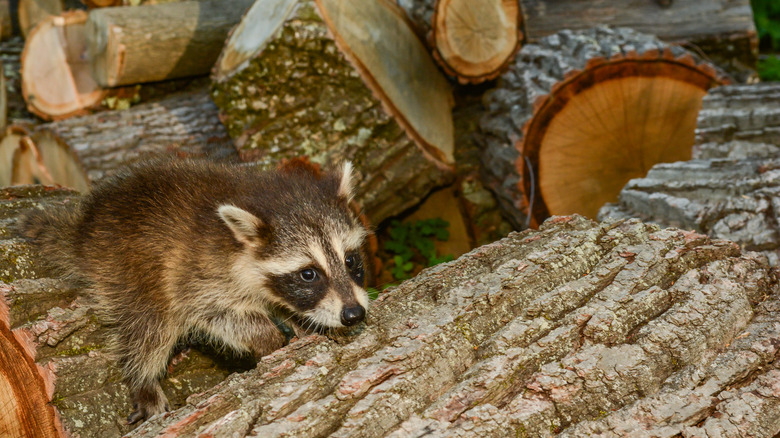
Piles of brush, old lumber, firewood, or any sort of yard waste offer exactly what a raccoon looks for when it comes to shelter. While these spaces aren't as insulated as your attic or garage, they offer protection from predators, shade from the sun, and a dry place to rest and raise a litter. Once raccoons find a safe hideaway, they're far more likely to return to your property for food and shelter. You may not even notice them hiding out until their population has grown. In fact, unmanaged debris is one of the most common ways urban and suburban yards accidentally invite raccoons to settle in.
To shut down any trash panda speakeasies, the idea is to eliminate access to easy hiding spots. That means clearing out any unnecessary clutter, such as branches, scraps of wood, or yard waste. For materials you actually need to keep, like firewood, your best bet is to store it in neat stacks above the ground on racks or pallets by at least 12 inches. It's also a good idea to store it several feet away from your home, sheds, or fence lines. If you've got a brush pile you can't get rid of right away, cover it with tarp and secure it so it's harder to nest in. Finally, if you do find an abandoned raccoon den or nest, burn all the wood or brush to prevent the spread of ringworm or harmful bacteria.
Strong odors from grills and grease traps
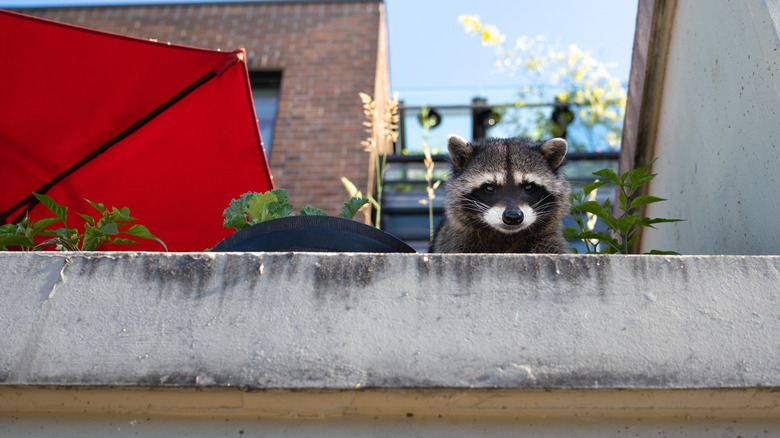
Even if your barbecue is long over, all those delicious smells linger on your grill, emitting clear signals to wildlife that there's potential for easy food. Animals are hardwired to follow scent trails, so leftover food or grease drippings are basically a homing beacon for scavengers. Even food residue stuck to the grill can be enough to lure raccoons onto your property, in search of fatty protein. Once they associate your home with food, they're not only likely to return, but they might explore the rest of the property for even more tasty rewards.
That's why it's mission-critical to clean grills and grease traps thoroughly and consistently. In fact, it's a good idea to run your grill on high for another 5 to 10 minutes after each cookout so that it completely burns any residue. From there, be sure to scrub the grates, empty the drip pans, and wipe down any grease splatter on the exterior. If your grill has a cover, make sure it's tightly fitted to discourage any curious paws. And if possible, store it indoors when not in use long-term, like over the winter or when you're on a long vacation.
Unsecure pens and coops
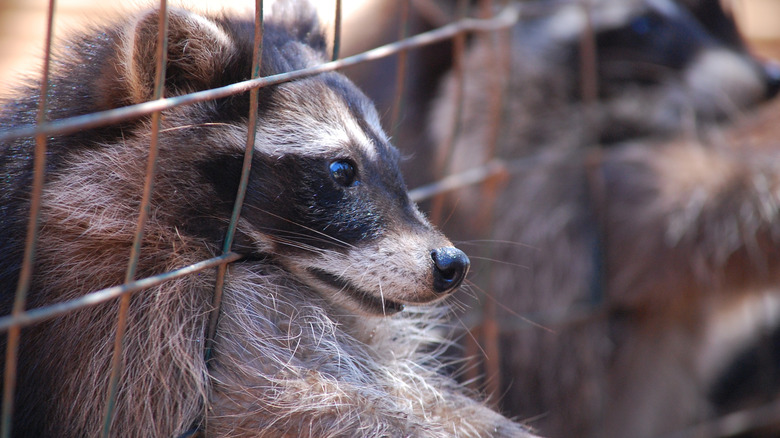
To the opportunistic raccoon, your chickens, ducks, and rabbits are Happy Meals on legs, and they'll stop at nothing to get their grubby paws on them. Don't be fooled by their diminutive size: Raccoons are deceptively strong and shockingly dexterous. They are more than capable of unlatching simple locks, lifting lids, and reaching through gaps to grab food or prey. Owing to their notorious persistence, they'll make short work of weak doors, loose fencing, and traditional chicken wire. Raccoons tend to kill as many birds in one go as they can, and unfortunately, once they finds success, the chances of them returning for easy food tend to skyrocket until access is cut off entirely.
Needless to say, keeping your animals safe means making sure security is airtight. One easy way you can do that is by replacing any lightweight chicken wire with ½-inch galvanized hardware cloth, since it's a lot tougher to bend or rip through. Heavy-duty latches that require two-step opening mechanisms (like you'd find with carabiner clips or sliding bolts) are well worth the effort, since these procyonids can open basic hooks or flip latches with relative ease. Beyond that, make it a routine to check enclosures every evening, and if possible, consider elevating small pens off the ground so they're harder to reach. Whatever you do, just remember that raccoons are surprisingly dangerous, especially when they spot an easy meal. So the goal is to make sure your animals never, ever look like dinner.