

Wild Animals That Are Way More Dangerous Than People Realize (In North America)
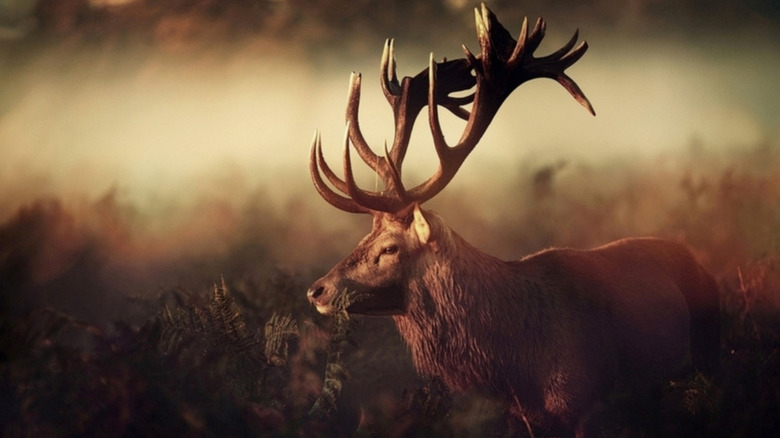
When most people think about dangerous animals in the wild, their minds jump to the usual suspects like cougars, bears, and wolves — classic predators that headline outdoor survival guides and warning signs. And sure, those animals deserve a healthy dose of respect. But here's the twist: A surprising number of wildlife injuries (and even fatalities) come from species that don't usually make the danger list. It's not just apex predators that pose a risk out on the trail: Sometimes, it's the underdog you should be keeping an eye on. Critters like owls, wild pigs, and even seals can be cute, but unsuspecting, dangers.
Danger in the animal kingdom isn't just about teeth and claws: It's about proximity, behavior, and how well people understand the animals they share space with. Many of these animals, like moose and bison, become aggressive not out of malice or hunger, but when they're startled, protecting their young, or defending their territory. They don't need to be predators to be powerful, fast, or unpredictable. This isn't about mongering any fear, but rather shifting the lens to awareness. Understanding when and why an animal might get aggressive goes a long way to avoiding such a run-in. Remember that respect for wildlife — even the ones that don't look dangerous — goes a long way in keeping everyone safe.
Wild Pigs
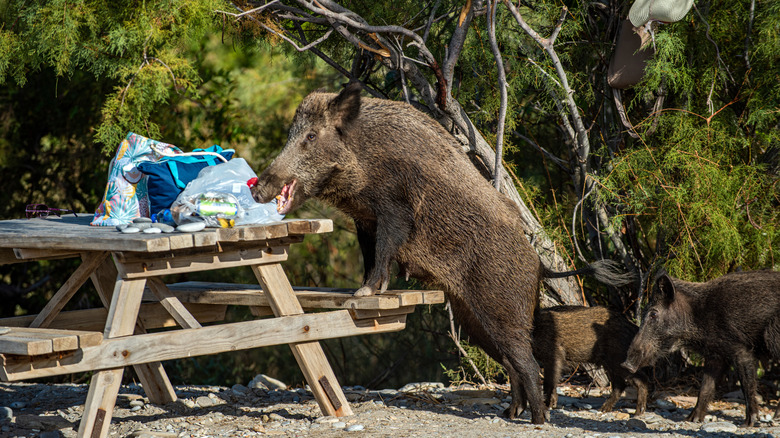
Wild pigs might look like nothing more than barnyard escapees at first blush, but these animals — common throughout the American southwest, south, and southeast in particular — are more destructive, and dangerous, than many people realize. With more than 6 million in the U.S. alone, feral wild pigs cause an estimated $2.5 billion in damage annually, destroying crops, ecosystems, and infrastructure. They also carry dozens of diseases and parasites that can be transmitted to humans, pets, and livestock. But the bigger issue many people overlook? Wild pigs are genuinely dangerous to encounter.
When wild pigs feel threatened, they can become aggressive in an instant. A global study in 2023 documented over 170 human deaths caused by wild pigs between 2000 and 2019, but it also revealed that most of those attacks were the result of unexpected, non-hunting encounters. Armed with razor-sharp tusks, feral swine have been known to inflict fatal injuries to legs and feet, where major arteries are vulnerable. With a top charge speed of 30 miles per hour and the damage a frenzied hog can inflict, this is an animal people understate at their peril. Some experts consider them among the most dangerous animals to humans.
If you're hiking, camping, or working in pig-heavy areas, you might want to leave your dogs at home. Also, stay alert and never approach piglets. Thankfully, most wild pigs are conditioned to avoid humans. –But if they don't, get to high ground like a tree to keep safe. In the southwest, it's useful to learn the difference between feral hogs and peccaries (also called javalinas), which are a different, indigenous species and tend to stay away from humans.
Bison
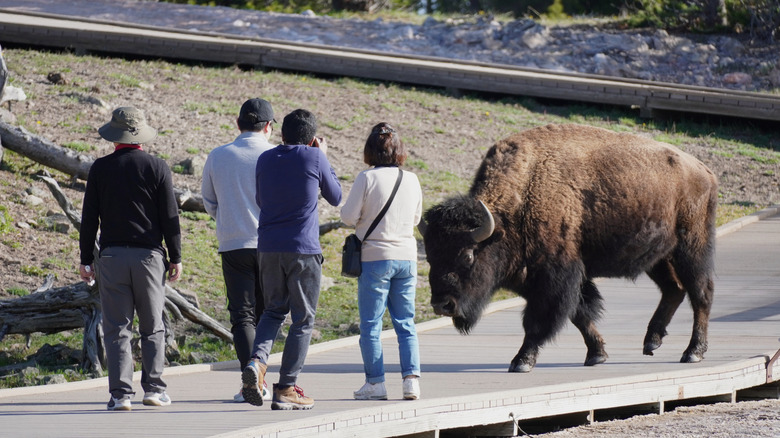
Revered as an icon of the American west, bison are among the most photographed animals in national parks and a must-see for tourists. And it's no surprise why. With decades of conservation under their belt, these gorgeous animals have become a national success story. But somewhere along the way, they picked up a reputation for being gentle giants rather than the unpredictable powerhouses they really are.
The thing to keep in mind is that a bison's normally calm demeanor can flip in a heartbeat. Despite weighing up to 2,000 pounds, these giants are also surprisingly nimble, capable of sprinting up to 35 miles per hour and leaping over five-foot barriers. Although bison play a vital role in their ecosystems and aren't normally aggressive, they are unpredictable, and will protect themselves if they feel threatened. Their combination of bulk and agility means they can do serious damage before you even realize you've crossed the line, making them one of the most dangerous animals at national parks.
This is why park guidelines emphasize staying at least 25 yards away from bison. So if your goal is to take photos, do so from a safe distance. If you encounter a bison while hiking, it's often best to turn back, even if it means leaving the trail to do so safely. And if a bison stops to focus its attention on you instead of its meal, chances are you're too close, and it's time to slowly back away.
Raccoons
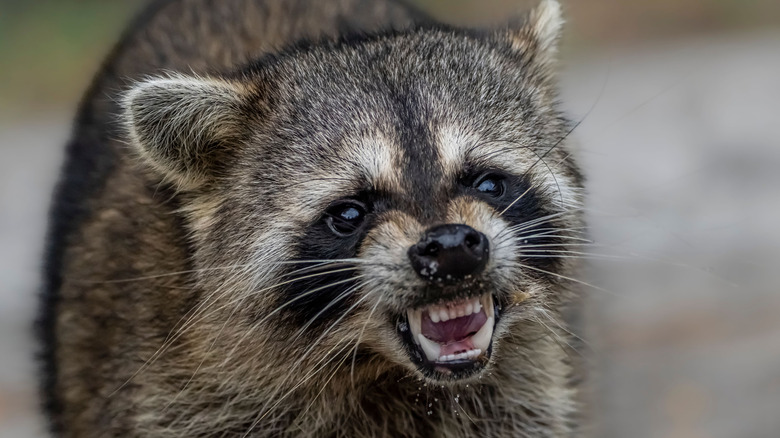
With their masked faces and grabby little hands, raccoons tend to come across as curious, even comical. But don't let their antics fool you – especially if you're camping. Raccoons are resourceful, bold, and surprisingly common in parks and urban areas across the U.S. While they usually avoid direct confrontation, things can get dicey fast when food is involved or they feel threatened.
Raccoons can transmit bacteria and parasites through bites, scratches, saliva, urine, or feces. More importantly, they are a major rabies vector in the United States. In some areas, the raccoon variant of the rabies virus accounts for up to 75% of terrestrial rabies cases, and about 1 in 10 raccoons that interact with people or pets test positive for the disease. Once symptoms appear, rabies is almost always fatal, and even a minor scratch or saliva exposure can transmit the virus. Any close contact with a raccoon — especially a bite — can mean urgent medical treatment and a series of post-exposure shots.
That's why your best bet with these guys is to keep your distance, even when a raccoon seems calm and curious. Since food attracts them, avoid feeding them and secure any supplies or trash, especially when camping. If you corner a raccoon (on purpose or accidentally), you run the risk of provoking a defensive reaction. So you never want to try and scare them off from up close. Even though they look like mischievous bandits, raccoons come with real risk and they're not animals you want to tangle with.
Moose
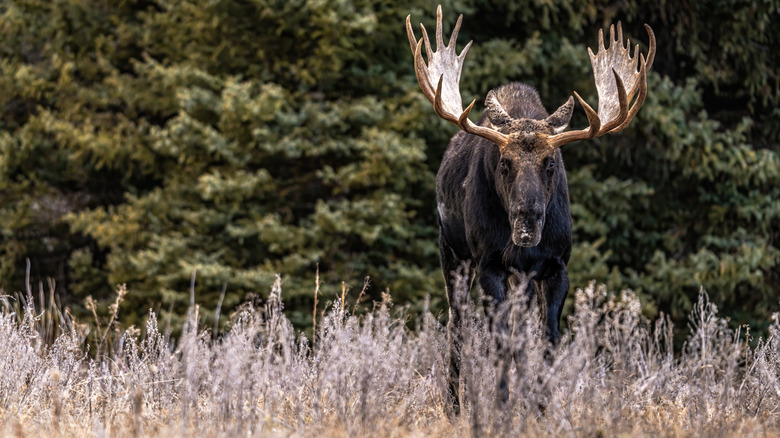
Moose are often seen as peaceful loners, slow-moving, mild-mannered, and more likely to ignore you than confront you. In fact, it's not uncommon for hikers or parkgoers to feel lucky when they stumble across one. But that reputation masks the truth: They are one of the most dangerous large mammals in North America – and moose are much scarier than you might think.
Many people don't realize just how massive these animals are: Adults can weigh over 1,600 pounds, yet sprint at speeds of up to 35 miles per hour. Unlike bears, moose aren't typically aggressive by nature – but that changes fast if they're startled, feel cornered, or are protecting their young. And they can charge without warning. In Colorado alone, 21 moose-related injuries were reported over a span of just six years. In one case, a cow moose knocked down and stomped a woman who got too close while walking her dog. Bull moose, meanwhile, sport 4-foot antlers that can each weigh 30 pounds on their own, so you definitely don't want to be hit by those. Even in Alaska, moose cause more injuries than black bears most years.
If you encounter a moose in the wild, give it at least 25 yards. Keep your dogs leashed or leave them at home altogether. Never try to scare a moose off, and never try and feed one (it's illegal anyway). And if it approaches, back away slowly and put a tree, car, or other object between you and the animal. If you're being chased and can't find high ground or a barrier, your best bet is to run, since moose don't typically give chase for long.
Seals and sea lions
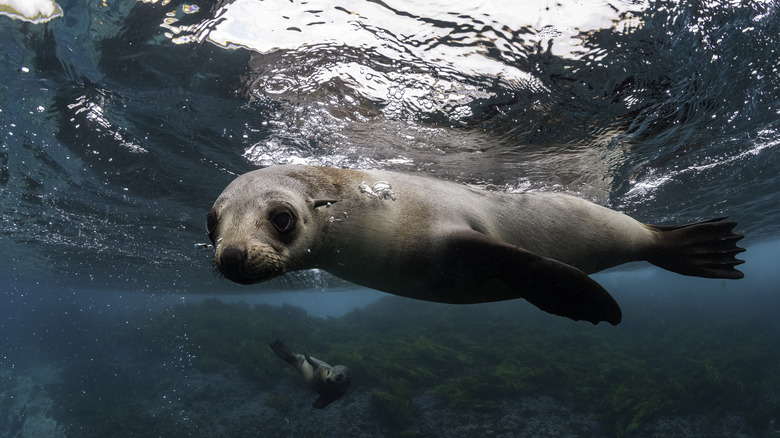
To most people, seals and sea lions come off as clumsy, comical, and totally harmless. You'll spot them sunbathing on docks, flopping around at the beach, or barking like dogs at the aquarium. But while they might look like sea puppies, the reality is a little more intense. Definitely steer clear of these guys if you're out swimming. Because these marine mammals are stronger, faster, and more territorial than most people realize, especially during breeding season.
Sea lions, in particular, are known to bite without warning when they feel threatened. Their powerful jaws and sharp teeth have landed multiple beachgoers in the hospital, especially in places like San Francisco, where human interaction is common. In one case, a swimmer was bitten so badly he needed surgery after the animal just barely missed an artery. Even seals — which are generally less aggressive — can lunge and bite if approached while resting, injured, or with pups nearby. The risk isn't just the bite itself, either: Wounds from marine mammals can lead to serious blood infections that often require antibiotics or medical treatment.
Needless to say, giving seals and sea lions their space is a great rule of thumb. Experts recommend staying at least 50 yards away, both on land and in the water. Never feed or try to touch them, and resist the urge to snap a selfie if they're nearby. It's also helpful to limit how long you admire them: If a sea lion stares, barks, or starts moving toward you, it's time to back away. If you're ever bitten, don't wait: Seek immediate medical care. Infections from marine mammals can escalate quickly.
Swans

Often seen as the epitome of elegance, swans exude a gliding beauty and an almost fairy-tale-like charm. Popularized in media, you'll find them on depicted on wedding invites or during lakeside strolls, where they seem practically ornamental. Because of that, most people don't think twice about getting close. While swans — especially what are known as mute swans — look serene, they're fiercely territorial. During nesting season, they'll defend their space against other swans, and humans, with surprising gusto.
Mute swans in particular are known for their aggression. Government agencies in both the U.S. and Canada warn that these large birds — native to Europe, but introduced to North America in the late 1800s — can attack people who enter their territory. Boaters have reported being chased or capsized, and there are documented cases of swans biting or striking humans with their wings. These attacks, called busking, often start with warning signs: loud hissing, wing flapping, or sudden charges. If ignored, a swan can use its powerful wings and sharp bill to cause bruising, cuts, or in rare cases, serious injury, especially out on the water.
The best way to avoid a swan encounter is to keep your distance, especially during nesting season (typically late spring through early summer). Avoid feeding them, never approach a nest, and be cautious when kayaking or canoeing near swan territory. If a swan begins to hiss or busk, back away slowly and put some space between you. Their aggression is usually defensive, not predatory, so giving them room to feel safe is the best way to stay safe yourself.
Wild horses
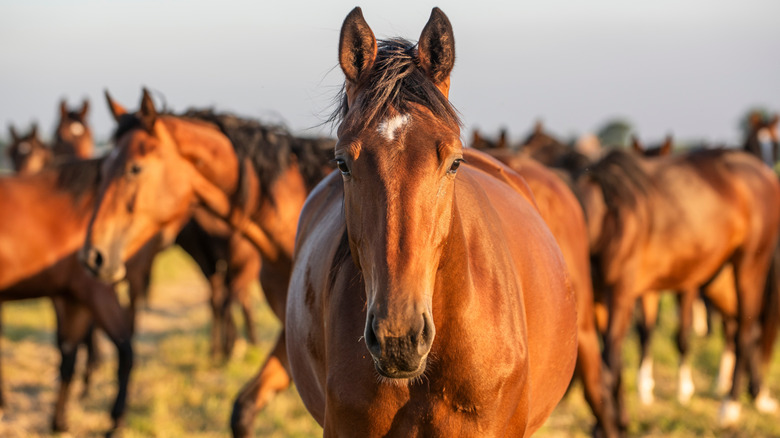
At a distance, wild horses look serene, even tame. Their free-roaming nature, calm posture, and graceful stride can easily lull people into thinking they're just like their domestic cousins. That's where things get dicey: While they may seem approachable, wild horses are powerful, unpredictable animals that can become dangerous fast if you get too close.
When they feel threatened or are trying to protect a foal, wild horses can deliver serious bites and kicks. According to the National Park Service, wild horses on Assateague Island have been known to bite or kick people who get too close or try to feed them. In 2025, an 11-year-old boy was hospitalized after being kicked in the head by a wild horse in Mt. Charleston, Nevada. Even domestic horses are known to cause frequent injuries from kicks and bites. When wild horses get spooked or agitated, the risks increase significantly.
So if you spot wild horses on a trail, in a park, or near a beach, the best thing to do is give them space. Never approach them, and definitely don't feed them – it conditions dangerous behavior. If a horse starts to pin its ears, open its mouth, or walk toward you (especially a stallion with a harem), those are red flags to back off. Remember, a single kick can cause serious injury, and these animals won't hesitate if they feel cornered.
Mountain goats

With their snow-white coats and high-altitude homes, mountain goats often come off as elusive and mellow. Because they rarely descend from on high on purpose, it's easy to assume they're peaceful and uninterested in humans. But when mountain goats grow too accustomed to people, or feel threatened, they can become aggressive, territorial, and even deadly.
One of the most well-known cases happened in 2010, when a 63-year-old hiker in Olympic National Park was fatally gored in the thigh. The mountain goat had become habituated to humans and had a history of approaching trails and acting aggressively, despite attempts by the park to change its behavior. In the years leading up to the attack, rangers had received dozens of complaints about the same goat, as well as others showing similar behaviors, like pawing at the ground, blocking trails, or following hikers. Similar incidents have been reported in Colorado and Glacier National Park, where visitors ignoring posted distance rules have led to close calls and warnings from rangers.
The key to staying safe is awareness and distance. If you see one blocking a trail, give it the right-of-way and find another route if possible. Stay at least 25 yards away, and never get between a goat and its escape route. Like many wild animals, respect and space are your best defense, especially when dealing with unique species at high altitudes.
Wild turkeys
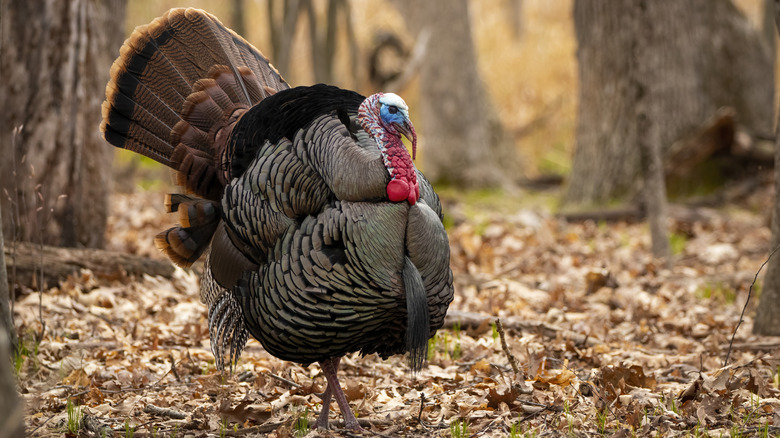
Wild turkeys are more likely to make you laugh than feel nervous. They strut, gobble, and wander through parks or neighborhoods without much fuss. But the truth is, turkeys have got a mean streak people rarely expect, especially during the spring breeding season or in areas where they've grown used to humans.
Male turkeys, or toms, become especially territorial between March and May, and some even begin to see humans as rivals. According to Audubon, turkeys that are regularly fed may lose their fear of humans and may start asserting dominance (particularly the juvenile males, known as jakes). In Massachusetts, wildlife officials have linked these aggressive behaviors to repeated human interaction, especially in suburban areas. Injuries are usually minor, but reports of turkeys chasing, pecking, and scratching people are increasingly common, particularly when turkeys are fed or approached too closely.
If you encounter one acting bold, don't escalate. Avoid eye contact, back away slowly, and put space or a barrier between you and the bird. Since feeding often causes their aggressive behavior, it's best not to. You may even want to stash bird feeders during breeding season, as spilled seed could turn your yard into their territory.
Deer
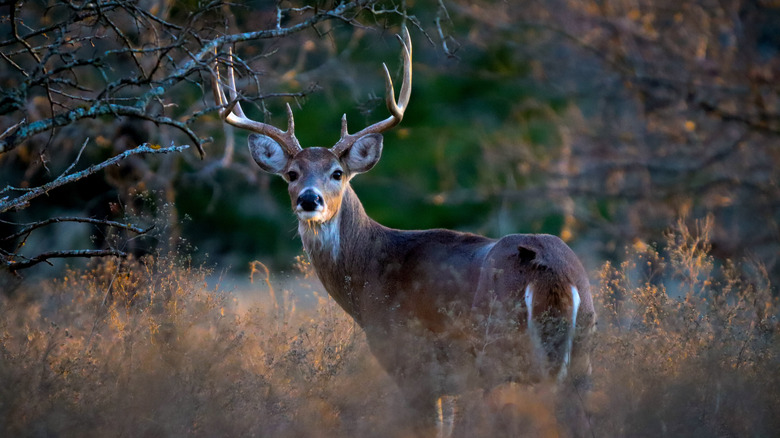
Most people don't think twice about crossing paths with a deer. In everything from Disney movies to holiday cards, they're romanticized as graceful, quiet, and often calmly grazing at the forest's edge. In residential areas, they're so common that many folks barely register them as wildlife at all. But despite their generally gentle demeanor, deer are capable of causing serious harm under the right conditions, and they're more dangerous than most people realize.
To be fair, deer are typically shy and avoid confrontation. But during rutting season (fall) or fawning season (late spring), that can change fast. A 2005-2006 study documented 13 separate attacks by white-tailed deer on a university campus, most involving protective does. Injuries including lacerations, broken bones, and blunt force trauma. In 2024, a Tennessee woman was seriously injured by a white-tailed deer in her neighborhood, in what state officials called an unprovoked attack (though one neighbor insisted the victim grabbed the deer's antlers). And although rare, fatal incidents have also been recorded.
With deer, watch for signs of aggression like flattened ears, head-lowering, or stomping (generally they use these to message their deer competition). Their hair may be standing on end. Also, never approach fawns, and avoid getting between a doe and her young. If a deer charges, try to put a tree or other solid object between you and the animal. Although these aren't common encounters, when they happen, they're a reminder that even familiar wildlife deserves caution and respect.
Owls
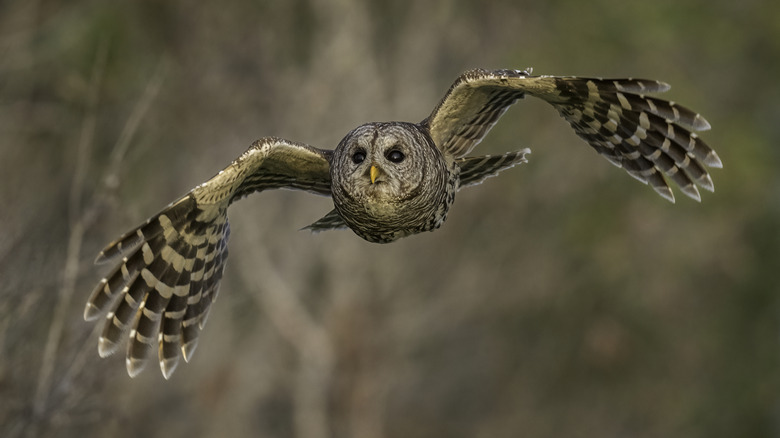
Owls don't exactly scream "danger" to us. Mysterious and soft-footed, they're more likely to show up in bedtime stories than backwoods horror stories. But under the right conditions, owls can become unexpectedly aggressive. And when they strike, you'll never hear it coming. Their wings are built for silent flight, and that's exactly what makes their attacks unsettling.
Great horned owls and barred owls are the most likely culprits when it comes to human encounters, especially during nesting season, which varies by region. That's when they get territorial, and more than a few hikers have felt the sting of their talons. In one case, a barred owl in Washington silently swooped down on a woman from behind, slashing her scalp before she even knew what hit her. Another man in Maine was dive-bombed by a nesting owl while skiing, resulting in a bloody head wound. And while these cases are rare, they're more common than many think, with injuries ranging from cuts to eye damage, possibly even death. The surprise factor alone makes them no joke to encounter.
If you're hiking in owl territory, stay alert. If you notice an owl circling or hear warning calls, slowly back away while keeping an eye on its movements. Raising your arms or holding something above your head can make you appear larger. And if you do get hit, treat it like a serious wound since predatory talons can tear skin and carry bacteria. A quick check-up is well worth the added peace of mind.