

Follow HGTV's Mike Holmes' Smart Advice On DIY Fence Post Installation
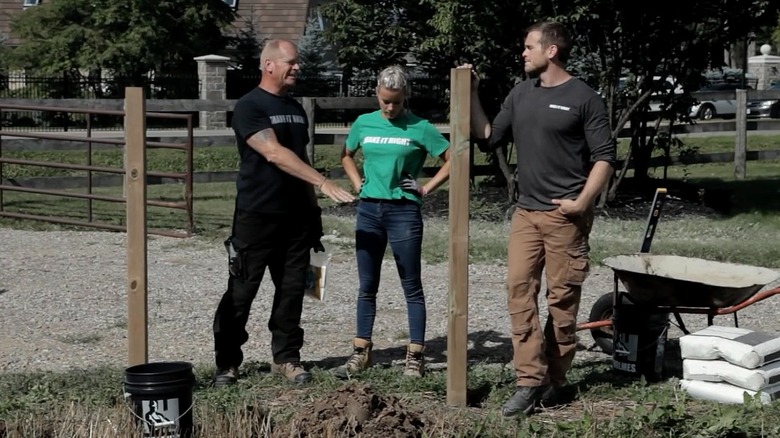
Fence construction can be daunting, especially if you have very little experience in carpentry. Not that you'll necessarily have to cut too many boards while building your barrier, but the act requires precision. If a single post is not straight, you will notice the results every day when you pour yourself a cup of coffee and glance outside. Wood settles with age, and therefore the posts become less straight over the years. For an old fence, this is a charming aspect that complements the landscape. For a new one, with fresh boards and a clean coat of stain, unevenness is less forgivable. That's why there are several tips you should follow if you want your fence to look right and last.
When preparing to build a fence, there is no better resource than Mike Holmes. For over 20 years, this Canadian general contractor has hosted HGTV programs focused on home improvement projects. In 2010, Reader's Digest found that he was the second most trusted person in all of Canada. His first tip for builders applies before you even purchase your material: check if you need a permit. Depending on where you live, local building codes may or may not allow you to simply put a fence in the ground without asking. While you're at the courthouse, also check to make sure that your property line is actually where you think it is. You don't want to start a feud with your neighbor, and you definitely don't want the courts to order you to deconstruct your work.
Before you start building, Mike Holmes recommends one more precaution. Call 811 before you dig. This nationwide service keeps track of where underground pipes and cables are located. The last thing you want is to jam your shovel into an electrical line.
Do not surround your fence post with concrete

Mikes Holmes doesn't recommend concrete bases as a method for setting fence posts. He says that it is a time consuming and labor intensive process. Instead, he suggests an expanding foam that will hold the post in place, specifically highlighting Sika Post Fix. The first thing you'll notice when you use a bag of this material is that it is incredibly light compared to concrete. Since you need to plant a post three feet deep, it takes about two bags of concrete to fill the hole. One bag of Sika Post Fix should easily do the job. The foam also doesn't require water.
A bag of Sika Post Fix contains two compartments. Once the substances in each of those compartments are joined, you have about 20 seconds to pour them into the post hole. Break the seal by tightly rolling one end of the bag against a hard surface like the ground or your knee, and mix everything up. Then, cut the corner of the bag and pour the mix into the hole around the post. The foam should quickly rise to just below the top of the hole and dry.
This method is preferable to concrete for several reasons, beyond the fact that it is so quick and easy to use. Concrete traps water around the post, causing the wood to rot away over time. As the wind blows against your fence, it will eventually break because they will be rotten and concrete has no give. Foam, on the other hand, provides structure without trapping moisture around your posts.
Do some research on the best materials for your fence
Most people go with wood as their fencing material, as it's also one of the cheaper options. Additionally, a wood fence will last 15 to 30 years as long as you take good care of it. Pressure-treated lumber is the most cost-efficient option, as it is treated with chemicals like creosote, copper, and imidacloprid (a type of insecticide) to protect it from rot and insects. There is also more expensive wood like cedar and redwood. But aside from budget, you should also keep maintenance in mind when putting up a fence and stain your fence every few years to protect it from the elements. Other forms of maintenance include replacing rotten posts and mending pickets.
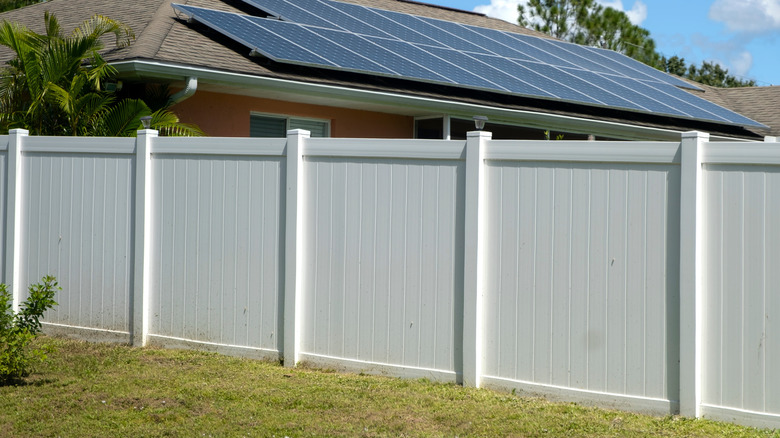
If you're in the market for something a little more expensive, then you can ditch wood and go with a composite material, like vinyl. If you go with vinyl, your fence will last about 10 to 15 years longer than a wooden fence might. Mike Holmes also argues that these materials require less maintenance. But you can't just put up a synthetic fence and leave it for 30 years. If the vinyl is white, mold will grow and stand out. They can be cleaned, however, and the best way to do it is by scrubbing them with a brush and soap and water. You can also mix vinegar and water as your cleaning solution.