

Things That Are Attracting Bears To Your Yard
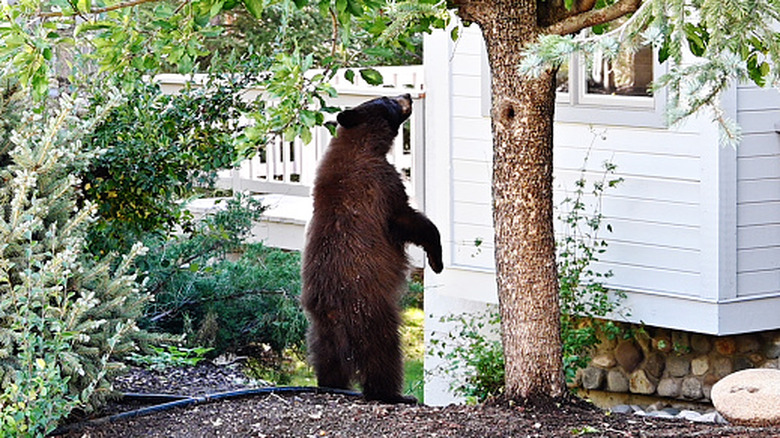
Bears are common throughout the United States and are frequently caught on security cameras doing all manner of things to yards and the contents. As amusing as these videos can be to watch, the potential for bears to return to the scene of the crime again and again is a serious concern. While there's no getting around the occasional interaction with wandering bears (if you live where they're common), the fact is, we do a lot (usually without knowing) to attract bears into our yards and gardens. From leaving garbage out, to keeping chicken or bees, to something something as unexpected as covering our hot tubs when not in use.
While their danger levels vary depending on the type of bear, there is no getting around the fact that bears can do serious damage to life and property. Sadly, bears that get too used to sourcing food from houses, cars, and yards sometimes need to be put down by wildlife authorities. As such, you need to be aware of what is attracting them so you can act accordingly and keep your yard — and the bear — safe.
Garbage bins
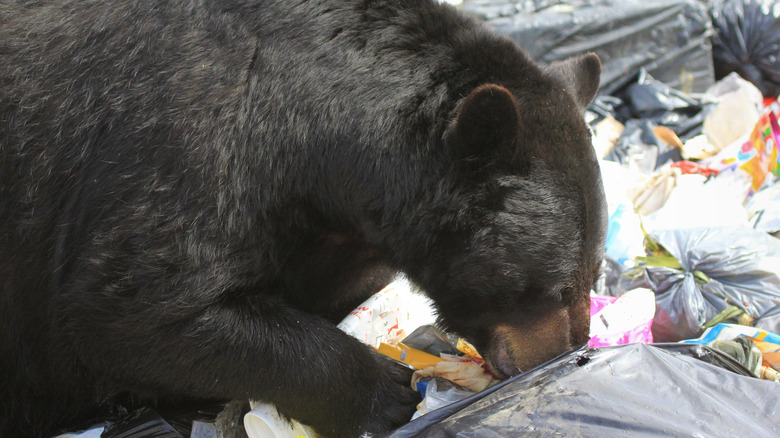
Keeping bears away from your home will never be as simple as just securing your garbage bins, but it is a good place to start. In many neighborhoods, municipal garbage bins are picked up once a week, and a week is certainly more than enough time for a bear to become interested in what might be inside of those bins.
Loaded garbage bins are by far one of the most common attractors for bears. As omnivores, they will be attracted to any food their noses pick up. Bears have a sense of smell that can reach in excess of several miles, so they can smell the remains of your roast chicken from way off in the woods. As bears become increasingly comfortable in suburban settings, it is not altogether uncommon to see them sniffing at or rifling through bins come trash day.
There are several things you can do to make sure that your garbage bins are safe(r) and more secure. You could invest in bear-resistant trash cans (some garbage services supply them on request), but a far easier solution is to keep the garbage secured in a bear-proof (as possible) structure or building. This could be a garage or a well-built shed. When possible, store particularly smelly garbage (think salmon skins) in the freezer until garbage or compost pickup day, and avoid putting garbage out til the morning of pickup, if possible.
Bird feeders
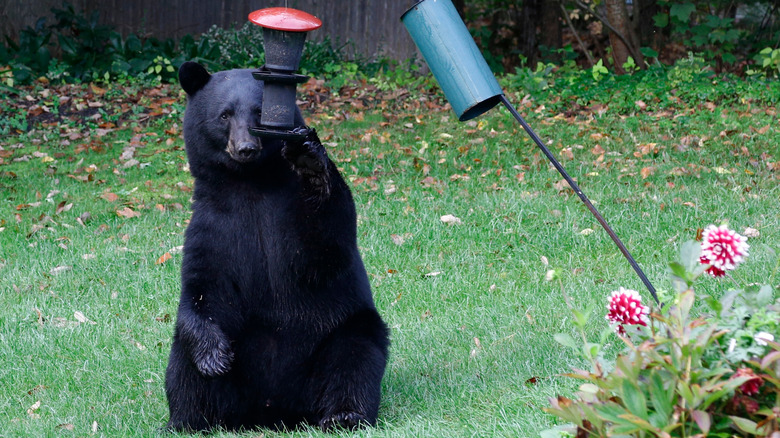
Bird feeders are a popular and simple way to get birds to flock to your yard. Not only is it charming to watch flyers gather round a seed or nectar feeder, but birds (hummingbirds especially) aid in the crucial act of pollination, leading to a healthier ecosystem. However, they also serve as a potential magnet for your ursine neighbors, and for good reason.
You see, whether you are feeding seed to song birds or are attracting hummingbirds with nectar, bears will smell those things and come looking to chow down. Bears require a lot of calories to survive — especially in the winter before hibernation — and both bird seed and hummingbird nectar are very high in calories. So, while you are likely to see bears any time of year at your feeders, there might be an increased chance of seeing them in the fall before bears disappear for their big nap.
What can you do to keep bears from getting at your feeders? First you can pull your feeder indoors when bears are particularly active, or at night. Check state and local guidelines, but you're likely looking at late spring through early fall. Hang feeders 10 feet or higher off the ground on a wire suspended between trees. Also, if you've found bears are really becoming a problem, just put your bird feeders away for a while. Your birdwatching can wait until the neighborhood is safe, and the birds will be fine until then.
Dirty barbecue grills
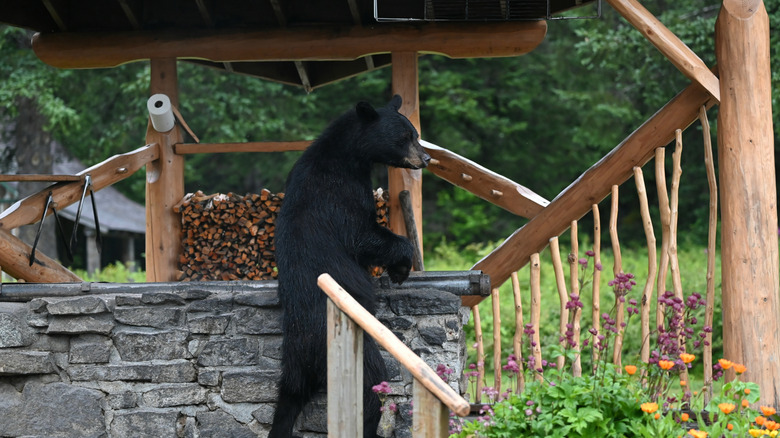
It may seem innocent enough, but a dirty grill can attract bears if they are hungry enough. Remember that strong sense of smell bears are endowed with? The wonderful smells coming off of your grill will waft on the wind, piquing a bear's interest from many miles away. The scents of steak, pork, chicken, and especially fish could have a bear wandering your way.
Thankfully, it's easy to prevent bears from poking around and potentially destroying your grill to get at the good stuff. Scrape and burn off any excess or stuck on food immediately after cooking on your grill. Also, be sure to clean out your grease trap after every use. Leaving it unattended will most certainly have more than just bears interesting in your grill (ants, raccoons, and other critters may be just as interested). If you're in active bear country, bring your grill indoors to a storage shed or garage once it's cooled down as an extra precaution.
Fruit trees
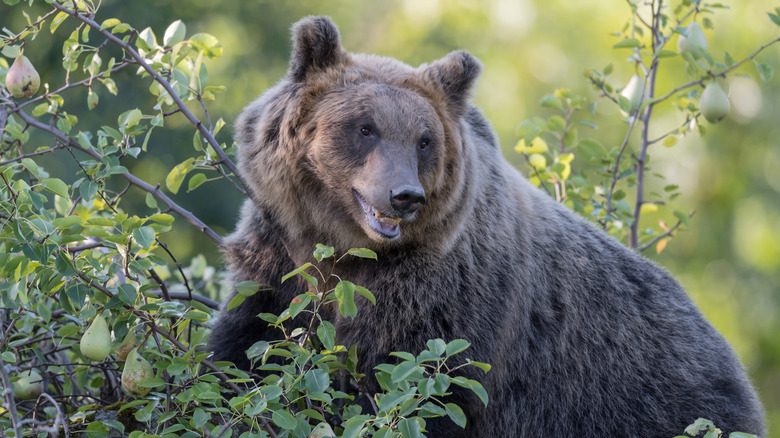
Not only are fruit trees a sustainable food source that can feed generations, but they add their own unique beauty to a property when they burst into bloom every spring. And while you might be more concerned with keeping insects and deer away from your fruit trees, you may want to reconsider planting fruit trees if you live in bear country.
It is important for all orchardists to realize that fruit makes up a large portion of a bear's wild diet. In fact, they are critical food for them in the lead-up to hibernation, as the sugars help bears build up fat stores for the long winter. This feeding cycle coincides with the ripening of certain tree fruits. As such, you could see a bear making its way through your apple and pear trees and ornamental berry bushes in the fall as it searches for those sweet, calorie-rich fruits.
Electrified fencing is without question the most effective way to keep bears and other larger animals out of your orchard. You can bait fencing with bacon strips to get bears to experience the dissuading shock. Fencing can be paired with other solutions, like scent deterrents and noisemakers for added effect. In addition, make sure to keep fallen fruit picked up, and continually harvest your trees as the fruit ripens.
Beehives
There is a reason bears and honey are so commonly linked, and it's not just because of Winnie the Pooh. Bears love honey for the nutrients it provides, as well as its sweet taste. As with berries and fruit, honey is a major high-calorie, nutrient-dense food, perfect for building up fat and energy stores. Bears also love the protein-rich larvae and any bees unlucky enough to be inside the hives at the time. And thanks to their thick skins, bee stings don't have much effect on bears.
If you are a beekeeper, there is a decent chance that bears will be attracted to your hives. Apart from eating all of your honey and bee larvae, bears will also totally obliterate the hives looking for every last drop. If your bees do not have a safe hive to return to, they will most assuredly die. Therefore, making sure your hive is protected is important for both you and the bees.
As with fruit trees, the best way to keep bears away from your hives is to install an electric fence. Do this around each bee yard, leaving 3 to 4 feet between fence and hive, so bears can't reach over or through the fencing. Use double-insulated wire rated up to 20,000 volts, but you're only sending 6,000 to 7,000 volts through it. That's plenty to keep a bear from trying to get at your hives again.
Livestock
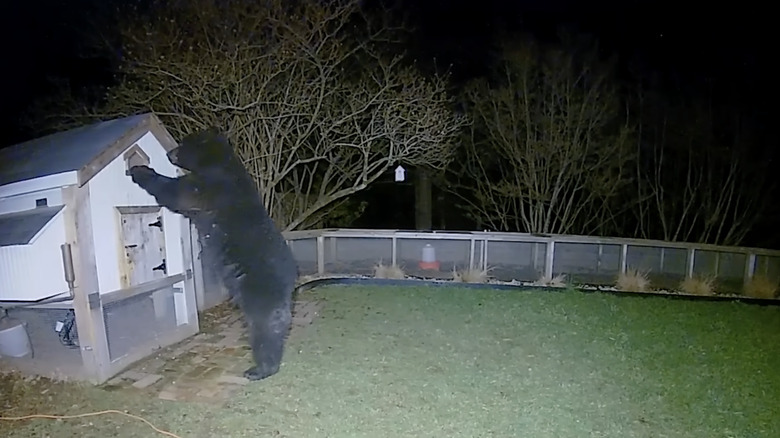
Bears are what are known as opportunistic carnivores. They will eat another animal if the opportunity presents itself. While we've all seen videos of them fishing for salmon in raging rivers, or even munching on a deer, wild animals are not the only meals bears are interested in. They are also keenly interested in livestock.
Bears will go after smaller livestock like chickens, ducks, or sheep before they go after larger animals like pigs and cows. The smaller animals do not pose any kind of threat to the bears, and if they are in a stationary paddock that is not properly secured, they make very easy targets. With hens, ducks, and turkeys, the bears are also attracted to the eggs, and the grain you feed your flock with.
Once again, electric fencing is essential for protecting property against bears. However, if you have the space, you could also build your flock a mobile structure and move it around your property. Having the animals in a different place every few days makes it harder for bears to discern the routine or predict where they will be next. Having guard animals and keeping your coop set up at least 50 yards away from the woods are further protective measures.
Pet food
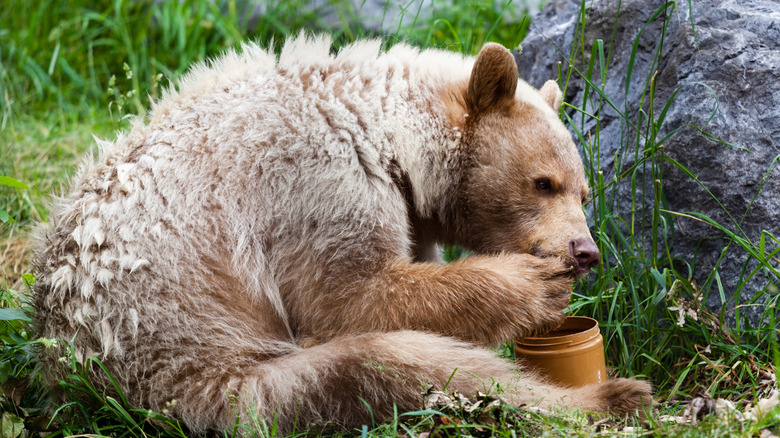
It should really come as no surprise that pet and livestock feed are also going to be primary attractors to bears. If your dog food can attract snakes to your yard, you can rest assured that it will also bring bears to your doorstep. Pet foods are rich in vitamins, minerals, and protein, all of which bears crave. As such, any improperly kept pet food is likely going to have them curious, especially if they are hungry.
If you feed cats and dogs outside, make sure you bring the pet food dishes inside when not in use, and clean them thoroughly before setting them back on the porch. If you have chickens, goats, or other livestock, keep any livestock feed in areas out of reach to bears. And remember to close garage and shed doors when you're not accessing them, or any storage strategies will be for naught.
Never leave unguarded bags of feed laying around or open. Apart from attracting rodents (or snakes!), bears will also be drawn to the smell of pet food. Secure feed for livestock inside well-sealed metal containers so the smell doesn't carry. And if possible, keep pet food indoors all together.
Camping coolers
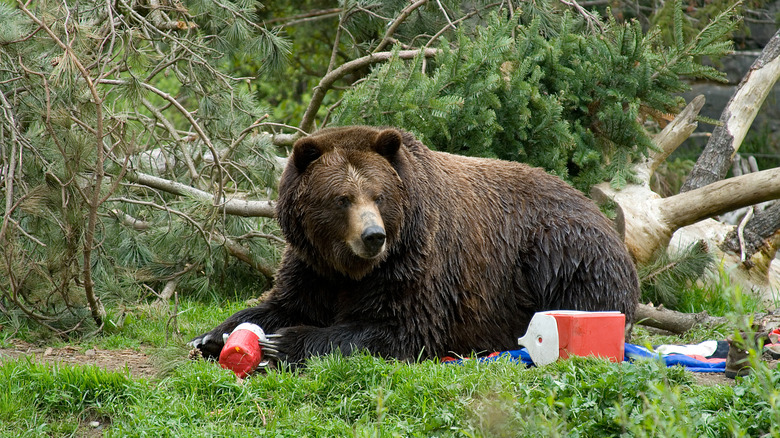
Anyone who camps knows that leaving your cooler out overnight is one of the worst mistakes you can make while out in the woods. The scent of food wafting from the thinly insulated walls of your cooler can attract any number of unwanted creatures to your campsite. But perhaps the most unwanted, and frightening of all, are bears, which are also more determined and more capable of breaking into most coolers.
But the cooler issue is not limited to the camp ground. As we've previously learned, any time you store food in a container outdoors, its scent has the potential to attract wildlife. And even if the seal on the cooler, or outdoor freezer, is strong, the fact is that the scent still lingers and will have a bear curious as to what is inside of it.
Therefore the same rules that apply while camping apply at home. After a cookout or other outside event, don't leave the cooler you've packed with food outside. Bring it inside or store it securely in a shed or garage. But what if a cooler is rated as "bear resistant" or "bearproof"? Even a bear-proof cooler can be broken into if a bear has enough drive to get at what is inside.
Hot tubs
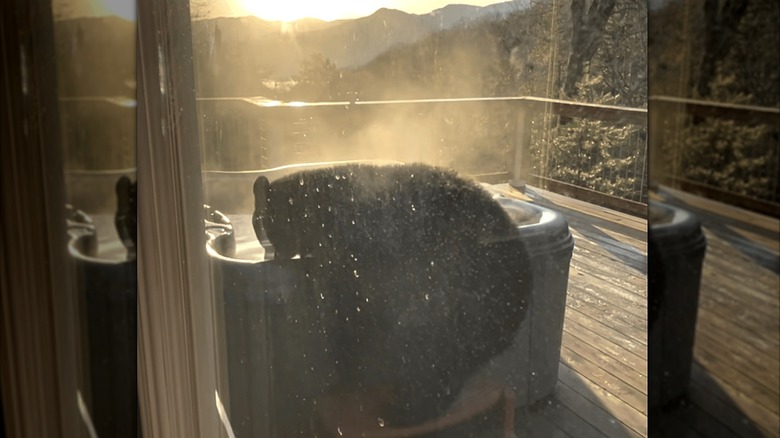
This one may seem a little weird, but hear us out — there are myriad funny videos of bears making their way into someone's hot tub. And while the sight of a massive ursine taking a dip in someone's hot tub may seem just a convenient way to warm up, the fact is that the chemicals found in hot tub covers give off a scent that is incredibly attractive to bears.
Many hot tub covers are made with insulation materials containing formaldehyde. As formaldehyde off-gasses it releases a compound called formic acid. Bears are drawn to formic acid because it is the same compound emitted by the ant colonies that they eat. As such, when a bear is tearing apart your hot tub cover, or any other padded cushion or cover you have on your property, it's hunting for ants because the formic acid is tricking it into thinking the bugs might be present. The hot water is just a bonus, as far as the bear is concerned.
One (perhaps obvious) way to prevent this is to look for hot tub covers that do not contain formaldehyde, such as versions made from aluminum(which are also more durable if a bear still decides to investigate). Stash removable parts, like foam seating, indoors when not in use. You can also spread garden lime on top of your cover, then shield it with a tarp. The alkaline lime neutralizes the formic acid gas, thereby preventing bears from being interested.
Compost or natural fertilizers
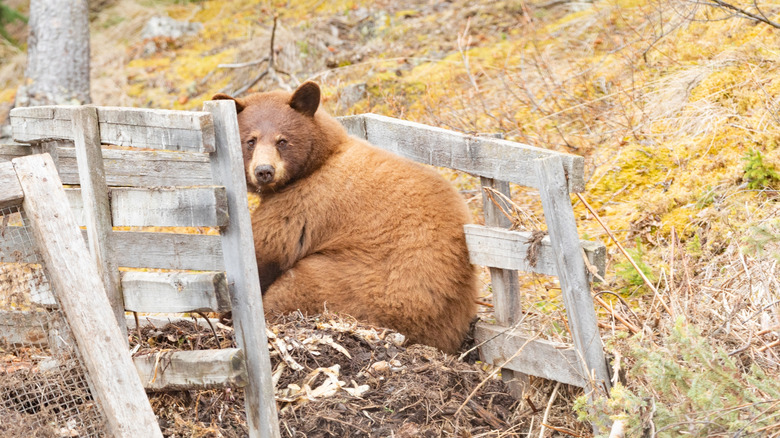
Compost is organic matter that breaks down into rich, loamy soil over time. You can toss in cardboard, paper, grass clippings, leaves, and other items without much concern for what might come to rifle through it (in fact, you want bugs and worms to come muck around). However, when it comes to disposing of food scraps, you need to be careful because certain types have the potential to draw bears.
While there are many who say that meat scraps, bones, and fish are items that you should never compost, the fact of the matter is that these items can provide essential nutrients to your compost pile, when composted properly. If you just dump the meat or fish scraps willy nilly on top of your compost pile, that scent is going to attract bears (and rodents) to come digging through. Since many gardeners have their piles near their homes or other structures, failing to properly compost meat and fish scraps could be very dangerous (and smelly).
The proper way to compost meat scraps is to bury them at least a foot deep into the pile. Cut larger chunks into small pieces, make sure you maintain a high heat to kill pathogens, and turn your compost frequently. This all allows meat to compost faster: The interior of the pile is where the necessary heat is, and the depth helps cover up the scent of the meat. You can also compost in a sealed bin or tumbler, both of which are difficult for bears to open.
Deer feeders
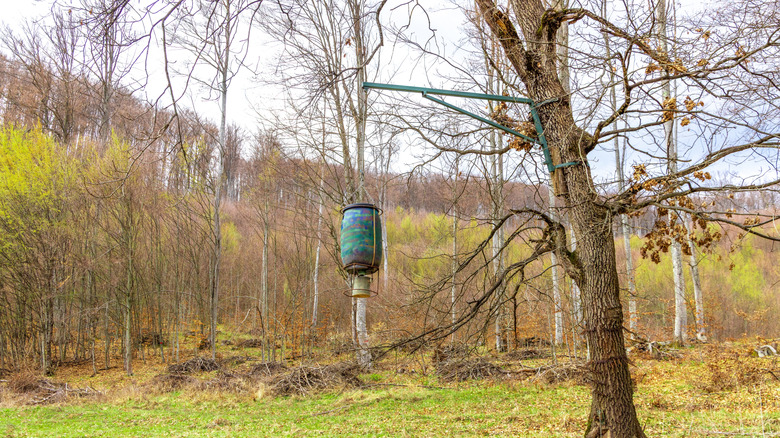
Whenever you feed wildlife there is always a chance that you'll be attracting more company than just the animals you hope to see. Once again, bears are highly opportunistic when it comes to sourcing food, and increasingly comfortable around people. As such, it's important to know that by feeding wildlife you've increased the likelihood of a bear making a visit.
If you have a large property and the feeder or salt lick is way off in the woods, it shouldn't be much of a problem. You'll want to be careful when visiting the feeder, but if the bear is far from your home, the safety risks are relatively minimal. If you have one closer to your house in your own backyard, things could get dicey very quickly.
Deer feeders are common attractors for bears, as they contain tasty grain and bring tasty deer to feast on. One option is to fill it with soybean — which bears don't care for — instead of corn. You can also protect your wildlife feeder in a similar manner to the bird feeders we mentioned earlier, keeping it elevated 8 feet in the air on a strong wire, and stashing it indoors when not in use. Or set up an electric fence barrier that deer can jump, but bears can't.
Unlocked cars or porches
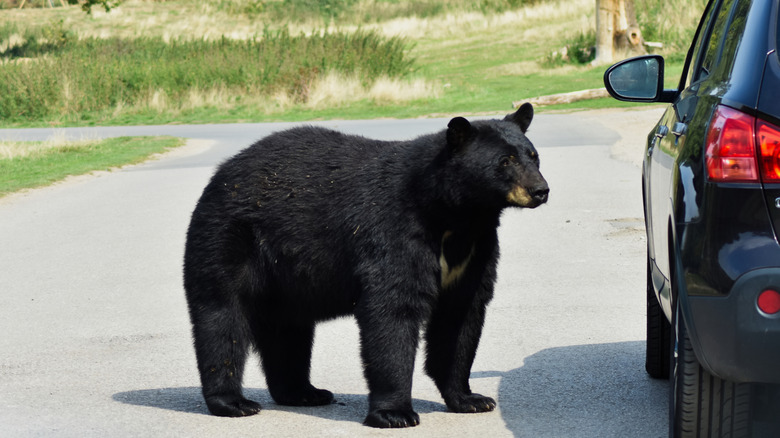
It should come as no surprise that your car is not the best line of defense when it comes to bears. There are so many reports and videos of bears making their way inside of cars to check out what's inside. While it is definitely true that a car with its windows rolled up will be more difficult for a bear to access, it is not impossible. However, if you've ever left your car windows open in the summer and there was food inside, that's a huge attractor to a bear. It doesn't matter if you're car camping, or just forgot some groceries. If there is food inside, a bear will want to get at it. In fact, even with the doors locked, it looks like your car isn't safe from bears. Basically, don't leave any food, leftovers, groceries, animal feed, or anything else inside your car that a bear might smell, causing it to investigate.
Another weak point on a property could be your porch. Whether it is open or screened in, your porch is not a particularly secure point in your home. If you ever leave food out there, or the aforementioned unclean grill or food cooler, a bear can very easily walk up the steps of your porch and have a field day. And don't think that the screens are going to make much of a difference. A bear can swat through a porch screen like a hot knife through butter. If you feed your pets (or strays) on the front porch, be diligent about only setting the food out as needed, cleaning up afterwards, and don't leave anything overnight.