

Say Goodbye To Grubs In Your Lawn With The Help Of An Unexpected Trick
We may receive a commission on purchases made from links.
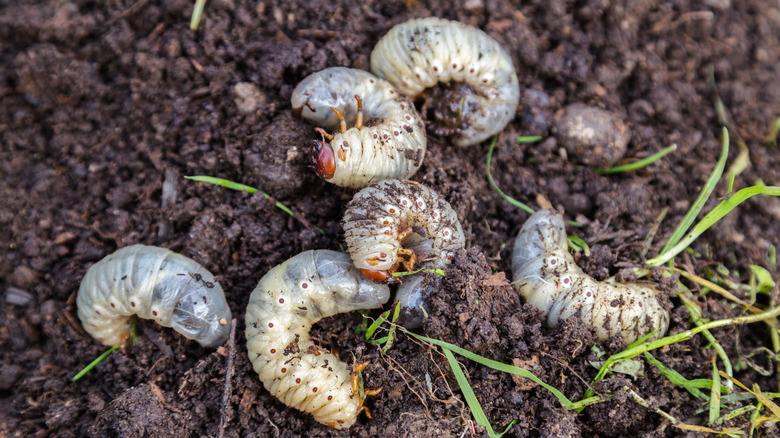
Got grubs making their home in your lawn? If you have brown patches in your grass that never seem to perk up or turn green again, it could be grubs eating up all the healthy organic matter in your soil and chomping on grass roots. While there could be other reasons why your grass is growing in patches, a quick dig will reveal the culprit if it is grubs. Grubs are the immature stage of scarab beetles, which include June bugs and Japanese beetles. While it could be one of these or any other grub, if it's Japanese beetles, you can keep them out of your garden with something called milky spore. Unfortunately, this treatment won't work on any of those other scarab beetle grubs.
There are plenty of reasons you'll want to combat the Japanese beetle grubs. If allowed to reach maturity, the Japanese beetles will continue to torment your yard by feeding on other plants. According to the USDA, there are over 300 agricultural and ornamental plants that the Japanese beetles enjoy dining on. They feed on the leaves of your plants until like look as if they're made of lace. The beetles can also spread if you move plants or dig up soil in infested areas.
How to use milky spore against grubs
To effectively target Japanese beetles, you'll want to use milky spore before they evolve from their grub stage. That means you need to know a little bit about their life cycle to determine how and when to use grub control. The USDA says the pupae stage comes in late spring, which is when they start their metamorphosis into adult beetles. They remain in the pupae stage for about two weeks. It's in early spring that the grubs will come closer to the ground's surface to feed on your lawn and garden roots, and this is when you will want to start thinking about hitting them. You will want to ensure that the soil temperature has reached at least 60 degrees Fahrenheit and stayed there for a few weeks.
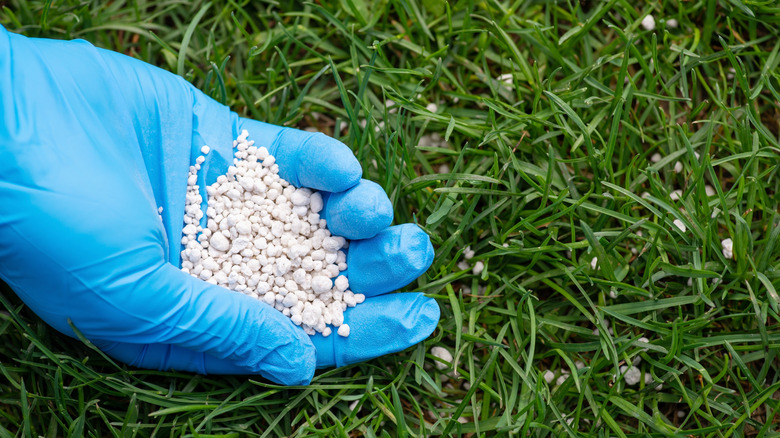
You can purchase milky spore powder on Amazon, and it's also available in granules. You'll want to wear protective gear when working with milky spore, as it can cause irritation — eye protection, breathing protection, and gloves will come in handy. Treat it like you would any other pesticide. Don't target only the spots you know there is grub activity; you'll want to cover your entire lawn to ensure you get all of these little critters before they reach adulthood and torment more of your plants. Use a spreader to make this task a little less time-consuming. After sweeping the lawn, apply the milky spore and then water it in to help the spores penetrate the soil and reach the grubs. While one application is usually enough, you will want to apply again the following spring.