

HGTV's Mike Holmes' Smart Money-Saving Tip For Using Cedar On Your Deck
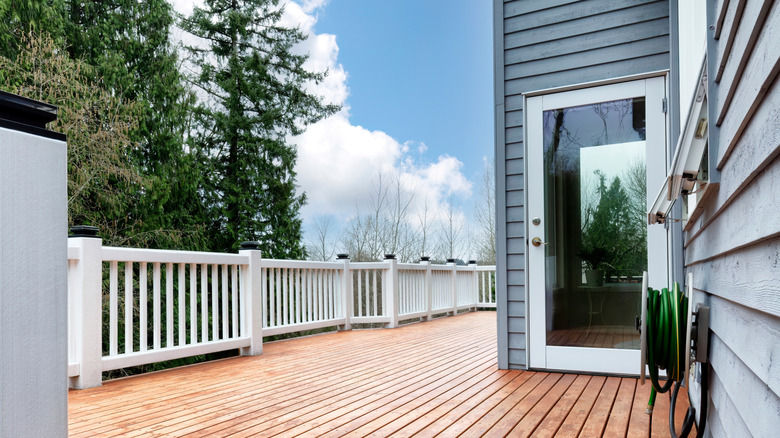
Both cedar and redwood are popular choices for decking, thanks to their warm, inviting hues that can add beauty and elevate your outdoor entertaining space. Their rich colors can provide a natural elegance that will complement your garden and other backyard elements. Combine that with their naturally woody scent, and it's easy to see why decks made from these timbers are so appealing. Whether you choose white cedar, red cedar, or redwood, their natural oils and tannins will protect them from decay, mold, and insects. With regular maintenance, a cedar deck can last 15 to 20 years or more, while one made of redwood will remain structurally sound and looking great for 25 years or longer.
Both woods stay relatively cool underfoot, making them comfortable to walk on — even on hot days. And while cedar or redwood decks are outdoor updates that can add serious value to your home, they can come at a price. Meanwhile, projects made of pressure-treated lumber like pine will likely cost significantly less than cedar or redwood ones. Pressure-treated lumber is also sturdy and resistant to weather and pests, though it lacks the natural beauty of cedar or redwood and often has a greenish tint. That said, painting or staining it can improve its appearance, and utilizing this lumber instead of cedar or redwood may save you significantly — premium woods can cost up to three times more than pressure-treated lumber.
Using pressure-treated wood and painting or staining it to achieve the look you want is one option. But if you're set on cedar or redwood yet wary of the cost, renovation expert and HGTV star Mike Holmes recommends a clever strategy that will allow you to enjoy the warmth, beauty, and durability of these premium woods without breaking the bank.
How Mike Holmes suggests you can build your deck for less
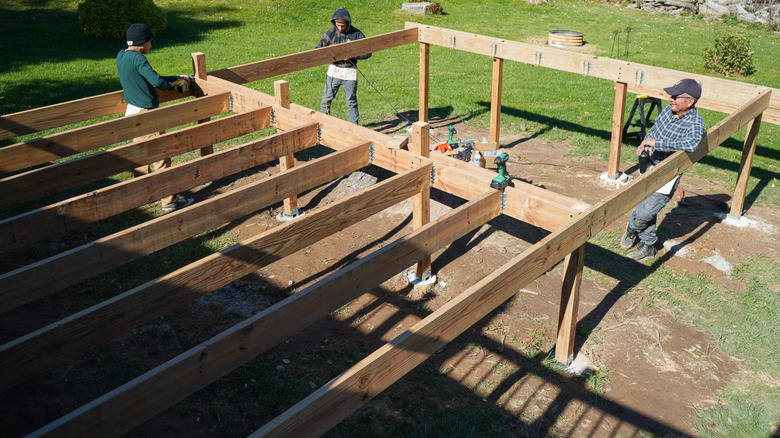
Pressure-treated wood doesn't have the natural beauty of redwood or cedar, but it's widely respected by contractors for its durability, resistance to rot and insects, and performance. It's regularly chosen for outdoor projects like decks and fences, and for structural framing because of its proven strength and reliability. So why not use pressure-treated wood for the structural framework of your decking project — its joists, beams, and posts — essentially the "bones" of your deck, and reserve the pricier cedar or redwood for the most visible, eye-catching elements, like the decking, railings, and bannisters? By following this approach suggested by Holmes, you can combine cost-effectiveness with the visual appeal of a premium wood.
The cedar or redwood boards and railings will provide warmth, a rich color, and natural resistance to your outdoor space, giving your deck a luxurious, long-lasting finish. This tactic will reduce the overall cost of your project while also enhancing its durability and lifespan. Utilizing pressure-treated wood will ensure that the hidden framework of your project will remain strong and safe for years, while the cedar or redwood surfaces will deliver the aesthetic impact you want for entertaining friends and family and for your everyday enjoyment. By blending the affordability and toughness of pressure-treated lumber with the premium beauty of cedar or redwood, you'll find that your deck is both functional and visually stunning — creating an outdoor space that's inviting, durable, and timeless — all without breaking the bank.