

Plants That May Just Be Attracting Ants To Your Garden
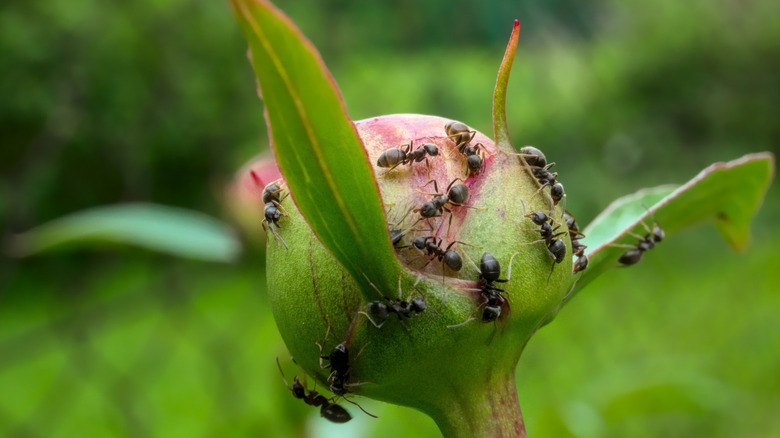
There are many plants that are likely to attract ants into your garden, from fruit and oak trees to gorgeous flowers that bring rainbow hues to your beds every single season. And while your first instinct when you see a black cloud of ants moving about your blooming borders is to reach for the insecticide, the relationship between ants and a large number of floral species is actually one of mutual benefit.
Some plants, as you'll discover in this guide, can actually benefit from their presence. Ants often help with seed dispersal, thus enabling certain plants to naturalize themselves. What's more, they can eliminate the threat of certain pests, reaping the rewards of the protein that such pests have to offer while saving the plant from their prey's voracious and herbivorous appetites.
Unfortunately, it's not all good news. Even plants that benefit from a healthy ant population can prove a nuisance to homeowners if they're making a home for themselves in areas close to where humans spend time. What's more, some plants tend to attract aphids, which in turn attract ants. Instead of eating the aphids themselves, ants actually prefer to "farm" them, keeping the aphid population healthy in return for the nutrient-rich honeydew that aphids secrete. In other words, if you have plants that are attractive to aphids, then a sudden influx of ants can be bad news indeed.
Peonies (Paeonia spp.)
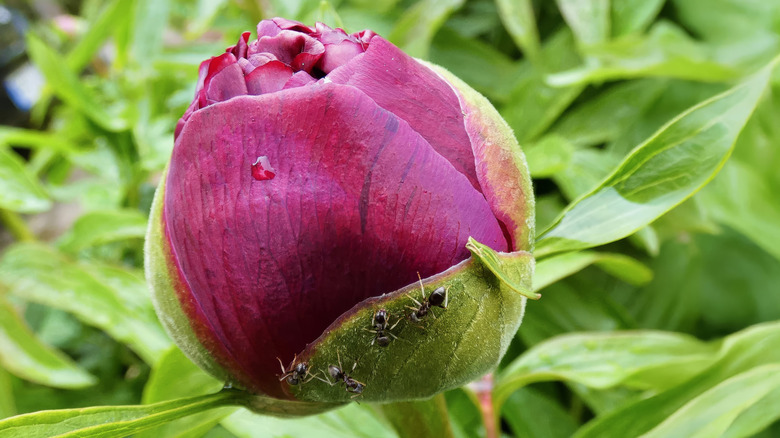
Peonies (Paeonia spp.) are one of those rare perennial flowers that won't leave your garden once established. Yielding beautiful blooms of white, pink, red, purple, yellow, and even coral (depending on the specific species) they are also fabulously fragrant, nourishing the noses of anybody lucky enough to have them in their flower beds. However, they are also immensely popular to a variety of ants, who are drawn to peonies' flower buds and the sticky-sweet nectar they secrete.
Before you reach for the insecticide, remember that, as far as your peonies are concerned, ants are not a problem. In fact, unless you're starting to notice legions of ants queueing up for nectar right next to your house or patio, it's usually best to leave them be. Ants, who know very well where their bread is buttered, are only interested in your peonies' nectar and won't harm the plant at all. And in return for a solid, regular meal, they will fight hard to defend your peonies against other herbivorous pests.
Nasturtiums (Tropaeolum spp.)
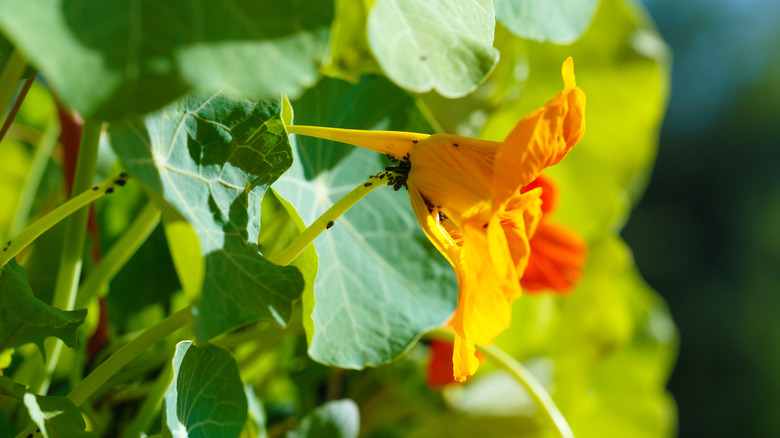
Nasturtiums (Tropaeolum spp.) are one of many fantastic companion plants to grow in your garden. What are companion plants, you ask? In short, they are complementary plants that support one another in a variety of neighborly ways. Some work to deter pests, like lavender (Lavandula), whose fragrance is utterly repellent to insects like aphids and mosquitoes. Others, like nasturtiums, are so attractive to pests that they effectively distract them from eating the flowers next door.
This strategy is known as "trap cropping," and when it comes to diverting aphids from other plants, it can be remarkably effective. The only real issue you're likely to have is if ants get wind of what you're up to. If they do, not only will they protect aphids from predators and thus help populations to boom, but they'll also help them to feed. And they won't just move aphids to different areas of a plant to find food. They'll move them onto different plants entirely, which can spell doom for those you were hoping to protect.
Hibiscus (Hibiscus spp.)
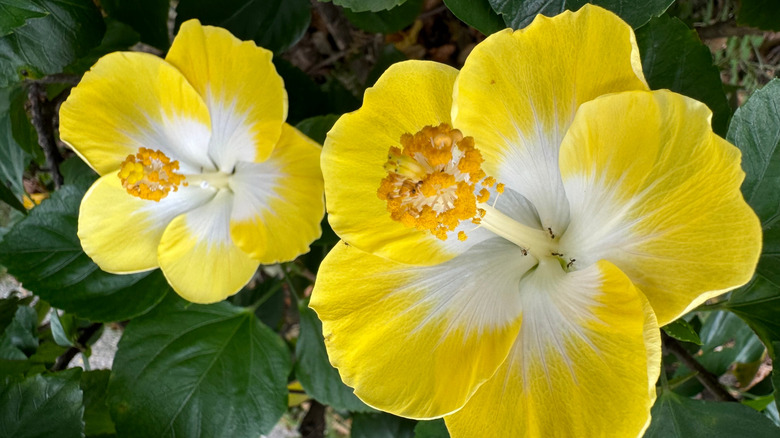
Hibiscus (Hibiscus spp.) plants are similar to roses as far as their relationship with ants is concerned. Hibiscus produces nectar at the base of each flower, representing a decent meal for any ant willing to climb for it. This may seem harmless, and in fact, the act of eating the nectar does no harm to hibiscus whatsoever.
Unfortunately, it's not only nectar that makes hibiscus so attractive to ants. Hibiscus plantings also make a tempting feeding ground for aphids, which, even without ants' assistance, can cause damage if allowed to gorge unchecked. This can be mitigated somewhat by the presence of predators like ladybirds. However, once ants discover a thriving aphid colony, they'll move in to guard and "farm" the insects in exchange for the honeydew they produce.
Now, this doesn't mean that you should avoid planting hibiscus. It just means you should be vigilant for signs of ants and aphids, and potentially alter your planting scheme. Pairing hibiscus with plants like fennel (Foeniculum vulgare), dill (Anethum graveolens), and marigolds can discourage pests from invading your patch, including ants and aphids. These plants also attract ladybirds, who naturally feed on aphids.
Fruit trees
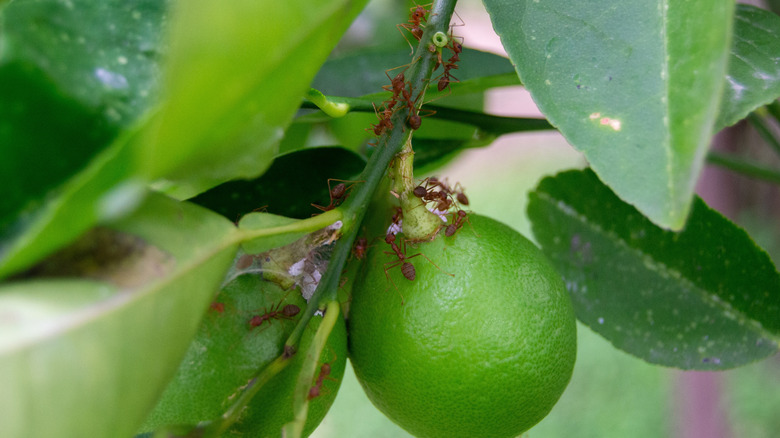
You're probably not surprised to hear that ants like fruit trees. If your trees leave you with an embarrassment of riches every year — fruit that ends up littering the ground around the trunk — you've likely encountered more than a few opportunistic ants. Their presence isn't necessarily a problem, since they'll largely go after the overripe — and therefore very sugary — fruit that's already fallen.
However, if you spot an army of ants on the march underfoot, and then look up to find your tree leaves adorned with aphids, there's a good chance the ants have made the same discovery. When this happens, there could be a serious problem. Aphids will suck the tree's sap and damage the leaves, aided by ants who are all too happy to see your tree's aphid population — and the resulting supply of honeydew — boom.
If this sounds familiar, then there is a method that could easily remove pests from your fruit tree. First, you'll need to lay a tarp around the base of the tree. Depending on its age and therefore size, you may then be able to physically shake the tree and remove a lot of the aphids. You can also use a padded pole to bash the branches and dislodge them. Finally, and especially for larger trees, you can spray the tree down to remove the bulk of the aphids. The tarp will collect most of them, and provided that you wash it well away from the tree, those shaken loose will be unlikely to find their way back.
Sunflowers (Helianthus spp.)
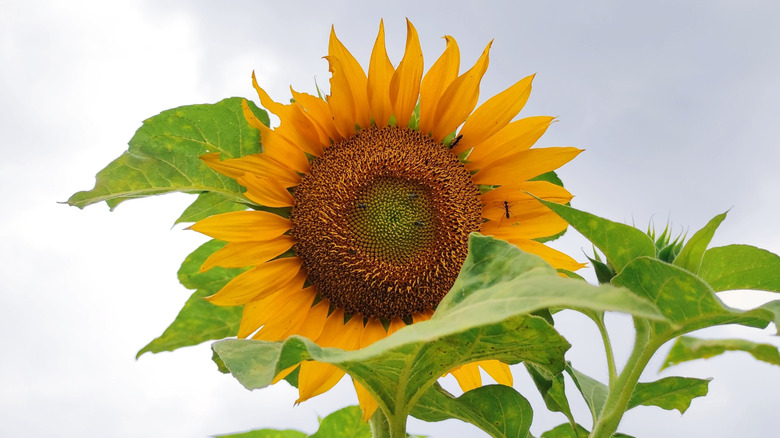
Sunflowers (Helianthus spp.) are very easy to grow, lovely to look at, and are superb plants for attracting birds like cardinals into your yard. However, the extrafloral nectaries on their leaves and stems secrete sweet nectar, which is immensely alluring to ants. This might not sound like a bad thing. After all, biodiversity is surely a goal that every gardener shoots for.
The problem is that sunflowers also represent a tasty meal for aphids, and unlike ants, aphids don't just go after the nectar. Once established, aphids can quickly drain the plant's sap and stunt its growth. And while aphid populations can usually be considered part of a healthy, bio-diverse garden — often managed by the presence of natural predators like ladybirds — when ants join the party, things can get out of hand quite quickly. Ladybirds suddenly have to fight very hard for their meal, while the aphids, in contrast, are able to enjoy the easy life with ants waiting on them hand and foot.
Bromeliads (Bromeliaceae genera)
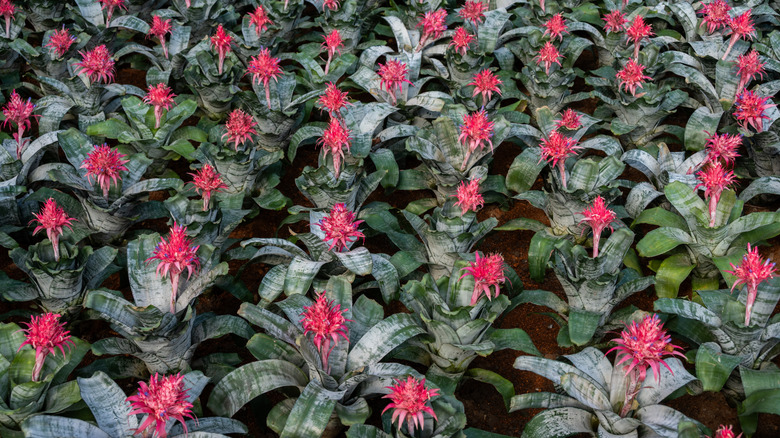
While bromeliads (Bromeliaceae genera) certainly attract ants, their presence is actually something that should be celebrated. This is because they form a mutually beneficial, or symbiotic, relationship. The plant itself provides welcome shelter for colonies of ants in the water-holding pockets at the base of the leaves. In return, the ants, as a result of their constant foraging, bring additional nutrients back to the plant site, thus enriching the soil and helping it to thrive.
Having said that, ants might still be undesirable if your bromeliads are growing right next to your home or outdoor seating area. And while ants should, ideally, be left to their own devices as they make a home for themselves in this particular plant, bromeliads don't need the extra nutrients from ants to survive. In other words, even if you have to take preventative action, your bromeliads will continue to grow just fine.
Asparagus (Asparagus officinalis)
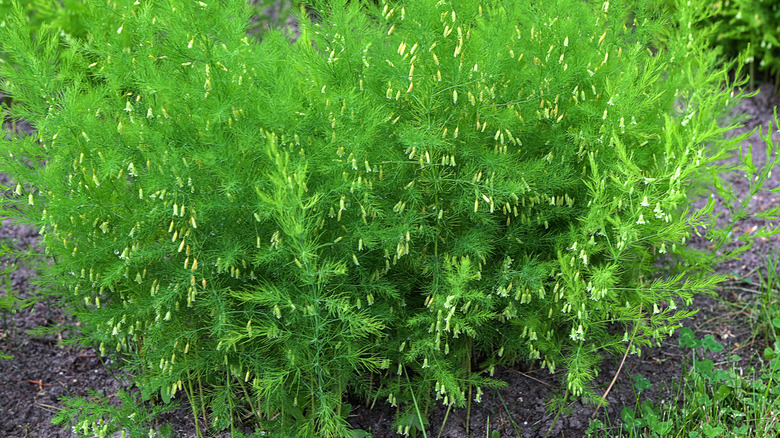
If you love asparagus (Asparagus officinalis) and are finally planting your own patch of it in your garden, then be warned. It is highly attractive to ants. It's not that the ants want to eat those gloriously green spears, although who could blame them if they did? Rather, the issue stems from the fact that asparagus aphids, as their name suggests, are more than partial to the taste of this spring shooter.
These annoying asparagus eaters are typically found munching away at the ferns of asparagus plants, which can cause a lot of damage to your patch and even lead to stunted new growth. The other issue — and the reason asparagus is featured in this guide — is that, where there are aphids, there are also likely to be ants. And since ants like to farm aphids, in order to reap more and more of the sweet honeydew that they secrete, your pest problem risks growing exponentially. Before long, you could be left with no asparagus (and probably less hair) and wondering why you ever bothered to plant it in the first place.
Bloodroot (Sanguinaria canadensis)
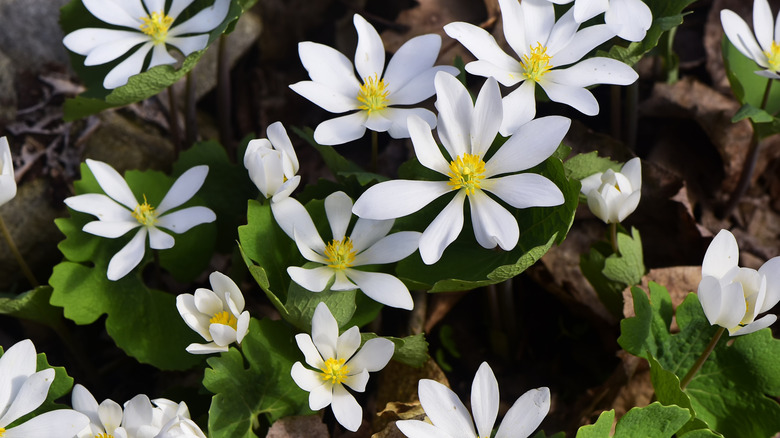
Bloodroot (Sanguinaria canadensis) flowers are beautiful to behold, but one issue you might find after planting them is that they tend to spread very quickly. They do so via two unique methods. One is by shooting underground stems, known as rhizomes. These spread horizontally — similarly to the rhizomes of other invasive species, like running bamboo (Phyllostachys spp.) — and will continue to do so if not properly contained.
Bloodroot also naturalizes itself via myrmecochory — a fascinating process in which ants play a crucial role. The plant's seeds actually form as part of specially-evolved fatty structures called elaiosomes. These are irresistible to ants, who tend to pick them off and carry them away to their nests. Once there, they eat the good stuff — that is, the seed's fatty appendage — and since they have no need for the seed itself, they discard it. From there, the seed is able to germinate and begin the process once more.
This is a fine example of how ant hills can be beneficial to your garden. However, since it's only one of two ways that the plant spreads itself, you ought to keep an eye out for new growth. Seeing a plant thrive is always rewarding for a gardener, but with ants carrying seeds across your garden, you could well be surprised by the areas in which this plant starts to shoot up.
Clematis (Clematis spp.)
Clematis (Clematis spp.) are one of several plants you should think twice about growing next to your house. Certain types, like sweet autumn clematis (Clematis terniflora), grow with strong, twining vines, which can put a lot of pressure on structures like fences and the walls of your home.
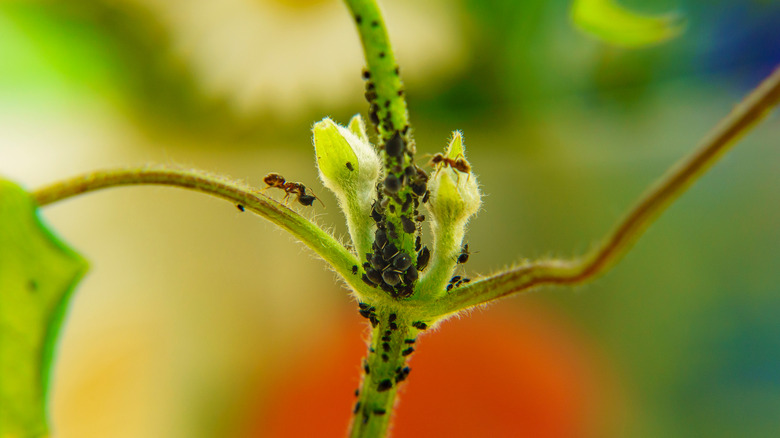
Another reason to avoid planting clematis, of any type, near your home, is that they are likely to invite ants. While not inherently attractive to ants as they are, clematis represent a very tasty meal for aphids, which in turn encourages ants.
With both ants and aphids present, your clematis faces double trouble. Without the help of ants, aphids will feed from your plant, but they may not necessarily suck the life out of it. With their help, they just might, and potentially very quickly. As the aphid population booms (thanks to the ants' ongoing defense against predators), they continue to hitch rides on the backs of their benefactors to juicer parts of the plant. You'll be amazed by how quickly aphids can ruin your clematis.
Northern catalpa (Catalpa speciosa Warder ex Engelm.)
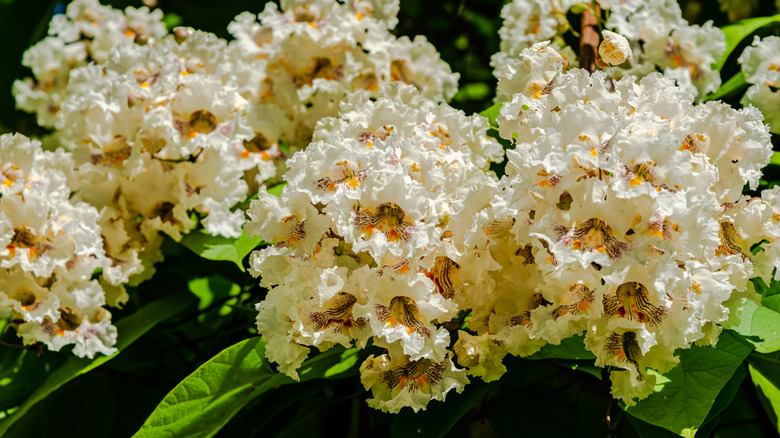
With beautiful blooms reminiscent of orchids, northern catalpa (Catalpa speciosa Warder ex Engelm.) are unsurprisingly popular among those hoping to add beauty to their gardens. Just know that they also have extra-floral nectaries which are a boon to hungry ants, and if grown near your house or patio, could invite them to crawl through your living spaces. Now, while you might think that ants are harmless, remember that they've probably travelled through dirty, even grimy areas to get there. This means they can spread potentially harmful germs — not what you want in your kitchen or outdoor dining area!
Provided that you grow this plant away from your house, however, the sight of ants should be welcomed. In return for the juicy goodness that its nectaries provide, ants will fiercely guard the plant against the machinations of various leaf-eating pests, including sphinx moth caterpillars. It's truly a remarkable relationship; as soon as these caterpillars begin to feed, catalpa starts to secrete extra nectar from its leaves. This increase in production attracts ants and other insects, who either eat or remove the eggs from the plant, thus ensuring it escapes the predations of even the hungriest caterpillars.
Partridge peas (Chamaecrista fasciculata)
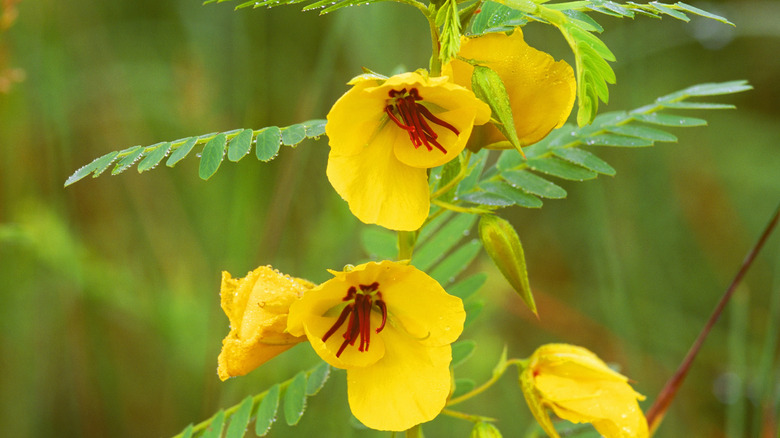
With their extra-floral nectaries towards the base of the plant, partridge peas (Chamaecrista fasciculata) are attractive to ants who love to feed on that sweet, sugary nectar. In return — and in order to secure an all-important food source — ants will gladly defend the plant against plant-eating insects.
In other words, if your garden has partridge peas, then the presence of ants could well be a good thing. The only issue is that partridge peas are renowned for their ability to spread. They do so via a process called autochory, which sees their seed pods dry out, then twist open and fling seeds a surprising distance. What this means is that, if left unchecked, your fast-growing carpet of partridge peas could also be home to a fast-growing colony of ants. This might not be a problem, depending on where they spread, but if you have them growing close to your home or outdoor dining areas, you may want to keep both plants and ants in check.
Roses (Rosa spp.)
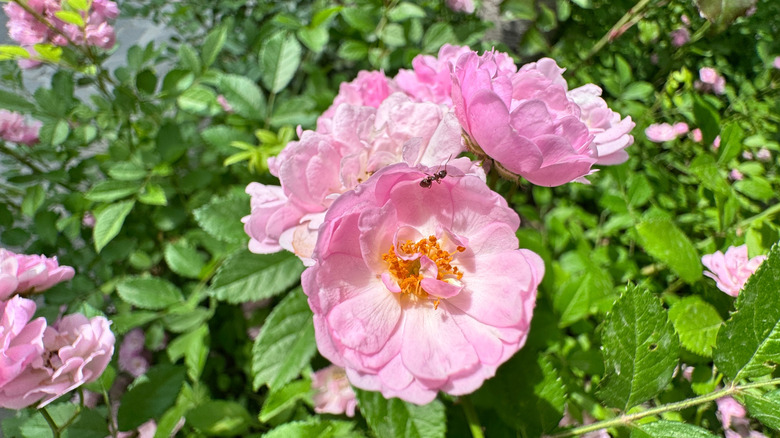
Roses (Rosa spp.) are attractive to ants for two main reasons. One is that roses produce their own sticky, sugary nectar, which is highly nourishing to populations of ants. The other is that they are immensely attractive to aphids, who feast on the plant's sap and produce honeydew. While such bio-diversity might sound like a good thing, by now in this guide, you should know that it's really — categorically — not.
Ants and aphids share a symbiotic relationship — each benefits the other. Ants protect aphids from predators like ladybirds, and will even move them to nutrient-rich parts of a plant that have yet to be tapped. The reward for such altruism? Honeydew — the sticky liquid secreted by aphids when feeding. Ants love honeydew, and by effectively farming aphids, they can secure for themselves a lucrative source of nutrients. In other words, while an aphid infestation is the last thing you want to see on your prized roses, the ants in your garden are well and truly for it.
With this in mind, it can be worth sowing companion plants for your roses. You could plant something like lavender (Lavandula), whose relaxing scent is often enough to keep pests like aphids away altogether. Alternatively, you could consider planting a trap crop, like nasturtiums (Tropaeolum spp.). Whereas plants like lavender tend to repel pests, trap crops serve a rather more sacrificial purpose. Because nasturtiums are so attractive to aphids, they can be used to great effect as a distraction — preoccupying your sap-sucking invaders and saving your most precious plants from the worst damage.