

Protect Your AC Unit From Harsh Winter Weather With These Simple Tips
We may receive a commission on purchases made from links.
With winter weather on the way, odds are you won't be running your central AC for awhile. However, while you may not need your AC when temperatures dip, if you want to keep you cool again when the weather warms again in the spring, you need to protect it from the chilly elements. Luckily, this is not a very complicated process. The main focus should be on preventing corrosion, rust, mold, and damage from debris and falling objects.
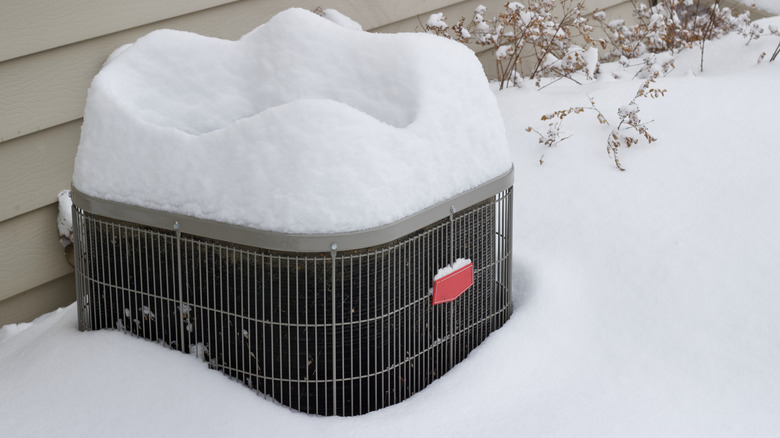
To prevent objects such as sticks, rocks, hail, or icicles from falling into your AC unit and damaging the internal components, you could place an air conditioner cover over it. However, while a cover will keep debris out, the wrong cover can create potential problems. Covers that completely enclose the unit can reduce air flow and trap moisture, which will lead to corrosion, mold, and rust. They can also create a safe haven for rodents, such as mice, which can wreak havoc on your unit. Besides, snow and rain generally won't harm most modern units.
With that in mind, it is best to choose a model that only covers the top of the unit. It should also be made of breathable material so as to not trap moisture. This is essentially the same idea behind using breathable frost covers when protecting the trees in your yard from frost. A simple cover like the Modern Wave central AC cover will provide protection by shielding the opening of the top of your unit, and installation is easy. Even easier? You can lay a piece of plywood over the machine, as needed, if you only get occasional heavy snowfall, hail, or a brief round of fall foliage.
Keep the area around your AC clean and clear
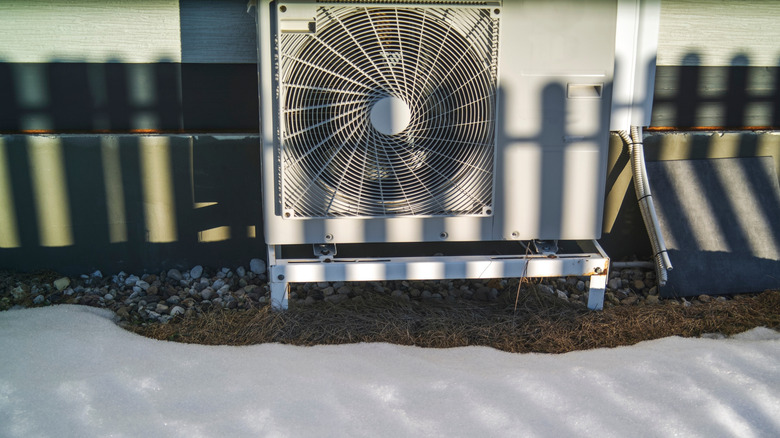
To safeguard against corrosion and rust, you could apply a coat of wax or lubricant to the exterior of the unit. However, the best way to ensure your AC unit doesn't fall victim to rust, corrosion, mildew, or mold is to prevent moisture from accumulating. First and foremost, allow air in and out of your unit by making sure the area around it is clear. Trim back bushes and trees: This will not allows proper airflow, but also helps prevent snow from piling up and can reduce the amount of falling objects directed at your unit.
Throughout the winter, clear ice and snow accumulation away from your AC unit as often as possible. But avoid using any sharp tools, which could damage the unit as you are attempting to remove the snow and ice. Instead, use soft-bristled brushes. You should also avoid using salt to melt snow, as it can corrode the metal components of your AC unit. Using a leaf blower is one clever hack for snow removal which avoids both of those potential problems.
Additionally, make sure the ground around your AC unit is well-draining. Otherwise, melting snow and ice could flood into your unit. Pools of standing water can freeze when the temperatures drop, damaging components of your AC. If water regularly pools around the unit, it may be worth considering installing a French drain.