

Escape The Cold This Winter With A Trip To One Of These US National Parks
While there are plenty of national parks that should be on your bucket list, when winter arrives it's important to choose wisely, especially if what you seek is a reprieve from the worst of the season's cold. That's not to say it's a bad time of year to visit parks like Yellowstone or Mt. Rainier. In fact, if you're into skiing, snowboarding, or just the beauty of snow-covered landscapes, there are a number of national parks that are great to visit in the winter. But many of these popular parks can be bitterly cold, even during the daytime, making them less enjoyable for those who miss the balmy warmth of summer.
If this sounds familiar, and you're curious which U.S. national parks are best to visit in the winter while avoiding the cold, this guide has you covered. With a selection that represents the sheer diversity of the country's National Park Service, from cactus-strewn desert landscapes to shallow bays that shimmer all the way to the horizon, you're unlikely to freeze in any of the parks featured below. In other words, if you're ready to lace up your boots and leave your long johns at home, then you'll find the destinations below are perfect for escaping the cold and enjoying some warmer winter wanderings. Want another reason to visit these warmer spots? While many national parks campgrounds close for the winter, the ones that are open usually don't have the months-long wait for reservations and instead are often available on a first-come, first-served basis.
Everglades National Park, Florida
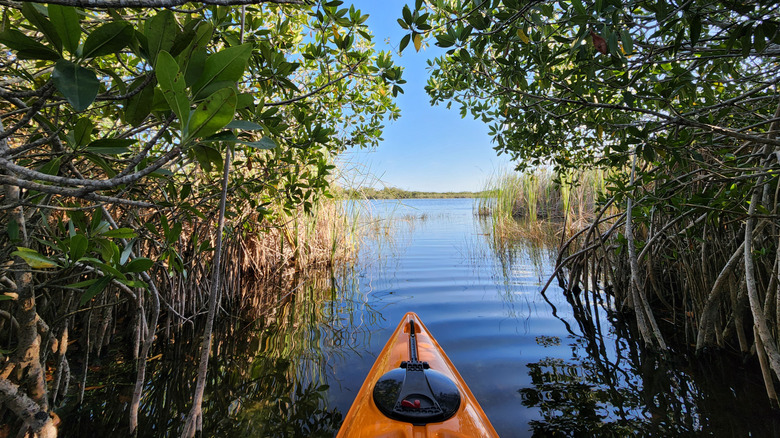
Spanning approximately 1,296,500 acres, the Everglades is the United States' largest subtropical wilderness — one that rarely sees temperatures drop below 53 degrees Fahrenheit, even during winter. And it's not only the temperatures that make visiting during the winter a good idea.
The park receives a great deal of rainfall each year, most of which falls between May and September. Come winter (the dry season), the climate is decidedly more dry (and mosquitoes less of a nuisance) making it not only the most logical time to visit, but also the most comfortable.
The park is home to a plethora of rare plants and animals: Botanists may be rewarded with sightings of the incredibly rare ghost orchid. The Everglades is also home to one of the rarest big cat species — the Florida panther. There are fewer than 200 of them left in the wild, so the chances of seeing one is slim. But there's still plenty to see: this National Park encompasses no fewer than three separate ecosystems, including freshwater sloughs, mangrove forests (the largest in the western hemisphere), and coastal estuaries, which means that there's plenty of biodiversity on which to feast your eyes. And did you know that the Everglades is the only place in the world where you can see both wild alligators and crocodiles?
To make the most of it, sign up for a ranger led tour or have a local guide highlight for you the park's most special features and residents. Alternatively, you could grab a pole and enjoy a spot of fishing or go cycling on one of the many trails. If you're planning to camp (which possible near the park), the park offers some absolutely breathtaking stargazing opportunities, including a dedicated Dark Sky Celebration, which takes place in February.
Big Bend National Park, Texas
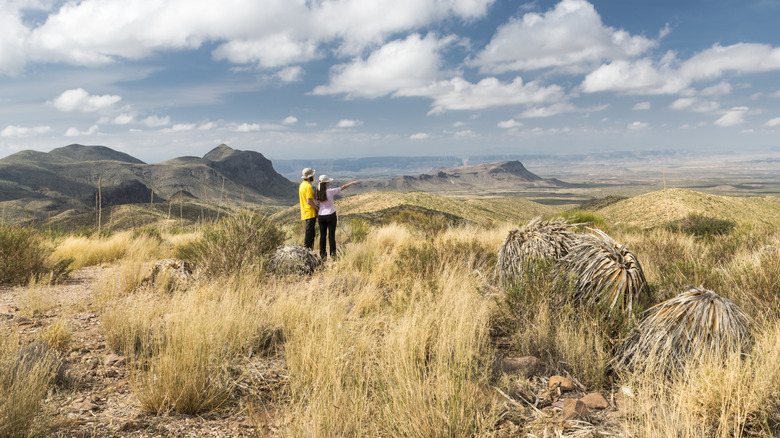
For a spot of Texan winter sunshine, Big Bend National Park is absolutely prime for some exploring, not least because daytime temperatures often break into the 60s and 70s (Fahrenheit). This is perfect for those who'd rather remain firmly above freezing during their winter adventure, and prefer to avoid the rain. What's more, at this time of year, this park is as diverse as it is beautiful. Rivers surge and springs gurgle their way through the landscape, while ridge tops do their best to pierce the enormous, rolling skies. At night, temperatures get cooler, which is to be expected given the park's desert climate. However, provided that you packed your essential winter camping gear, it's hard not to be blown away by the sheer clarity of the night sky. And even though you're avoiding the brutal summer heat, it's important to remember that Big Bend's rugged terrain can be dangerous, if you're not careful or unprepared.
Daytime explorers can wander more than 150 miles of hiking trails, or sign up for ranger led tours, which will help them to discover more about this most magnificent national park. While you're exploring, you're sure to be treated to an array of wildlife sightings. In fact, despite being a desert, it's home to an abundance of wildlife, with documented sightings of over 450 species of birds. Over 75 mammal species call the park home, including mountain lions, black bears, and bobcats.
Congaree National Park, South Carolina
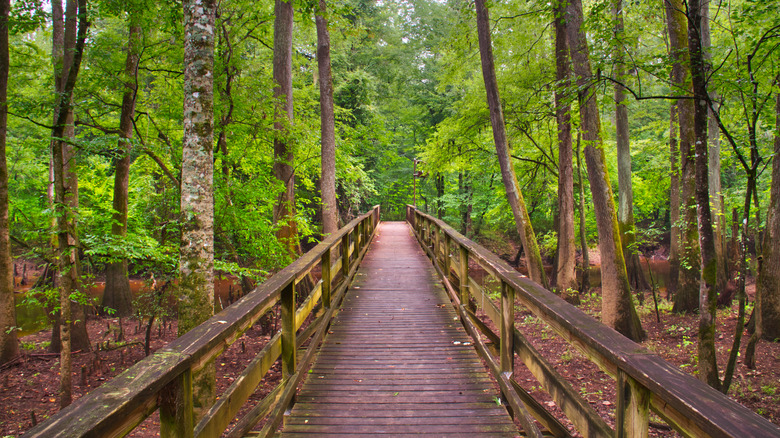
You're highly unlikely to regret spending a few winter days in South Carolina's Congaree National Park, especially if you're fleeing cooler climes. Here, average daytime temperatures hover around the mid-50s F between November and February, and while they can plunge below freezing at night, the reality is that your day trip is highly unlikely to be snowed off. In fact, rain is more frequent than snow, meaning you'll at least need to stow some wet weather gear in your rucksack.
It's worth braving the showers, though. The park is home to the largest remaining old-growth bottomland hardwood forest in the Southeast, which is supported by the Congaree and Wateree rivers. It's a surprisingly lush landscape, even in the thick of winter, but exploring here comes with a word of warning: The rivers are prone to bursting their banks after heavy rainfall, and they can do so quite quickly. Flooding can temporarily erase trails, so it's worth getting the NPS app on your phone and pre-downloading your chosen trail routes, to help you to avoid getting lost should you find yourself hiking off-trail.
Provided that you arrive suitably equipped, there are various adventurous pursuits with which to fill your days at Congaree. You can hike — a simple pleasure that's likely to throw up sightings of wildlife that ranges from owls and alligators to woodpeckers and river otters. You could tour the waterways on a kayak or canoe, spend a relaxing afternoon fishing, and if you want to make a few days out of your trip, you can also camp (backcountry camping requires applying for a permit at least 72 hours in advance). If you do, be prepared for cooler temperatures after sundown, as they can sometimes dip below freezing in the winter.
Pinnacles National Park, California
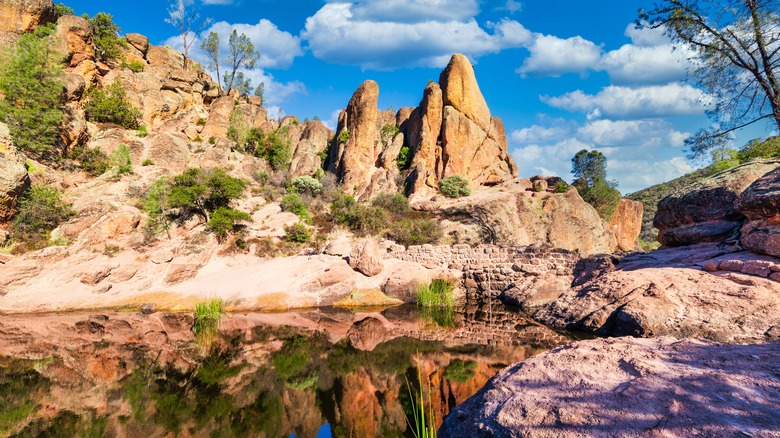
Winter wanderers in search of warmer climes are sure to appreciate the mild daytime temperatures (usually above 60 degrees F) that keep things comfortable at Pinnacles National Park. They're decidedly colder at night (often well below freezing), but that's to be expected in the desert. And while snow isn't uncommon at higher elevations, even then it's usually light. However high you intend to climb, the landscape at Pinnacles is about more than rocks and crags. Sure, you'll find steep cliffs and have the chance to explore the park's famous talus caves — many of which provide a home for bats — but its blend of hills and picturesque desert valleys represent a tempting prospect for winter hikers (over 30 miles of trails are available for exploration).
Wildlife here, too, features more than just cave-dwelling bats. In fact the park is home to more than 400 species of bees alone — one of the greatest concentrations of bee species in the world. It's also a habitat for California condors (the park is a key partner in the California Condor Recovery Program), as well as diverse mammals that include wild pigs, badgers, coyotes, bobcats, foxes, and even mountain lions, although sightings of the latter are rare.
To help you make the most of your time at Pinnacles, there are two visitor centers and a nature center, each abundant with resources and information. As for activities, take your pick! Arm yourself with a pair of binoculars and go wildlife watching, or simply enjoy the wide, rolling vistas and milder winter temperatures on a daytime hike. There are plenty of climbing trails to challenge climbers of all abilities, and if you want to spend a few days exploring, you'll find both tent and RV camping inside the park.
Biscayne National Park, Florida
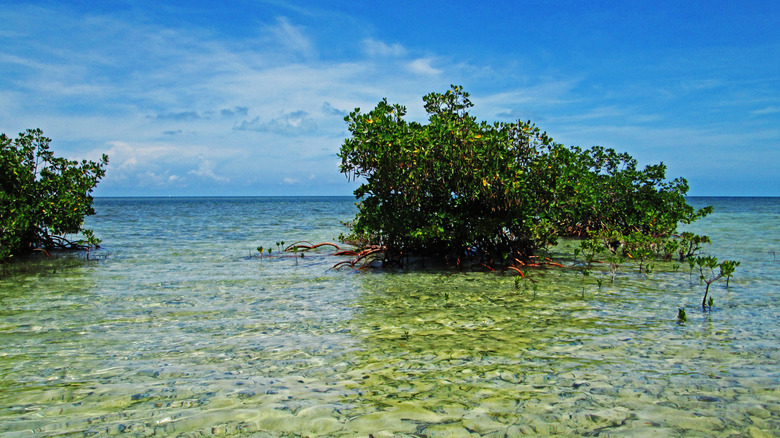
After December, you could be forgiven for having had enough of white Christmases and winter wonderlands. But what about a watery one? Renowned as a superb destination for lovers of all things aquatic — and reportedly once a favorite spot of the notorious pirate Black Caesar — Biscayne National Park, on Florida's southern tip, caters to an array of outdoor pursuits.
You could spend your days boating, fishing, or scuba diving and snorkeling along the Maritime Heritage Trail, capitalizing on the park's beautiful coral reefs. More of a culture vulture? If so, the park is home to evidence of more than 10,000 years of human history. The bones of wrecked ships now add to the very reefs that brought them down, and on land, various archaeological sites point to the way in which people have lived on, and from, the landscape for millennia, including shell middens (trash heaps) showcasing ancient peoples' reliance on the natural abundance of seafood.
During your time, there's a good chance that you'll run into an array of wildlife species. Manatees and sea turtles both frequent the waters here, as do myriad types of fish, while numerous bird species can often be seen skimming over Biscayne's crystalline shores, or singing in the trees on land. However you spend your trip and whatever you happen to see, since temperatures rarely dip below 68 degrees F (the average temperature in January is 77 degrees F), you can safely leave your cold weather gear at home for this park visit.
Joshua Tree National Park, California
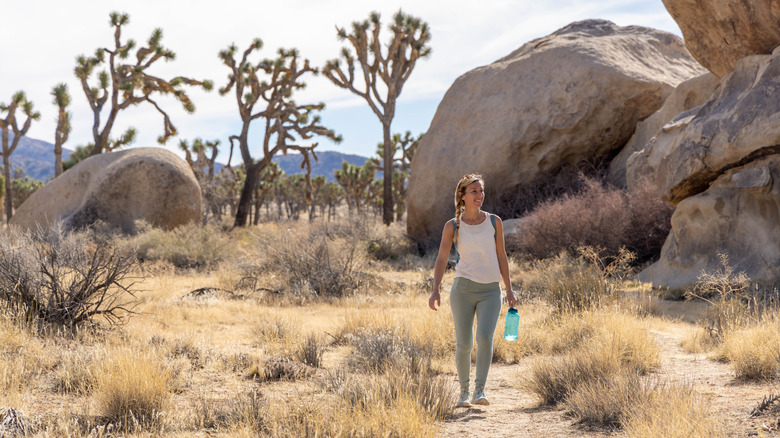
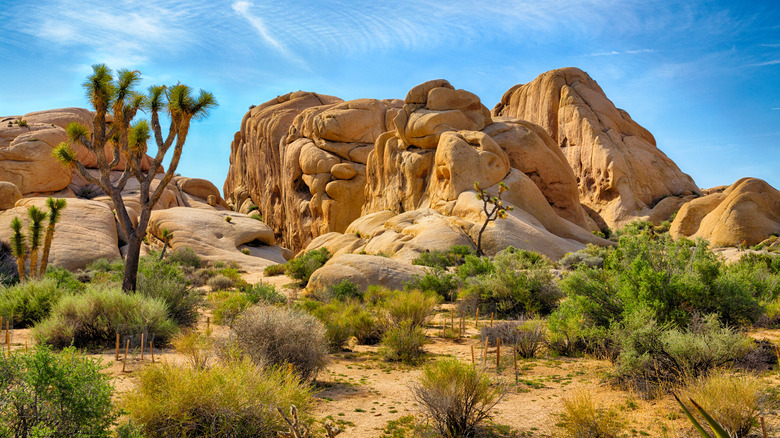
Despite the fact that nighttime winter temperatures at Joshua Tree National Park frequently dip below freezing, it's the daytime temperatures here in this most iconic of national parks that make it worth a winter visit. Days usually hover around 60 degrees F, which, compared to the sweltering heat of Joshua Tree summers, makes the winter a superb time to take on some of the park's longer hikes, or brave the cold for some of the finest stargazing opportunities in the country.
With significantly less risk of heatstroke, you'll be free to take whichever route takes your fancy. You can dive into the nation's past by taking on the four-mile Lost Horse Mine Trail, where you'll encounter signs of the park's history as a gold prospector's paradise. Remains of gold mines can be found across the park, and while you're not allowed to get particularly close to the ruins, they're nevertheless fascinating to see. You could opt for world-class rock climbing and bouldering trails, or if you'd prefer to spend your time scoping out local wildlife, all you need to do is keep your eyes peeled.
An array of animals make a home for themselves here, from mammals like bears and bobcats, to reptiles and amphibians including tortoises, tree frogs, and no fewer than 26 species of snakes. Cyclists are welcome to use any of the roads open to vehicles (no bikes on trails). There are opportunities for horseback riding, and if you'd prefer to have an expert introduce you to the best the park has to offer, there are ranger-led programs available to help you do just that.
Dry Tortugas National Park, Florida
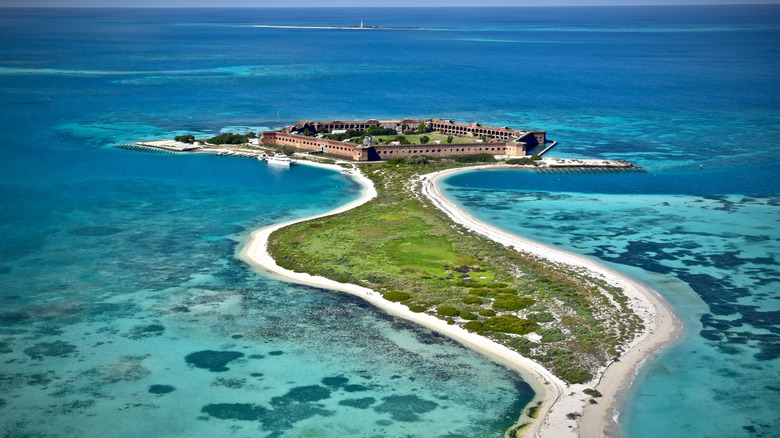
Comprising seven small islands surrounded by opalescent waters, Dry Tortugas National Park in Florida is something of an ocean paradise. It's certainly a far cry from the snow-capped peaks of other national parks, in fact daytime temperatures regularly punch into the 70s (F). Again, it's part of Florida's "dry season," and hurricane season ends in November, so you're enjoying better weather overall. Having said that, the winters here can be windy, which means that it's still important to bring warm clothing if you plan to lace up your boots and explore.
Adventure seekers at Dry Tortugas can pick from a selection of exciting winter activities. You can charter a sea plane and experience the archipelago from above. If you'd prefer to stay at sea level, bring your own boat, or book a ferry or catamaran. Swimming, snorkeling, and scuba diving are also popular, and both are a superb way to get up close with the park's diversity of marine life, including myriad fish, nurse sharks, and even sea turtles.
On windier days, when choppy conditions spoil underwater visibility, there's still plenty to see and do on land. Around 300 species of birds are regularly recorded at Dry Tortugas, and while you're visiting, it would be rude not to pay the 19th century Fort Jefferson a visit. One of the largest of its era in the U.S., it occupies the second largest island in the park, and can only be accessed by plane or boat. Originally built to protect one of the nation's most strategically important deepwater anchorages, its rich history includes use by the Union during the Civil War to both block Southern shipping and imprison Union deserters. It later served as an observation post during the Second World War.
Saguaro National Park, Arizona
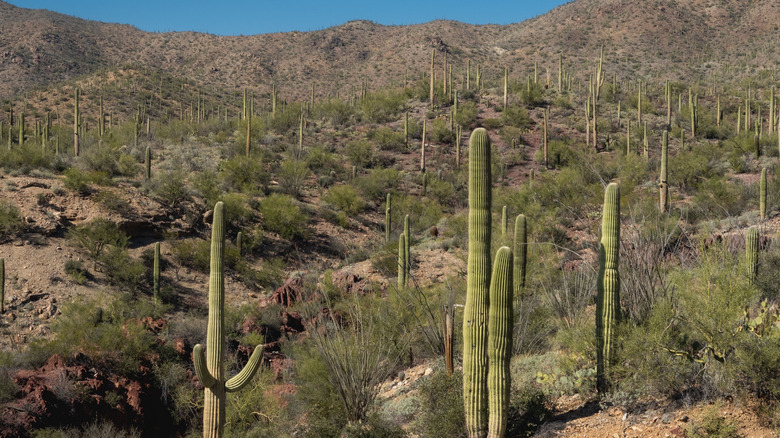
The Hollywood-worthy cactus that gives the park its name — the saguaro — can reach up to 40 feet in height, and that alone is worth making the trip to Arizona for. However, Saguaro National Park is also home to a dazzling array of wildlife. Unfortunately, once-prevalent species like grizzly bears, jaguars, and Mexican gray wolves are now locally extinct. But if you're lucky, you'll still have a chance of spying black bears, bobcats, mountain lions, and local characters like javalinas and ring tailed cats (actually a kind of raccoon). Bird life is also in abundance, including desert dwellers like roadrunners and Harris' hawks. If you keep your eyes peeled, you might just see some of the most beautiful hummingbirds in the United States along their migration routes, including both Anna's and Costa's hummingbirds.
This desert oasis in Arizona is unsurprisingly warmer during the winter than many other national parks. Of course, this isn't a blanket rule, and if you decide to explore at higher elevations, there's a decent chance you'll run into snow. But if you're sticking to lower elevations, you'll find that winter is the best time to visit, with daytime temperatures usually averaging around 65 degrees F, far milder than during the sweltering heat of summer. The only drawback is that crowds are more likely in late winter and early spring, since most visitors would prefer to avoid the worst of the desert sun.
White Sands National Park, New Mexico
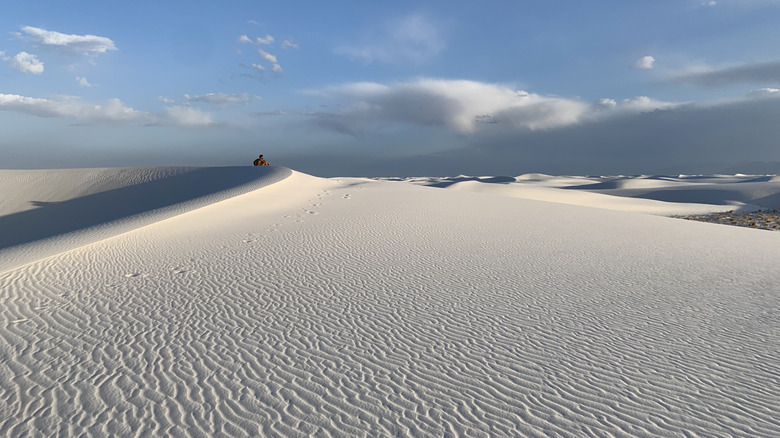
Last, but by no means least in this guide, White Sands National Park in New Mexico is a worthy addition for any adventure seeker hoping to dodge the winter cold. Comfortable daytime temperatures average out at around 60 degrees F, and while they can dip below freezing after dark, it's really beneath the light of the sun that this park comes into its own. Rolling white sand dunes dazzle the eyes, and while it can seem like an utterly foreboding and ferociously unforgiving landscape, it's actually teeming with life and geological wonders.
In fact, the sandy landscape itself is unusual. It's made from gypsum, commonly is used in a wide variety of industries ranging from construction to the arts, and even the food industry. The origins of this dunefield date back up to 280 million years, when — hard as it is to believe today — the area was covered by a shallow sea. Despite temperatures staying well above those needed for snow, it turns out sledding is one of the more popular activities on these dunes: Sand sledding, that is. Waxed saucers can be rented or purchased at the gift shop (or bring your own), and anyone is invited to hit the "slopes."
Today, the seemingly-arid and barren landscape provides a home for a multitude of mammals, birds, amphibians, and plenty more besides. Coyotes can be found near the dunes, and you never know, you might just see one cross paths with a roadrunner. And that's not all, folks! You could just as easily spot a turtle as you could a badger or bobcat. Remember to keep at least one eye on the sky: Over 220 bird species have been spotted here, including owls, wrens, hummingbirds, and hawks.