

The Aromatic Flower You'll Wish You Planted Next To Your Birdbath Sooner
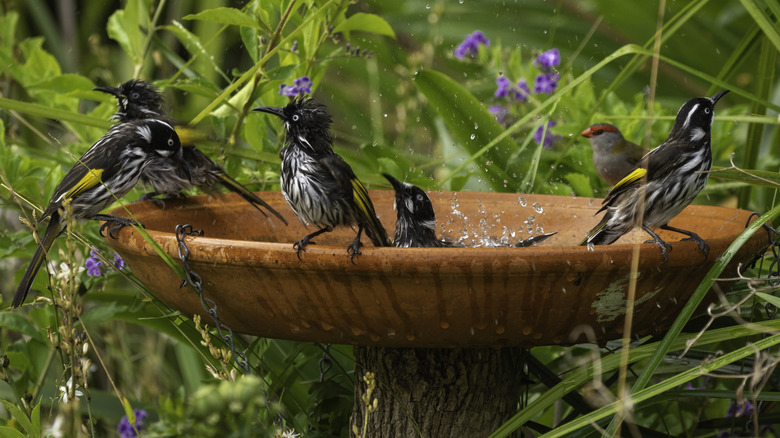
Adding a birdbath to your yard or garden is one of the simplest hacks you can use to attract more birds, and they can add a lot of charm to your home's outdoor space as well. To add even more charm, planting a host of pollinator- and bird-friendly plants near or around the bath can create a visual feast, while also providing a real feast for your feathered friends. If you've already chosen the best birdbath for your local area and are wondering what to plant around it, might we recommend hummingbird mint? (Agastache spp.)?
Agastache, also called giant hyssop, is a genus of about 20 different species of perennials in the mint family that are mostly native to North America. They're gorgeous plants, typically grown for their tall flower spikes and purple, pink, red, or orange flowers that bloom in late summer through fall. They have a lovely scent similar to anise and are remarkably drought tolerant. However, the reason they make great flowers for growing around your birdbath is that birds love them! Hummingbirds in particular enjoy the nectar from them (hence the alternate name), as do goldfinches. Pollinators like bees and butterflies are also drawn to these flowers, so insect-eating birds visiting your birdbath can enjoy a little snack as well!
Growing agastache plants
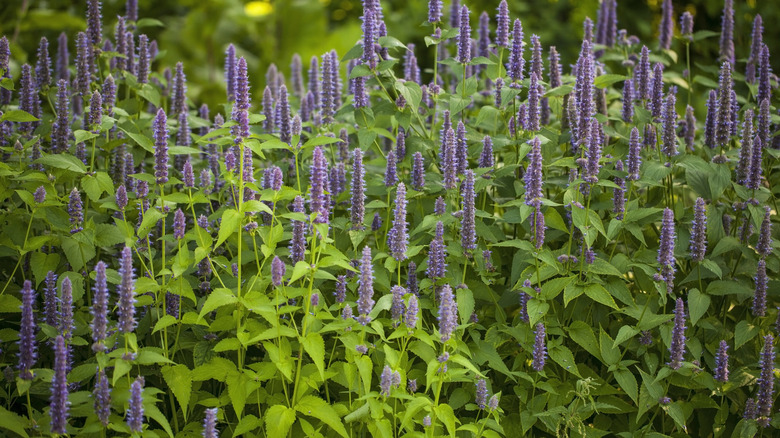
Agastache plants thrive in well-draining soil and full sun. Unlike many other members of the mint family, giant hyssop needs quite a bit of room to grow. Plant it a few feet from your birdbath, and be sure to space the plants 3 to 6 feet apart to avoid crowding them. While this may leave a few awkward bare patches around your birdbath at first, your agastache plants will grow and fill them soon enough. It's generally hardy in USDA zones five through nine, but can be grown outside of that range with some extra care. You can plant it in a container to grow it in colder regions, or give it extra shade and water in hotter ones.
Because there are so many species, you'll find specific species of agastache that are better suited to some climates than others. For example, Agastache foeniculum is more cold hardy than other species, while Agastache neomexicana and Agastache cana are native to the Southwest, fairing better in hotter, drier climates. Aside from this, giant hyssop requires very little care, making it a fuss-free plant that's great for beginning gardeners. Regular deadheading can encourage more flowers, but be sure to leave a few so it can self-seed (not all species self-seed, and cold stratification is required for germination). It grows well in poor soil and can actually struggle if the soil is too rich, so avoid heavy fertilizer use. In no time you'll be able to see this flower bloom and attract a diverse variety of birds to your birdbath!