

Why The Popular Meat Hack For Healthy Garden Soil Might Not Be Worth Trying
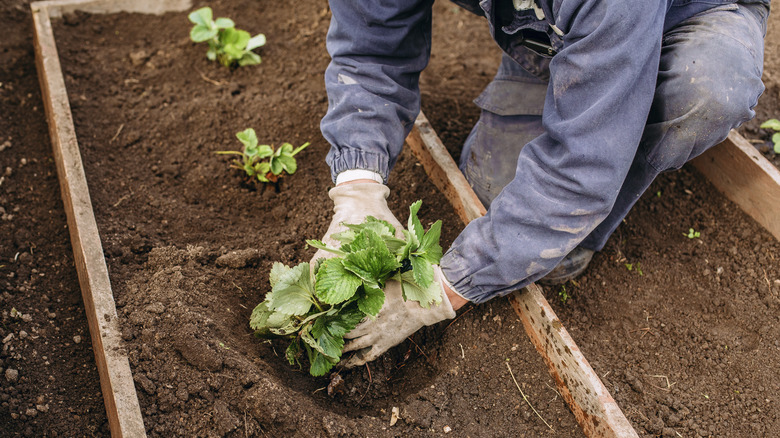
Gardening hacks are a dime a dozen — some of them work amazingly, and some of them you should avoid no matter how good they seem. When it comes to the meat hack for a healthy garden, there are some things you should know about before you go tossing raw meat in your garden soil, or even in your compost bin. Especially as there are some things you should never compost. While meat can be composted, it comes with some risks that you should first consider.
First, let's talk about what this hack is and how it's believed to work. Meat and animal parts are organic, so it may seem like a good idea to add things like offal, fish heads, and bones to your compost. Some Instagrammers suggest burying these meat scraps right in your garden, about 8 inches deep. The claim is that the soft waste meat of animals will break down fast and release nutrients to the soil.
It's said that these raw animal bits can add calcium, collagen, nitrogen, and more to the soil. Of course, the idea is that you're wasting less and putting fewer items in landfills. Unfortunately, unless you're a composting pro and know how to deal with raw meat in this process, you should pass on putting any raw animal scraps in your compost, and definitely not directly into the soil of your garden.
The risks of using raw meat in gardening
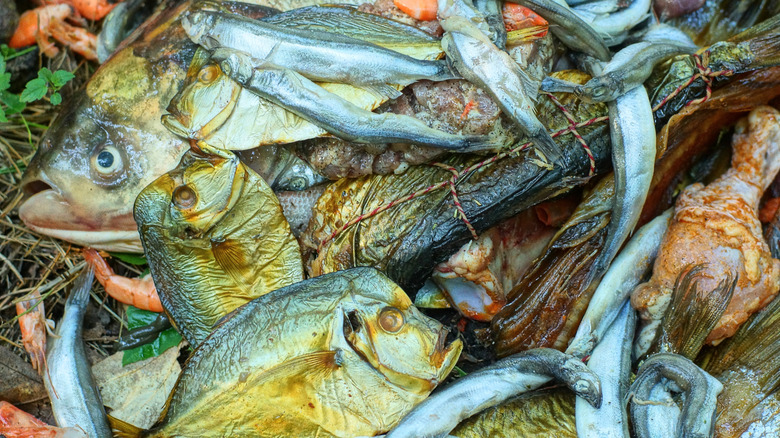
First of all, meat contains a lot of potentially harmful bacteria. The Michigan State University Extension states that avoiding raw meat in gardening and composting can cut back on food safety issues. Any meat, including poultry and fish, can carry E. coli and Salmonella bacteria, among others. These bacteria can then transfer to the food you plant in the meat-treated soil. Yes, you read that right — you can get Salmonella and E. coli poisoning from vegetables and other foods grown in soil that was supplemented with raw meat. Of course, there's a chance the raw meat parts will break down safely, but do you want to take the risk of getting food poisoning right from your own garden?
If you really want to try this hack, use what is called "trench" composting. In this composting method, you will bury the meat and other animal products deep in the ground or in your compost pile (definitely more than 8 inches). Trench composting is also great if you need compost and are short on time or space. The NRDC suggests burying the meat up to 18 inches deep and recommends using only cooked animal byproducts. While there may still be a worry of attracting pests to your compost pile by adding meat, you can cut down on the dangerous bacteria by both cooking the meat before composting it and by keeping your compost temperatures above 130 degrees Fahrenheit. Looking for an alternative composting method? Here are some budget-friendly compost bin ideas.