

Why Pruning Your Fruit Trees Is So Important For Healthy Plants
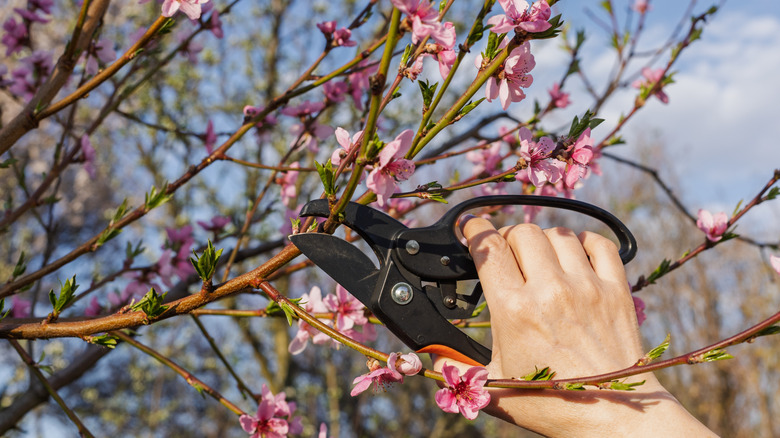
Fruit trees are an excellent addition to your yard or garden and a sure favorite for homeowners; they're great to look at and provide a wonderful snack, as nothing tastes better than the food you grow for yourself. Beyond sustenance and aesthetics, fruit trees are also great at attracting pollinators to your yard and garden with their blooms, bringing in bees, butterflies, and more. Speaking of their blooms, fruit trees are absolutely gorgeous when blossoming and provide great shade in the summer. That being said, when they aren't healthy, fruit trees can have some serious problems. To preserve their health, pruning your fruit trees is absolutely necessary.
The primary reason for pruning your fruit trees is to maintain their health and growth. If you don't prune your fruit trees, the long-term health of your trees will decline, and they will yield fewer harvests. When you prune young trees, you're basically fortifying them, teaching them to be stronger and more structurally sound. When you prune older, more established trees, you can still improve the production and quality of the fruit they grow, encouraging more production and better fruit.
By pruning, you encourage more growth in branches and protect your tree over time. If you are worried about pests, they'll be a thing of the past if you use the simple method of spraying and shaking — spray with a hose and shake the branches to dislodge bugs. If you have fruit tree FOMO but think you don't have the room for them, there are fruit trees you can grow in pots if space is tight in your garden.
How to prune your fruit trees
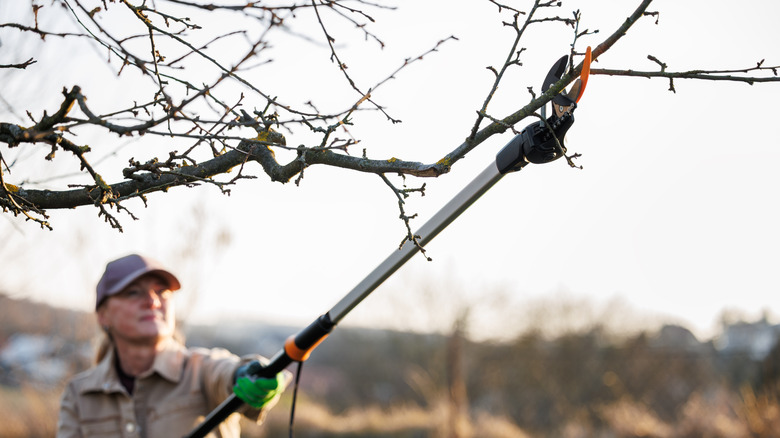
To promote the health and growth of your fruit trees with pruning, you'll first want to identify the best time to prune. All seasons are great for pruning except fall, as pruning in this season will cause scars on the tree that won't have a chance to heal during the winter. Additionally, pruning in the fall can cause infections and make fruit trees overall more susceptible to disease. The most common time to prune is in the late winter or early spring, when the trees are still dormant and have time in the sun to heal from their pruning wounds. If you prune in the summer, it is most likely to reduce the size of your fruit trees and control the growth and appearance of your trees. Be cautious, though, as this may slow the growth of your tree.
To prune your fruit trees, you'll need the right tools. Use hand pruners for small twigs and branches, loppers for branches a few inches around, and a chainsaw for any branches larger than three inches around. First, you will want to remove anything that is dead, damaged, or diseased so its problems won't spread to the rest of the tree. If you allow a diseased branch to prevail, it may infect the rest of the tree. Next, prune any branches that are rubbing against each other or look like they will soon. This will allow for more free growth and prevent damage to the branches. The last place to prune is near the top and middle of the canopy, where you will want to cut any branches that block airflow and prevent light from reaching lower branches.