

Winter Weather Is Already Starting. How To Prepare Your Roof For Heavy Snow
We may receive a commission on purchases made from links.
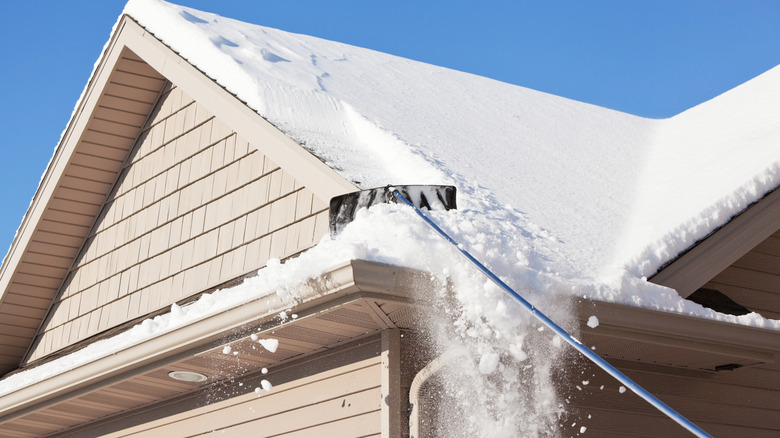
With winter weather starting, it is only a matter of time before snow and freezing conditions are on the way. For those in regions that traditionally receive substantial snowfall, that means getting homes ready for the harsh winter weather. One of the biggest dangers to your home is weight of snow on your rooftop, which can cause issues ranging from water leaking into your house to the entire roof sagging or collapsing. Knowing how to prepare your roof for heavy snow is the key to preventing such disastrous impacts. That process can involve an arrays of tasks ranging from simple (such as cleaning gutters) to major (like shoring up structural supports) depending on the current state of your roof.
The first thing to do is inspect and assess your roof's current condition. A quick assessment will let you know if there additional jobs, beyond regular maintenance, to be completed before the snowy season begins. As you survey your roof, look for any soft or sagging areas. Should you notice such trouble spots, a closer look is required to determine if there is damage to the decking or supports. Any issues should be taken care of ASAP, as these problems will only be exacerbated with the weight of snow and ice, and the subsequent meltwater. The good news is, many newer homes built in areas with regular, heavy snowfall are constructed with reinforced roofs and other structural features designed to protect them.
While looking over your rooftop, keep an eye out for damaged or missing shingles. Again, these should be addressed immediately, as they can lead to water leaks and other major problems once the snow starts. Also inspect the seals on your flashing and around chimneys and vents, Resealing areas that look damaged or worn.
Start winter with a clean roof and gutters
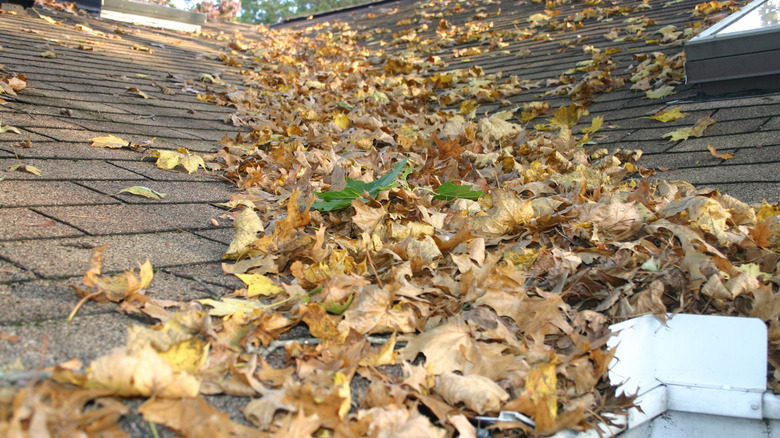
Next, it's time to attend to a few tasks that need to be completed every year, even if your roof is in otherwise perfect condition. Using a push broom, water hose, and/or leaf blower, thoroughly clean your rooftop. Be sure to remove not just dirt, but also any objects or debris such as leaves, twigs, and limbs. Any moss or algae should be cleaned away using a soft-bristle brush and liquid cleaner designated is safe for shingles. This is also a good time to install snow guards on your roof if your area frequently receives a lot of snow. This is particularly useful for metal and steeply-pitched roofs.
At this same time, trim any limbs hanging over the roof. Overhanging limbs can be a problem for several reasons. For one, the continual falling of leaves and limbs will create ongoing obstructions on your roof and clog your gutters. More seriously, larger limbs that break and fall due to high winds or the weight of snow can damage your roof. Additionally, overhanging branches prevent moisture from evaporating efficiently, preventing proper drying of your roof. Finally, regardless of how often you clean your gutters, you should do it once more after cleaning your roof and trimming limbs.
Once that is done, move inside and check out your attic. It is important you have both proper insulation and good airflow in your attic. This will help maintain a constant temperature and help remove moisture from the attic space, which in turn helps prevent ice dams from forming on your roof.
The work doesn't stop when the snow begins
While all of those steps are necessary to complete before winter weather sets in so as to prepare your roof for heavy snow, the work doesn't stop when the snowfall begins. In fact, a whole new set of tasks begins at that point. The main goal at this time is to manage the weight load sitting on your roof at any given time. Most roofs that are in good condition are able to support about 20 pounds of snow per square foot. Anything beyond this is courting disaster.
To better gauge how much weight is on your roof at any given time, look to the depth of ice or snow that has accumulated. Fresh snow is the lightest and roofs in good shape can usually hold as much as 4 feet of accumulation, though it is safest to keep it to the 30- to 40-inch range. Wet snow is heavier and no more than 2 feet should ever be allowed to sit on your roof. Ice is heaviest of all and 7 or 8 inches is all that most roofs can handle. With that in mind, ice dams should be prevented or safely removed immediately in order to keep the weight from reaching excessive levels.
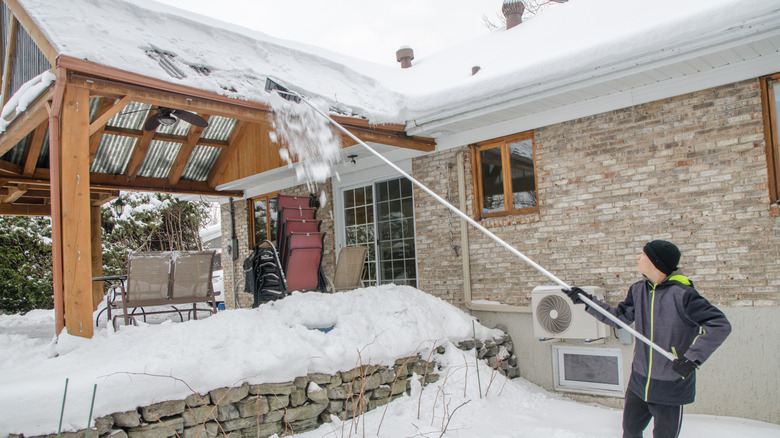
In addition to clearing off ice dams, you should also remove excessive snow from your roof regularly to prevent the weight from going beyond the amount your roof can support. The safest and easiest way to remove snow from your roof is to use a long-handled roof rake such as the Extreme Max poly roof rake. The goal here is not to completely clean your roof, but rather to remove the excess. Leaving a couple of inches of snow can actually help protect your shingles through the winter.