

How To Determine If A Tent Cot Is Right For Your Camping Style

You've tried camping in all sorts of tents, and perhaps you've also decided that camping in your car may not be the best option. Aside from glamping or renting a campsite cabin, what options are there that still leave you protected from the elements? Consider a tent cot; it's not a cot that goes inside a tent, but rather a cot that has a tent atop it, by design.
The cot is a foldout sleeping area that keeps you up off the ground like a lounge chair, but perfectly flat for sleeping, military style. It has a tent structure over it that offers enough coverage to keep insects and other pests out, as well as rain, and there are no tent stakes to deal with, either. A tent cot is an all-in-one structure that's easy to move once you've set it up, should you want to move closer to the campfire, for instance. That's far less likely to happen if you've set up a traditional tent. Like just about any type of sleeping setup for camping, a tent cot has its pros and cons, so whether one is right for you may depend upon where you're camping and your plans for getting to the campsite.
Factors to consider when deciding if a tent cot suits your camping style
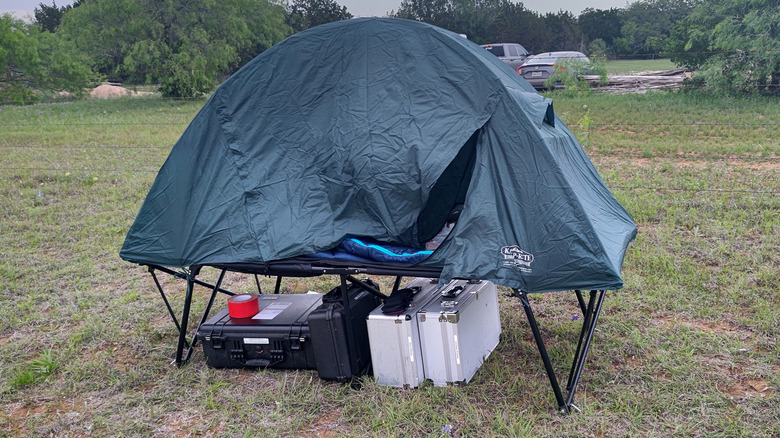
Tent cots could be awkward if you have to hike to your campsite. For instance, the Anniversary Series Original Tent Cot from Kamp-Rite weighs 24 pounds and folds to 35 inches long, 31 inches wide, and 6 inches high; not exactly convenient for hauling via hikes. This particular tent cot also sleeps one, like a typical old-school cot. The company also makes larger versions, which add more weight. For instance, the company's compact tent-cot double that sleeps two weighs 42 pounds, so it's best for camping near your vehicle.
One major advantage of sleeping on a tent cot versus setting up a regular tent on the ground is that pebbles, mud, and ants aren't of any concern. Even a trickle of water that happens to run off from a higher location as you sleep won't reach the cot. On the other hand, you'll need level, stable ground for the cot's feet, much like setting up a camp table. Another drawback to the tent-on-legs approach of a cot tent is that winds on a cold day will seep right through the tent bottom; there's no ground blocking the breeze or providing some level of insulation. A warm sleeping bag or insulated camp pad atop the cot could help you stay warm while sleeping during fall and winter camping trips.
Though somewhat weighty, a tent cot still weighs less than the 100-plus average pounds of a rooftop tent. That weight is one of the reasons you may want to avoid using a rooftop tent. It's also much easier to get into a tent cot since there's no climbing necessary, plus you're free to move your vehicle as needed during your camping trip if your tent isn't attached to it. All in all, tent cots are convenient in certain camping scenarios.