

Why The US May Seem Colder Than Europe During The Winter Months
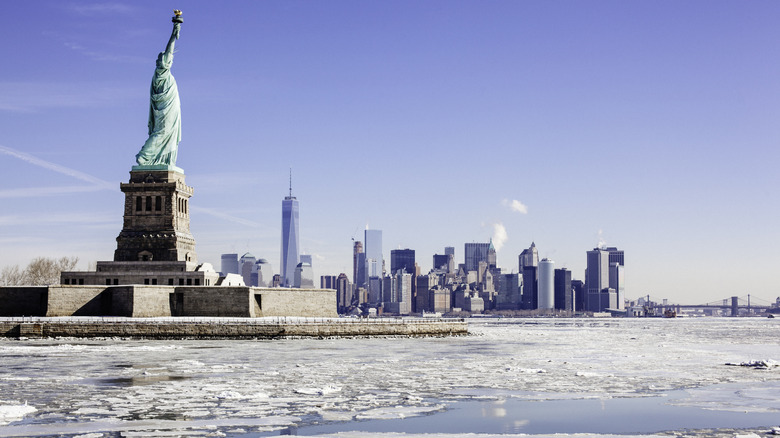
Those who paid at least a bit of attention in high school geography may remember the invisible parallel lines around the globe known as latitude. Those lines (also called parallels) begin at the equator, labeled 0, and rise in numbers as you move farther in either direction from the Earth's waistline. Generally, the lower the latitude, the warmer the climate and vice-versa. However, some parts of the world on the same or similar latitudes experience different temperature norms. This is particularly noticeable when comparing similar spots in North America and Europe. It turns out the ocean between them, and its currents, is one of the reasons for these differences.
For example, the average high temperatures for Minneapolis, Minnesota during winter are in the 20s and low 30s. Minneapolis sits at 44.9 degrees north. Just a short distance south, at 38.6 degrees north, St. Louis, Missouri, has average highs during winter range in the 40s and 50s. By contrast, however, Bucharest, Romania, which is also on the 44th parallel, typically sees high temperatures during winters in the high 30s and 40s, more in line with much lower St. Louis. Among other things, this would certainly suggest camping in the winter is more comfortable in European than some U.S. locales!
Although it may seem hard to believe when discussing two cities that are in the center of their respective continents, the Atlantic Ocean, which separates these two land masses, is the reason why one has warmer temperatures than the other. A system of ocean currents, called the Atlantic Meridional Overturning Circulation (AMOC), pushes warmer tropical waters towards Europe, propping up winter temperatures. It turns out that the U.S. is on the cooler side of the Atlantic, one reason for the colder winter weather the National Weather Service is predicting.
Water makes a difference in winter temperatures
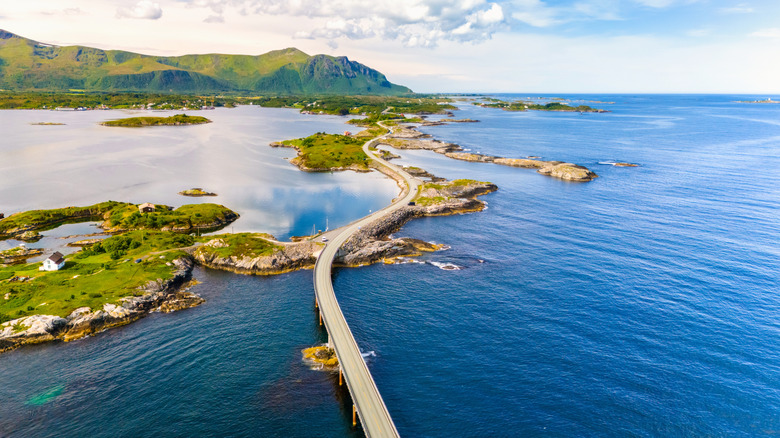
Although some may look at the Atlantic Ocean as a large, uniform pond, in reality it is multilayered, and filled with strong currents. Those currents transport water. Often times, that water is warmer or cooler depending on where the current originates. With that in mind, one of the primary reasons for Europe tending to be warmer in the winter is the fact warm water from the Gulf of Mexico is carried to its shores via a current known as the Gulf Stream. At the same time the Gulf Stream is bringing this warm air to the shores of Europe, it is causing atmospheric waves the pull cold Arctic air down over the Northeastern United States and Canada. Meanwhile jet streams in the U.S. blow polar winds down along the Rockies, further cooling things off in the Midwest.
The ocean on the other side of North America can also play a role. While the Pacific Ocean tends to serve as a buffer against extreme weather, when La Niña season is in effect, it can cause colder temperatures across the northern half of the U.S. That said, these examples of how the Atlantic and Pacific can cause winter temps in the U.S. to be colder are somewhat of anomalies. In general, being in close proximity to water moderates air temperatures, which is another reason Europe tends to be warmer in the winter — it is surrounded by water. True, North America is also surrounded by water, but it is a much larger land mass, so it's not as "insulated" by any warm ocean currents that do reach us.