

11 Tragic Caving Disasters
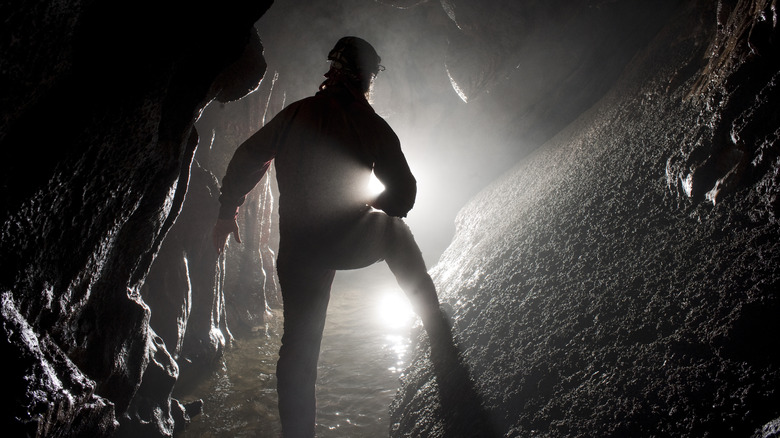
Humans have been exploring caves for thousands of years. In fact, there are many places in the world where people still utilize them as dwellings. However, besides determining if a cave is a safe shelter when you're lost in the woods, caves represent something that has engaged explorers for generations: the unknown. We never know what we're going to find in a cave. That is what makes them exciting. It is also what can make them extremely dangerous.
With that danger comes the likely, tragic, loss of human life. There have been numerous famous caving disasters throughout the years, each of which has left its unique mark on history: The Mossdale Caverns tragedy in Britain in the 1960s; The 2007 Nam Talu cave floods in Thailand; The Mount Gambier cave diving disaster in Australia in 1973. Each serves as a spine-chilling reminder of just what can happen when we explore places a little too deeply, carelessly, or just at the wrong time.
Like the National Park adventures thrill seekers enjoy, serious caving (or spelunking) requires training. Beginners shouldn't go alone, but explore with experienced adventurers instead. At a moment's notice, you could become trapped in the rocks, face a cave in, drown in a flash flood, or simply get disoriented and panic. The following 11 caving disasters prove just how tragic this extreme form of exploration can become.
Sand Cave, Kentucky
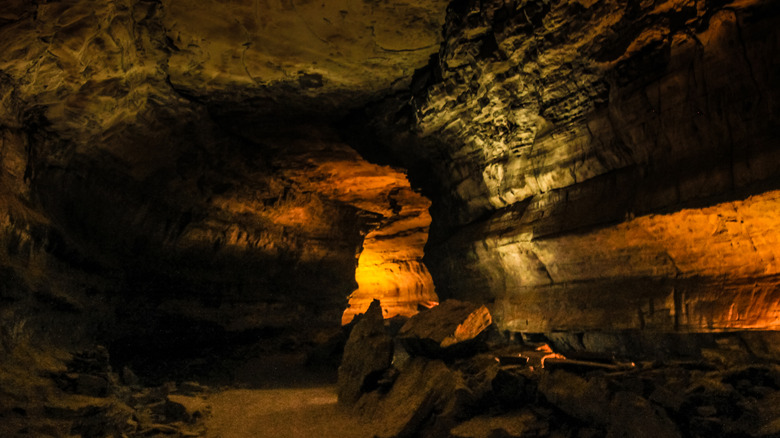
The story of William "Floyd" Collins is equal parts sad and fascinating, which is why we are leading off with it. Born in 1887 in western Kentucky, Collins began exploring the caves of the region as a child, discovering what is today called Floyd Collins Crystal Cave in 1917. This was during a time known as the Kentucky Cave Wars, when numerous farmers were looking for ways to make money through tourist visits to caves on their property, spurred on by the already famous Mammoth Cave. Since competition was high and he was struggling to bring people to explore his own cave, Collins ventured into Sand Cave, a complex Mammoth.
It was January 30, 1925. Collins entered the cave with a kerosene lamp and some meager provisions. A good way into the cave, he began to lose light and decided to turn back. Inching his way on his stomach along a particularly tight passage, his ankle became stuck beneath a dislodged rock. He was completely trapped.
It took 18 days for rescue crews to reach Collins. Unfortunately, by the time they arrived, Collins had died from exposure. The rescue efforts and Collins' death garnered international media attention, and actually served as the inspiration to federally protect Kentucky's amazing cave network. Though tragic, Collins' tragic demise can be directly linked to the founding of Mammoth Cave National Park, which is a national park that should totally be on your bucket list.
Eagle's Nest Sink Cave, Florida
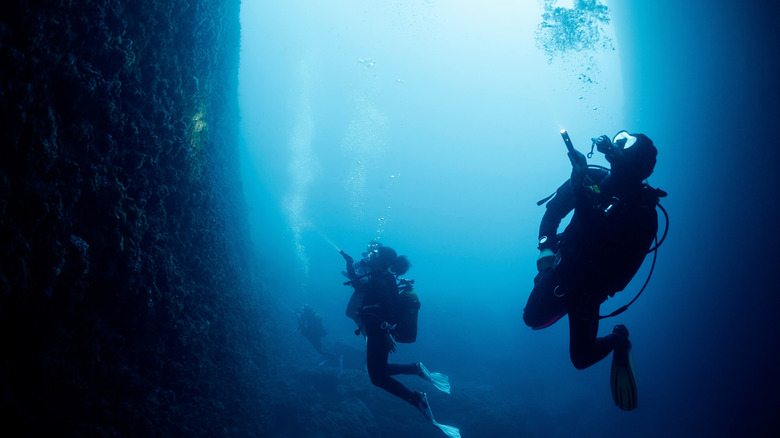
Eagle's Nest Sink is an expansive labyrinth of underwater caves located on the coast of western Florida. The network of tunnels goes down at least 310 feet deep in some places. With tight areas, upstream and downstream currents, and ever-changing visibility based on water conditions, Eagle's Nest Sink is one of the most dangerous underwater caves to explore. It should not be attempted by amateurs, as evidenced by the extremely tragic deaths of Darrin Spivey and his 15-year-old son Dillon Sanchez.
On Christmas Day, 2013, Spivey and Sanchez descended into Eagle's Nest Sink, trying out new equipment. When they didn't return home that evening, Spivey's fiancée alerted law enforcement. The following day, the bodies of the two were discovered, Sanchez at a depth of 67 feet, and Spivey at a depth of 127 feet. Both had drowned.
Being a teenager, Sanchez was not a certified diver. Spivey was certified, but did not have the requisite certifications for cave diving. Their deaths were attributed to lack of experience and the inherent dangers presented by the cave, which has claimed the lives of numerous other divers. Adding to the tragedy, it was an acquaintance who found Spivey's body and had chastised him in the past over safety concerns. These days, extreme safety measures are in place to mitigate the potential for death, and only professional, certified divers are allowed to enter Eagle's Nest Sink.
Nutty Putty Cave, Utah
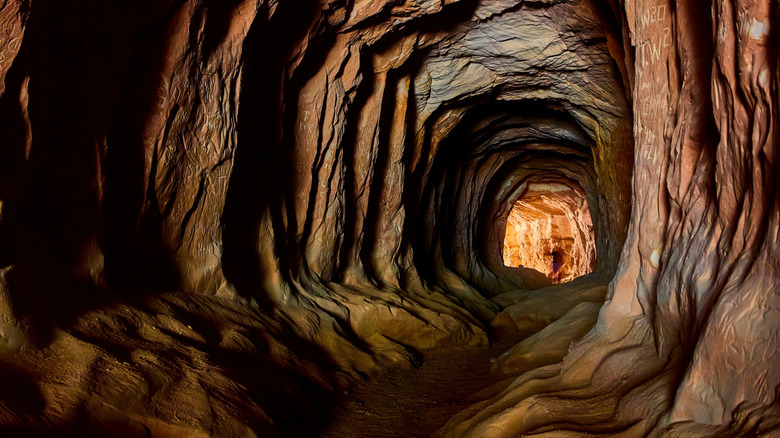
The tragedy that occurred in Nutty Putty Cave in north central Utah the week of Thanksgiving, 2009 is proof-positive that even experienced cavers can make mistakes that cost them their lives. John Jones, along with some friends and family, entered the Nutty Putty Cave system on November 24. As they maneuvered along the tight passages of rock, John pressed on past his group to explore a section known as The Birth Canal, a notoriously skinny passage that opens up to a larger cavern. As a highly experienced caver, Jones would likely have made it through The Birth Canal without issue. The problem was, he went the wrong way.
Jones' hips became wedged, upside down, into a thin section and his arms were pinned to his sides, making it impossible for him to move. What's worse, his upper body was facing downwards, meaning that over the hours, blood would start to leave his legs and pool in his upper body. Time was of the essence in terms of rescue.
The plan was to use a pulley system to extract Jones, but when one of the tracks broke, his body was pushed further into the tight passage. Jones would die in the cave from cardiac arrest. Nutty Putty Cave was sealed with Jones' body still inside. To this day, it is inaccessible and people are banned from exploring it.
Mossdale Caverns, United Kingdom
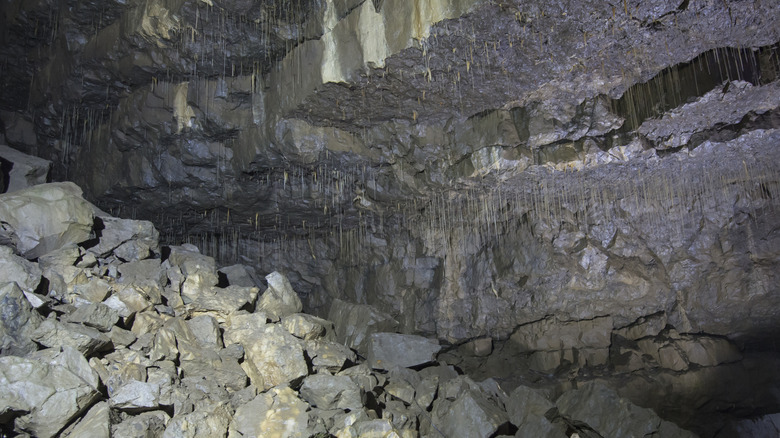
The Yorkshire Dales make up a beautiful landscape in northern England, encompassing rolling hills, misty moors, and craggy limestone cliffs and caverns. The Mossdale Caverns are located in the Conistone Moor in the north dales. Discovered in the 1940s, Mossdale is considered to be the ultimate caving challenge in England. A massive web of tight caves penetrate as deep as 3 kilometers (1.86 miles) into the Earth. Through these caverns flows Mossdale Beck, a small river. Though it had been explored successfully before, in 1967, Mossdale Caverns would become a tomb.
In what has been described as Britain's worst caving disaster, six young men ventured into the depths of Mossdale Caverns on June 24, 1967, never to be seen again. Unbeknownst to the cavers, torrents of rain were occurring above ground. Mossdale Beck surged into the caves, completely flooding them and drowning the young explorers.
An immense rescue effort, which garnered international media attention, followed. Over 300 rescue workers tried, but ultimately failed, to dam up Mossdale Beck and reach the drowned cavers. Their burial cavern remains unexplored to this day, out of respect for the caver's memories. However, the cave remains open, though there have been no reports of further exploration.
Pluragrotta, Norway
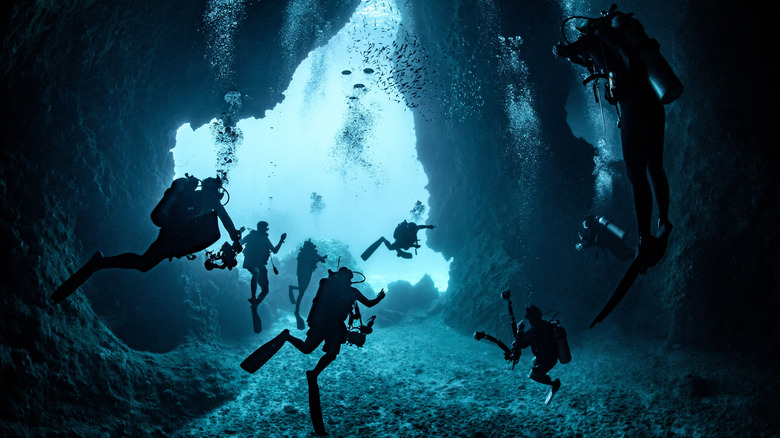
The Plura Cave System, also known as the Pluragrotta, is the deepest and most popular cave diving site in Scandinavia. Located in northeastern Norway near the border with Sweden, the Plura Cave is an extensive network of skinny passages several miles long. The cave opens up into a wide grotto about a quarter of the way through, before continuing into a far more difficult-to-navigate tunnel filled with exceptionally cold water. It's so tricky that the five-hour journey requires underwater scooters at one point in order to navigate properly.
Still, the allure of the passage is what brought a group of five highly experienced Finnish cave divers to the Plura in February 2014. After breaking through the ice in the grotto section, the group ventured in groups into the deeper tunnel. A diver in the first group became tangled in his equipment and drowned while another diver unsuccessfully tried to change out the trapped diver's breathing apparatus. A third diver managed to squeeze by the deceased, while the fourth is believed to have drowned due to panicking. The fifth diver turned around and went back, the long way, to the start of the dive.
The three surviving divers made it back to the surface, but needed to be hospitalized for months due to decompression sickness. After several unsuccessful recovery attempts, the cave would be closed off by the authorities. But that did not stop the survivors from returning to Plura (without telling the police) to retrieve the bodies of their deceased friends, which they were able to accomplish after a five-day effort.
The caves continue to remain a popular diving spot and to pose risks. On April 3, 2024, three experienced divers were on an uneventful journey, when one suddenly "dropped" over 10 feet in the cold water and went into convulsions. One of the other divers was able to swim his body out of the caves, and CPR was administered, but it was too late.
Nam Talu Cave System, Thailand
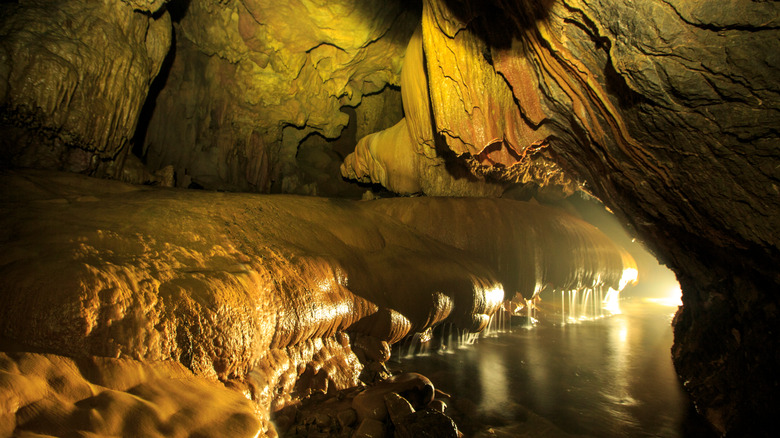
The Nam Talu Cave system is a vast and oft-visited natural destination in southern Thailand. It is a massive structure, offering visitors (guides are required) the chance to see the stunning main hall, featuring some of the largest, natural limestone structures in all of Thailand. A key feature of the cave is the water that flows through it. Shallow in some areas, deeper in others, it eventually ends in a majestic waterfall that serves a perfect capstone to the adventure. But even the largest, most beautiful caves are not without their dangers.
In October 2007, a group of tourists were traversing Nam Talu Cave when the heavens opened up. A severe monsoon came crashing down upon the cave, causing a flash flood that killed six tourists and a Thai guide. Helena Carrol, a tourist from the United Kingdom, was the only survivor of the ordeal. She spent 16 hours trapped on a ledge. Some of that time was spent with her fiancée, John, who died whilst trying to find a way out and flag down a rescue team.
Speaking shortly after being rescued, Carrol, quoted by The Guardian, said: "One minute I was in what I thought was the most beautiful place in the world. The next thing there is death all around me." A stark reminder that even popular caves deemed safe for tourists and non-professionals can turn dangerous under certain circumstances.
Mount Gambier, Australia
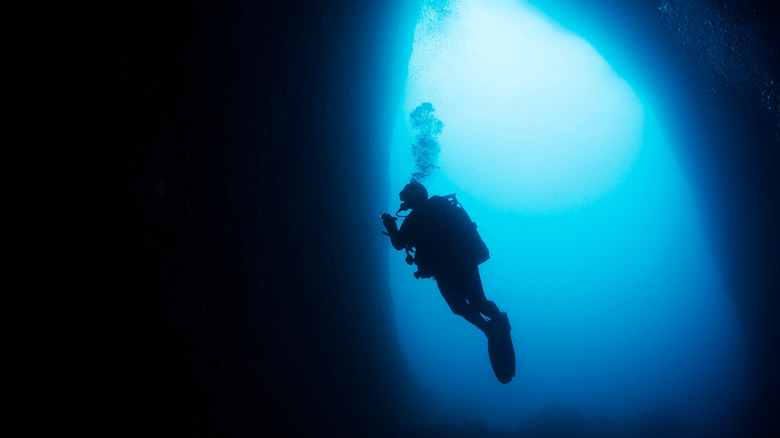
Much like the unexpected dangers of the Blue Hole swimming area in New Mexico, the location of one of the worst caving disasters of all time is relatively inconspicuous. For most observers, the area appears to be nothing more than farmland at the base of Mount Gambier in southern Australia. However, located within that farmland is a 400-foot deep sinkhole known as The Shaft. And it was here that, in May 1973, tragedy befell a group of divers.
Though mystery still surrounds this cave diving disaster, what is known about it is as tragic and haunting as anything we've seen so far on this list. Eight divers descended into the main chamber of the shaft, which is an area filled with sunlight and had been explored by numerous divers before the incident. It is believed that issues arose when members of the group descended into a significantly deeper section that was completely enveloped in darkness.
Four of the eight divers were to die in the depths of The Shaft. It is not known exactly what happened, but experts believe nitrogen narcosis — nitrogen entering the blood stream at depths deeper than 120 feet — was partially to blame. The four bodies were not retrieved until much later, and only done so by trained professionals. Incidentally, this tragedy both closed off The Shaft to the public further exploration (it's still used by the police for underwater rescue training) and led to the formation of the Cave Divers Association of Australia.
The Y Mountain Cave of Death, Utah
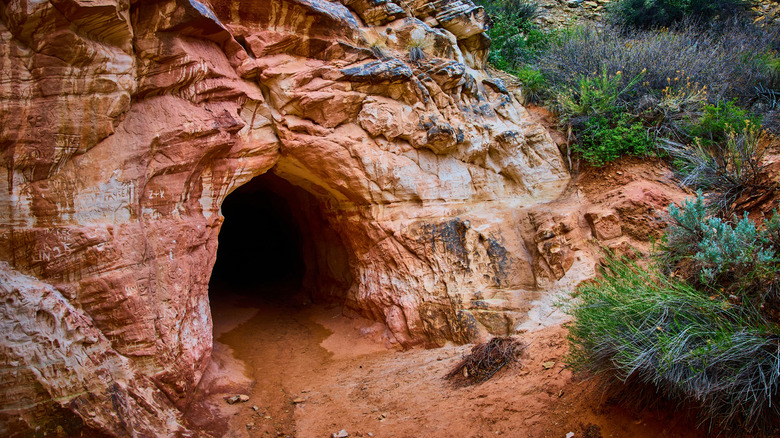
It is easy to see how hiking and exploring the rugged, beautiful landscape of Utah can captivate so many adventure seekers. However, as we learned earlier with the tragic death of John Edward Jones in the caverns of the Nutty Putty caves, even the most beautiful of landscapes can yield disastrous outcomes. And when a place is colloquially known as The Cave of Death, it might be in your best interest to stay very far away from it.
Unfortunately, a group of young college students did not heed the warning presented by nickname they'd given the local cave. The Cave of Death is located at the base of Y Mountain nearby Brigham Young University in Prove, Utah. In August 2005, four hikers ventured into the small cave and eventually came to a section where a 15-foot underwater tunnel would supposedly lead them into another cavern. This tunnel was to be their watery grave.
Rescue workers believe that while the group made it to the cavern, they became disoriented and drowned on the return journey with the front swimmer possibly blocking the other three from emerging. The bodies were recovered after water was pumped out of the cave, and the entrance was sealed off just hours later to prevent further tragedies.
Sterkfontein Caves, South Africa
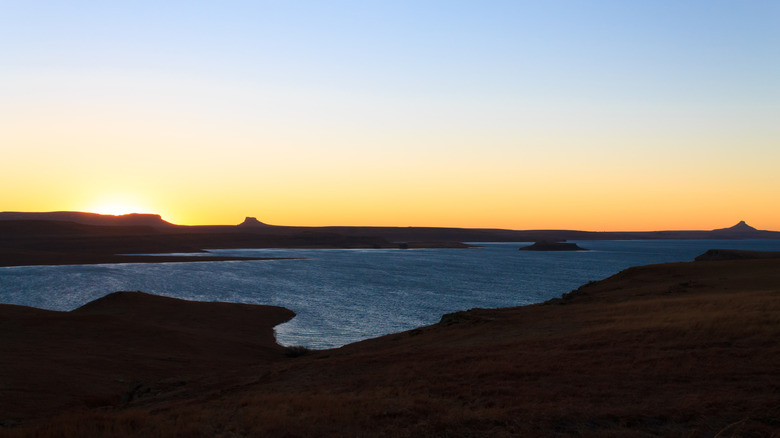
The Sterkfontein Caves are part of the UNESCO World Heritage Site in South Africa known as the Cradle of Humanity. They are a truly astounding natural area, taking visitors back millions of years in time to see what very well could have been the beginning vestiges of human civilization. However, like all the areas on this list, there are certain dangers inherent to exploring any cave system. And while the Drakensberg Hills of South Africa might be one of the most dangerous places to hike in the world, one of the saddest caving tragedies of all time happened right in the Cradle of Humanity.
Paul Verhulsel was 29 years old when he decided to explore the Sterkfontein Caves alongside some friends in 1984. He got separated from them in the long maze of twisting tunnels that make up the cave complex. He eventually found a small underwater tunnel. He swam through it and came out into an open cavern that contained a small island. Now completely lost, Verhulsel sat on that island for three weeks before eventually dying of starvation.
A total of six weeks passed before rescuers were able to locate Verhulsel's body. When they approached, they found a poignant, but deeply sad message written into the sand of the island. It read: "I love you, Shirley and Mom" — Verhulsel's final message had been one of love to his wife and mother.
Wabasha Street Caves, Minnesota
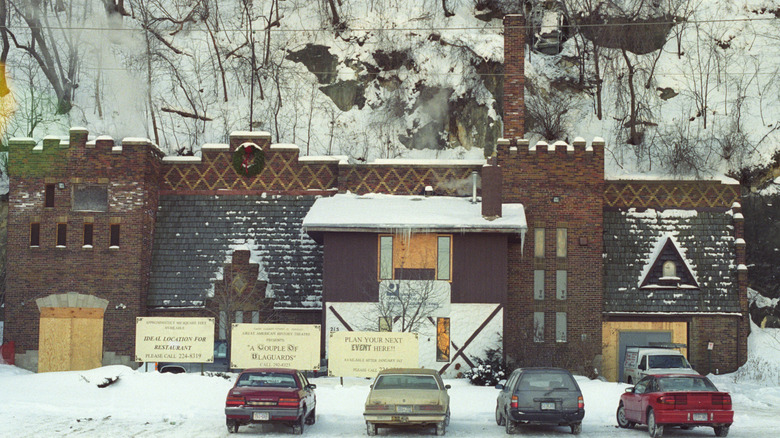
The Wabasha Street Caves in St. Paul, Minnesota began their existence as a silica mine in the 1800s. This eventually transformed into a lively gangster hideout during the 1920s, where it is reported that an unsolved gangland shooting and murder once occurred. The caves are said to be haunted, and today are a historic museum and wedding venue destination. However, in April 2004, the caves were in a state of neglect and became the location for a very tragic event.
The deaths of three teenagers who were exploring the caves one night that April had nothing to do with getting stuck, drowning, or getting lost in a deep cavern. Instead, it had everything to do with a gas present in the caves: carbon monoxide. Thanks to the darkness and complex nature of the extensive cave system, many visitors start fires to stay warm or spend the night. These fires leave behind carbon monoxide, and the chamber the teens found themselves in was full of it.
In addition to the three teens who perished in the caves, a fourth fell unconscious but was later rescued, and a fifth managed to get out and alert authorities. This wasn't the first tragedy in the caves. In 1992, two teens also perished due to carbon monoxide poisoning. Three other recorded deaths were due to drowning, fire, and rock fall. Owing to how many entrances into the cave system there are and the softness of the rock, authorities were never able to totally seal the network off. Though now that it is a privately owned tourist attraction, illegal exploration may have lost its allure.
Bushman's Hole Rescue, South Africa
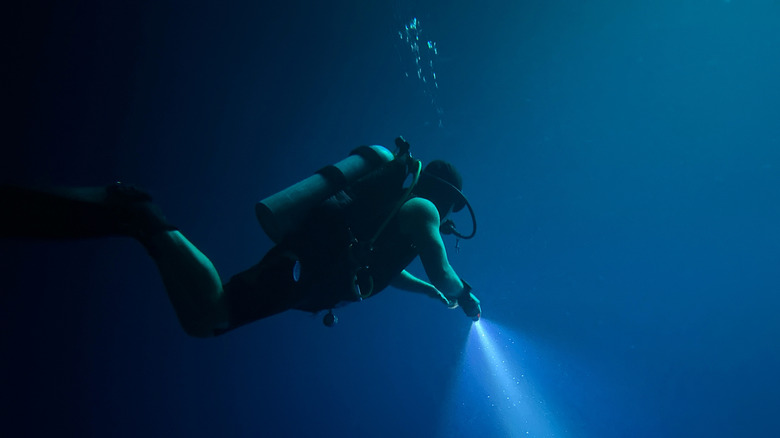
The Bushman's Hole Rescue in South Africa is especially tragic because it encompasses two connected deaths. The first is that of Deon Dryer, a 20-year-old cave diver who met his demise in Bushman's Hole in 1994. His cause of death is believed to be deep water blackout, as he would eventually be found over 800 feet below the surface. A decade later, Dryer's body would be discovered by deep diver David Shaw.
Shaw's first trip down Bushman's Hole was something of a remarkable feat for deep water diving. He has reached a record depth of 886 feet on a rebreather set up and, in the process of exploring the cave, had discovered Dryer's remains. Shaw had tied a line to the body so he could find it again. After months of planning, Shaw and his frequent diving partner Don Shirley, were ready to try and retrieve Dryers body.
It was January 8, 2005. Shaw descended to Dryer's position about a minute faster than he planned. Nitrogen narcosis kicked in and lines got tangled, and David Shaw died right next to the young man's body he was trying to recover. Shirley watched it all happen from 400 feet above. After trying to reach Shaw and Dryer, Shirley's equipment began to malfunction and he turned back. Ironically, a few days later as the rest of the team was collecting equipment, they realized both Dryer and Shaw's bodies had floated to within 60 feet of the surface. Both bodies were finally rescued and were properly mourned and buried by their families.