

Beautiful, Awe-Inspiring Things Found Deep In The Woods
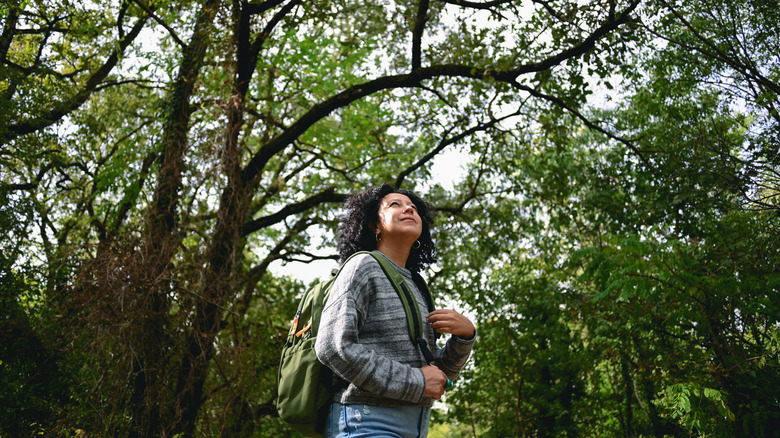
Spending time outdoors is pretty simple, even predictable, to many people. They expect fresh air, maybe a good view, and the satisfaction of getting their steps in for the day. If they're lucky, they might catch a sunset or a deer darting through the trees. It's always just enough to scratch that itch for escape, offer a break from the noise, and remind you there's a world beyond screens and schedules.
But ask any seasoned hiker why they keep going back, and you might be surprised to find that answer gets harder to pin down. Perhaps it's a place that lights up no matter how dark it gets at night, or a lake so clear it doesn't look like water. Each experience is unique, and it spurs them on to discover even more.
For them, it's not so much about the miles they're traveling, but rather, the possibility of experiencing something truly spectacular. And the more they wander off the beaten path, the more there is to learn, protect, and pass on. Every step into the wild has a chance to add something new and help develop the way they connect with the natural world. Because the thrill of knowing what they could find if they just pushed past the familiar and into the unknown is just enough to take their breath away.
A grove filled with beams of sunlight
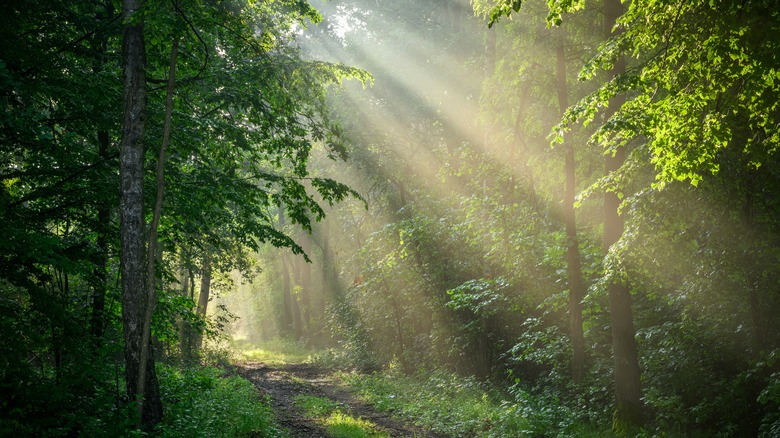
If you're in the woods early in the day – particularly after a steady rain or cool night – you might notice beams of light slipping through the trees. They often cut across the forest floor like quiet spotlights, sharp along the edges but soft in the center. Sometimes they hang unmoving for minutes, other times they shift as the sun climbs and the wind stirs the canopy. Although you don't have to be anywhere special to see them, you do need to be in the right place at the right time. But when it happens, everything slows down, and it can often seem as though the forest is standing still.
Known as "God Beams," these forest rays show up when several conditions line up just right, such as high humidity, clean and still air, and, of course, strong sunlight. They tend to appear when the canopy breaks and the light filters through at an angle, scattering against moisture, pollen, or dust in the atmosphere. The effect is called the Tyndall effect, and it's the same reason you can see a sunbeam through a dusty window or a flashlight beam in fog. But in the forest, they also serve a very special purpose. These rays mark areas where sunlight finally reaches the understory, and in doing so, they help plants that don't normally get much direct light. So while they might feel like a visual trick, they also say a lot about the forest's health.
A single tree with two distinct types of leaves
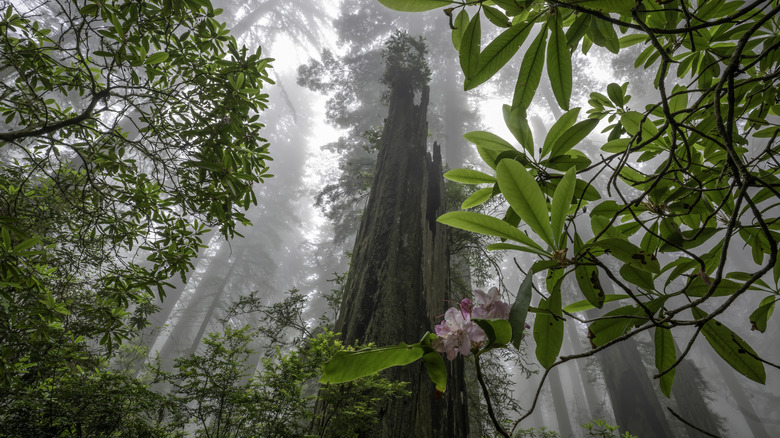
If you look up at a coast redwood, one of the tallest coniferous trees you can find on Earth, its canopy might just seem like a massive green wall — or roof, perhaps. But go a little higher, and you'll find something most people never notice. Unlike other trees, this one doesn't just grow one type of leaf. Instead, it grows two, and each one has a unique function the tree depends on to sustain itself. The first is a flatter, waxy leaf that handles sunlight and air, pulling in what the tree needs to make food. Tucked among them are smaller, scale-like leaves designed to catch water directly from fog and rain. That's particularly important way up at the top, too, where it's harder for the tree to move water from its roots. The system is quiet and hidden, and it's been helping redwoods survive for millions of years.
Scientists call this strategy functional leaf dimorphism. It means the redwood divides its work across different kinds of leaves, depending on what the tree needs and where it's growing. One type focuses entirely on photosynthesis, while the other focuses on collecting water, and that division of labor isn't spread randomly; the tree adjusts them based on local conditions. In dry years, you'll find more of the leaves that absorb water, and when sunlight is strongest, it'll produce more food-making leaves. That built-in flexibility helps the redwood grow and survive quietly in plain sight.
A hidden field of wildflowers blooming in the mountains
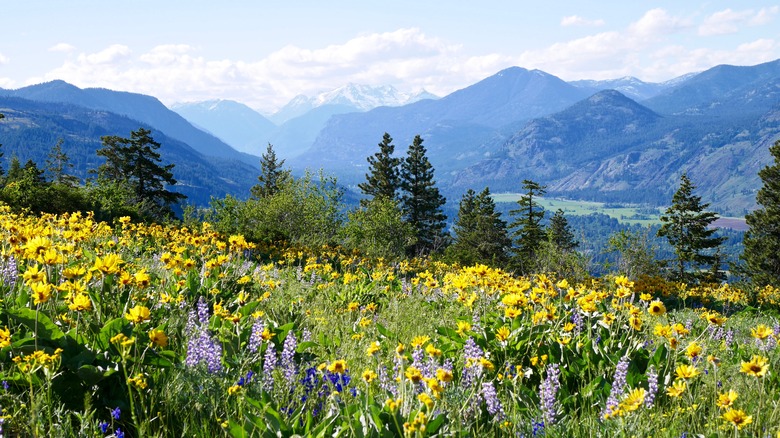
In late July, high up in the Rocky Mountains, there's a field of wildflowers most people never see. It's tucked into the alpine basins above the treeline, near the Hutcheson Lakes and Lark Pond, in a remote, quiet place far from the main trails. However, getting there isn't easy. In fact, it's a 16-mile hike with steep elevation, thin air, and rough footing. But if you go early enough and hit it at just the right time, the payoff is huge. Meadows that were under snow a few weeks earlier are suddenly full of color, with Indian paintbrush, alpine columbine, and dozens of tiny flowers blooming all at once. And although it doesn't last long — just a few days — the whole mountainside comes alive like its very own chaos garden.
That short window of bloom is what makes alpine wildflowers so remarkable. Up at 11,000 feet, the growing season is brutally short. With just six weeks between the last snowmelt and the first frost, these plants don't have time to waste. As soon as conditions allow, they grow, flower, attract pollinators, and drop seeds before the cold returns. It's a fast, efficient cycle adapted to harsh conditions, and because so few people make it into these zones during the narrow peak, these flowers bloom with very little disturbance. For the hikers who reach it, it's a reminder that some of the best things in nature are well worth the effort.
An underground fungal web connecting trees
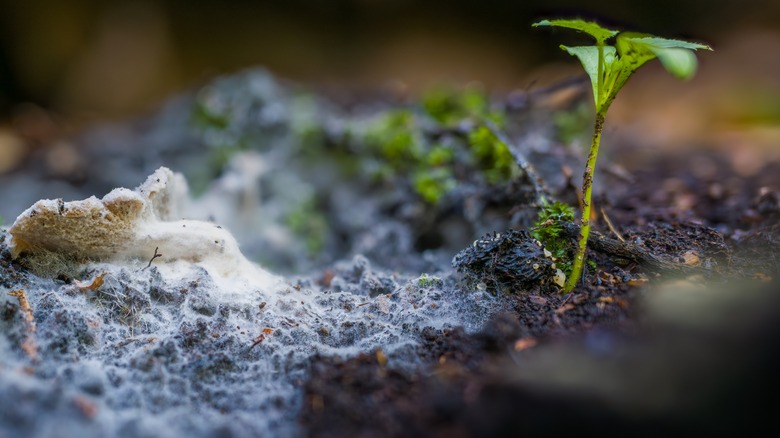
It's easy to think that each tree in a forest is just fending for itself, but underneath the ground, a web of fine, thread-like fungi spreads through the soil, connecting trees and other plants to one another. And the more you learn about it, the stranger it seems that trees could be sharing food, sending signals, or helping each other survive, all while you're just walking by.
These networks are made of mycelium, the living part of fungi that grows underground, and it's rather different from the mushrooms growing in your yard. Forming partnerships with tree roots, they create mycorrhizal networks, which allow trees to pass nutrients to one another, alert each other to stress like drought or disease, and help younger trees that haven't yet reached the canopy. In fact, researchers believe that older trees use this same network to redistribute resources to support the forests around them before they die.
Not only have scientists discovered that these networks can span some 2,200 kilometers, but some are estimated to be over 8,000 years old. So while it might be invisible, this one organism does some of the forest's most important work right underfoot, and has likely been doing so for thousands of years.
A lake so clear you feel like you're floating in the sky
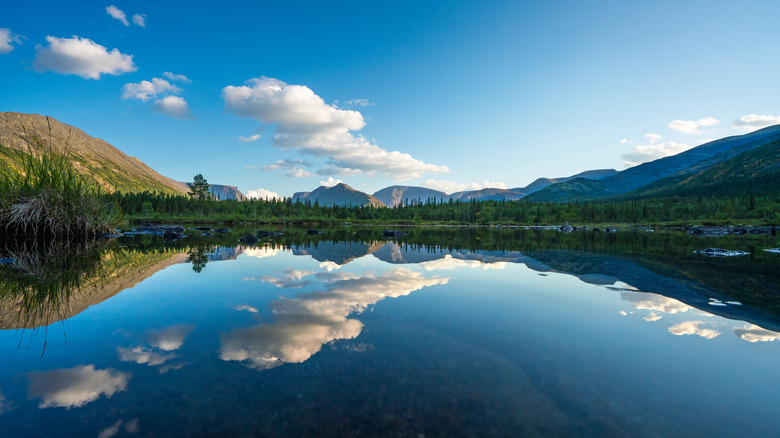
Tucked deep in New Zealand's Southern Alps, there's a wild lake worth exploring that's so reflective it seems to disappear. The sky, the clouds, and the peaks around it all show up in the water with perfect clarity, and if you were standing at its edge, it'd be hard to tell where the land ends and the sky begins. The lake in question is known as the Blue Lake, or Rotomairewhenua, and it holds the clearest natural freshwater ever measured anywhere in the world. With visibility that can reach up to 80 meters, no crowds or boats, and with only silence as your companion, you'll find yourself at a lake that feels like you're standing directly inside a reflection.
But how does this lake become so crystal clear? The reason comes down to a rare mix of conditions. Water flows in from Lake Constance above, and is filtered through layers of rock that strip out almost every particle. As a result, there's no direct runoff from the land or murky sediment by the time it reaches its destination. At the same time, plants growing around the lake share water and nutrients through underground mycorrhizal networks or fungal threads, which keep the soil stable, slow erosion, and stop anything from clouding the lake. Undoubtedly, it's a simple system, but it only works when everything is in sync, and it shows how something this beautiful can only exist when every part of the ecosystem works in harmony.
A moss‑covered ancient tree so large and old it feels like a living cathedral
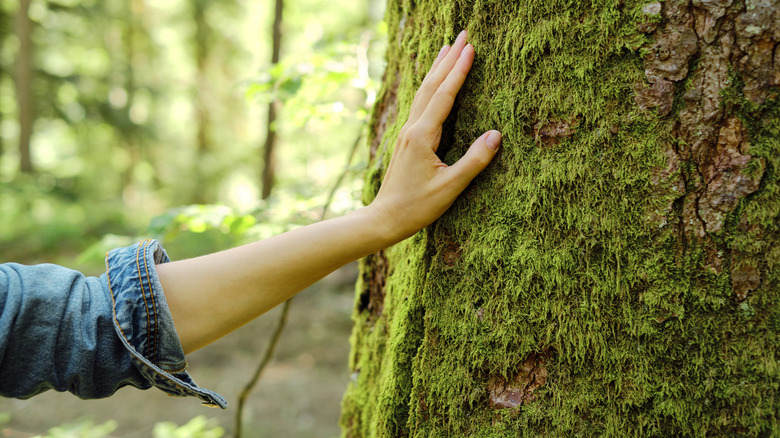
In some out-of-the-way forest locations, you can find yourself having stumbled upon a tree so massive and covered in moss and time that it genuinely beggars belief. Trees like this often stand alone or in quiet groves, tucked into forests with lots of old growth, where the land has been left mostly untouched. You'll know you've found one by its thick and furrowed appearance, with roots that spill across the ground almost like slow-moving rivers.
What makes these old trees so important is how much they hold. Their branches support entire ecosystems, from mosses, ferns, fungi, and even small animals. Trees like eastern hemlock, sugar maple, and yellow birch can live for centuries, often growing from the fallen remains of older trees. Their roots form dense, stable systems that help shape the forest floor and hold water, supporting new life in the process.
Sadly, in eastern North America, old-growth forests like this are almost gone. Over 99% have been logged, and what remains exists only in scattered pockets of the wilderness. Furthermore, because they grow slowly, they're also more vulnerable to climate change, invasive pests, and disease, all of which means that discovering these extraordinary trees can be especially difficult. But when they survive, they create a rare, complex habitat that can't be replaced in a single lifetime, even if they offer a once-in-a-lifetime experience for those who are fortunate enough to find them.
Bioluminescent fungi or firefly displays hidden in forest clearings at night
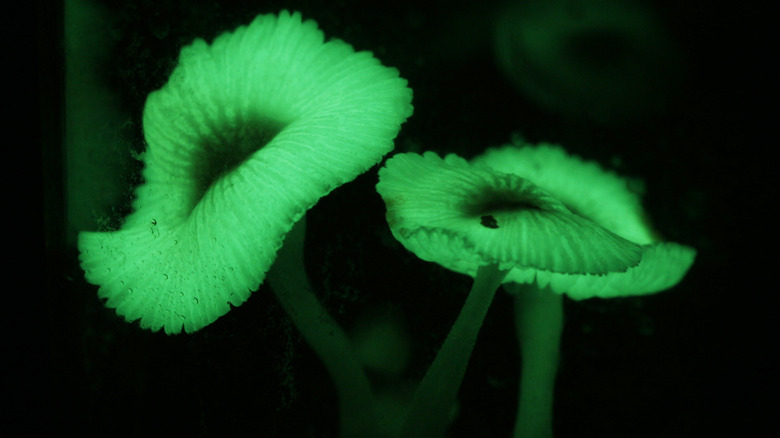
If you're in a forest at night and the conditions are just right, you might spot a faint green glow curling along a fallen log, or see tiny sparks of gold rise from the underbrush, almost like floating embers. These natural spectacles are thanks to certain types of glow-in-the-dark mushrooms and fireflies that flash in perfect timing, synchronized to match the seasons. Most people never get to see such brilliance, but if you do, you might be surprised by how bright these lights can get, almost like the forest has been lit up from the inside out.
So, how is all this possible? The glowing mushrooms belong to a group of fungi that break down dead wood and give off light as a byproduct of that process. Their glow, often called foxfire, only appears in damp, shaded areas where the forest floor stays cool and undisturbed. What's interesting is that the fireflies depend on those same conditions. Their larvae live in the leaf litter, and the adults rely on darkness to flash and find mates. But if there's too much light, too little moisture, or too much disruption, both will vanish. Either way, this combination of chemistry and communication is only possible in a healthy forest, which is another reason why experiencing them can seem so magical.
A cascade of autumn colors so intense it puts every postcard you've ever seen to shame
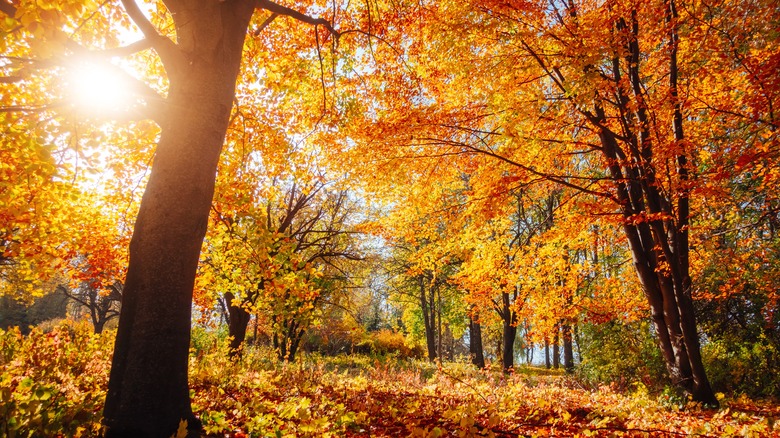
For many people, autumn shows up gradually, with leaves showing their fiery tinge over several weeks before falling to the ground. But in some places, autumn rushes in all at once, particularly if you're in places like Vermont, the Smoky Mountains, or the mountain forests of Honshu. There, leaves not only shift into reds, oranges, and golds as you'd expect, but you'll also see deep purples and even a kind of glowing scarlet.
But even if you're in those aforementioned regions, these displays don't happen every year. So when they do, you know you've arrived during a stretch of time when the weather and the trees are in perfect sync with one another. That's because that color comes from a mix of timing, sunlight, and temperature, which is one of many reasons people should camp in the fall.
During the day, trees produce sugars in their leaves. When the nights are cool, however, those sugars stay where they are, triggering the production of special pigments called anthocyanins. For this to happen, the weather has to hold steady, with just the right amount of sun and cold. So long as it lines up just right, the result is one of the clearest signals that a forest is healthy and still in rhythm with the season. These moments are becoming more and more rare, however, since they depend on the kind of natural balance that's getting harder to find.
A secluded waterfall frozen in mid-flow
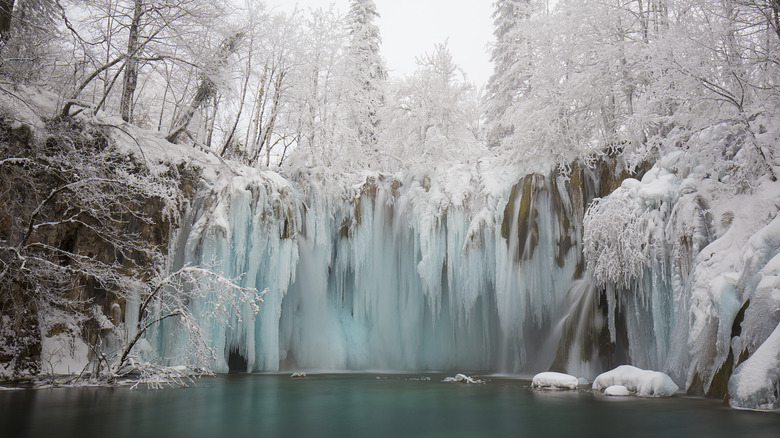
In the winter season, if you follow a quiet trail deep into an alpine forest or up into a mountain gully, you might find a waterfall that's completely frozen in place. There, the water will seem to have stopped mid-air, caught in the act of falling, and turned into a column of blue and white ice. Ribbons of frozen spray hang from the rocks like glass pulled thin, and jagged icicles stretch out in every direction. At places like Argentière waterfalls in France's Mont Blanc massif, you'll find towering structures like Nuit Blanche, a vertical sheet of ice built from layers of frozen spray and seeping runoff.
But how is it even possible? It's important to note that frozen waterfalls form slowly. As water trickles and builds up layer by layer in freezing air, thin sheets of ice spread across the rock, and over time, they thicken into solid structures that insulate the liquid core inside. That's also what gives them their strange, almost glassy glow, like the ice crystals growing larger and clearer as the water keeps moving underneath.
They're also quite fragile. If the temperature drops too fast, the outer shell contracts much quicker than the warmer center, which can cause cracks to spread. Since these formations are constantly changing, the structure that holds everything together can collapse entirely when weakened. Such beauty comes from a delicate balance, and that balance can dissolve in a single night.
A moment of total silence in the heart of the woods
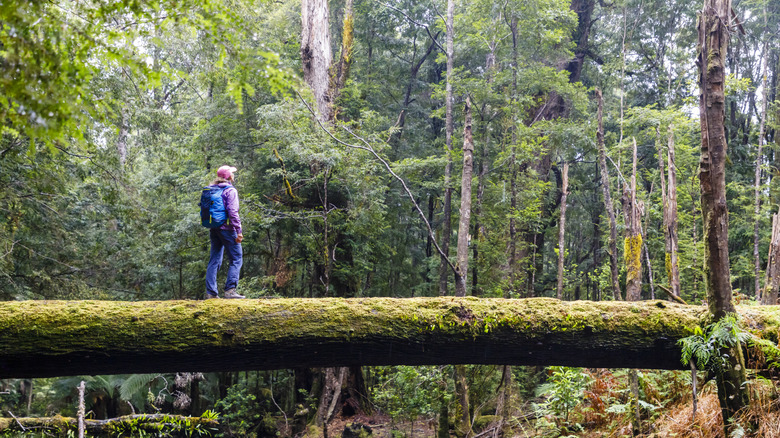
Sometimes, if you're far enough away from the trailhead, the forest can go completely quiet, and even your own movements seem to stop making any noise. You'd think this would make the woods feel empty — eerie, even — and yet it can actually feel surprisingly full, almost as if the forest is holding its breath. As the air gets ever more still, your ears adjust, and you become aware of just how much noise usually surrounds you.
This kind of silence isn't common, but it does have a name. Scientists call it acoustic natural quiet, the rare state where all or most human-made sound is absent. You're more likely to find the phenomenon in deep forest valleys, high mountain woods, or other remote places where human noise hasn't crept in. It's an all-consuming silence that those who have encountered it recognize instantly.
In these conditions, even the smallest natural sounds become clear, such as a branch creaking overhead, snow shifting under your boots, or even a moth's wings passing nearby. Most people never actually "hear" this kind of silence, often because their world is filled with so much background noise that their ears simply don't pick it up. In the few wild places where background noises disappear, the silence almost seems like it's a part of the landscape itself. Soundless pockets are quite rare, however. So when you discover one, it's a reminder that nature has its own kind of voice when humans stop to listen.