

How To Prepare Your Electric Lawn Mower For Winter Storage
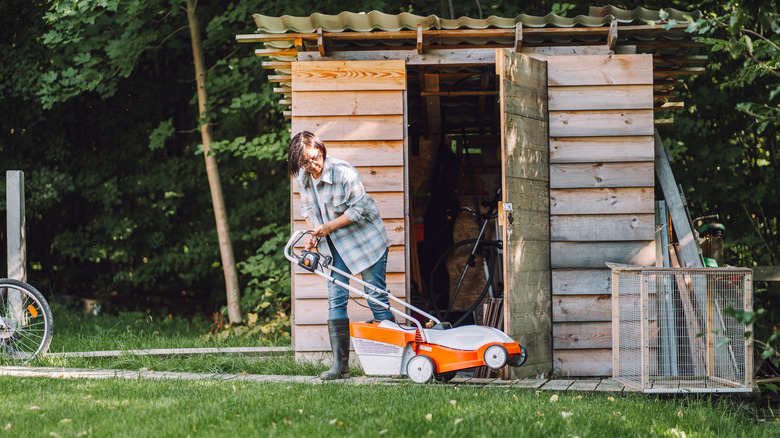
Unless you live in an area warm enough to mow the lawn all year long, there's a fair chance you'll want to put that mower away for the season once the grass goes dormant and winter approaches. An old-school gas mower requires quite a bit of pre-winter prep such as removing spark plugs, emptying the gas, and draining old oil, none of which apply to electric lawnmowers. Even battery-powered mowers are best prepared for storage before cold weather hits. While it's not mandatory that you spend loads of time cleaning every nook and cranny of that electric mower, a little extra attention before putting it away for the winter will help prolong its usefulness and its ability to function at its best.
A lithium-ion lawn mower battery, however, does require special attention. It's not designed to withstand freezing temperatures for days on end, and leaving it in the mower all winter could cause the battery to fail, requiring a pricey replacement battery. Though manufacturers have their own guidelines as to what's best for their mower batteries, they all concur that the batteries should be stored in a moderately warm and thoroughly dry environment.
Winterizing your electric lawn mower
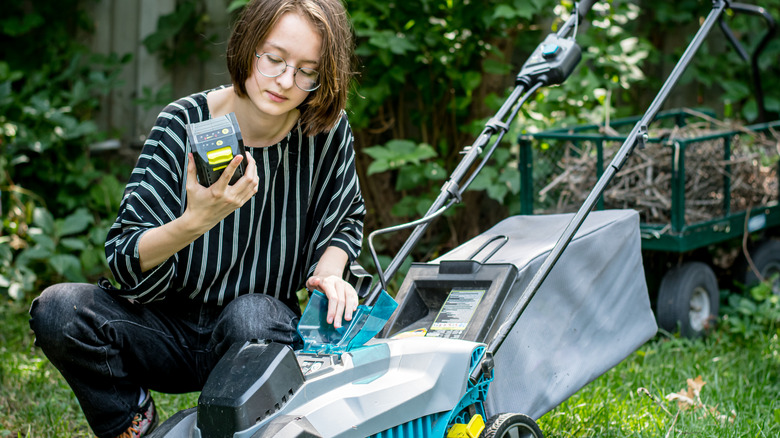
Remove the grass-catching bag if your mower has one, and empty the contents into a compost pile, or use some lawn clippings to help your potted plants thrive. Brush dust and debris off the grass catcher and the top and sides of the lawn mower. Remove the mower's battery and key, if it has one, then close the battery compartment again. While on the lawn, flip the mower on its side and brush away all the stuck-on grass clippings and dirt on the deck's undercarriage. It's a good time to sharpen the mower blades, too. Though there are different ways to sharpen mower blades, it's important to re-install it the right way. Adding an obvious paint mark to the blade is a trick to ensure the mower blade is installed properly once you're ready to put it back on.
Afterward, set the mower upright again and wipe everything down with a soft, dry cloth. If the owner's manual suggests it, lubricate the bearings on the wheels. Replace the grass catcher, then push the mower to a dry, flat area to store it, such as in the garage. Cover it with a tarp or blanket to keep it dust-free.
Wipe the battery and key down with a dry, soft cloth and charge indoors about 40% of the way if it's nearly dead. Check your owner's manual or the manufacturer's website for recommendations about how often to charge the battery during prolonged times of storage. Some brands suggest a more frequent recharging than others, even during off-season. Keep the battery and key together so they're ready for use when that lawn's ready to mow again in spring. Store the battery and charger in a fairly warm, dry location.