

Avoid This To Keep Your Snowy Lawn Healthy All Winter Long
We may receive a commission on purchases made from links.
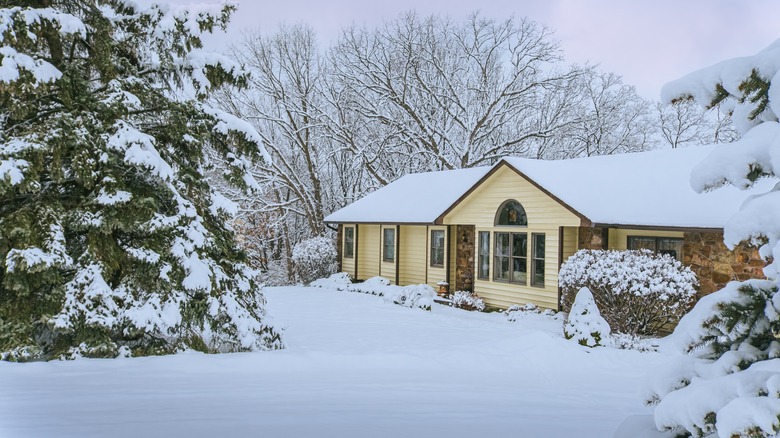
As winter weather sets in, most homeowners take steps to protect their lawn from frost and freezing conditions. However, once snow begins to cover lawns, it's often people, not Mother Nature, that inflict the most damage on grass. Whether you're walking your dog, clearing snow from your sidewalk, or building a snowman, any footsteps can cause both immediate and long-term harm to your lawn. As a result, you should avoid walking on frozen grass to keep your snowy lawn healthy all winter long.
While seeing a blanket of snow covering your well-maintained lawn may cause some worry, in reality, grass can typically weather such conditions without permanent harm being done. This is especially true if you fertilized during fall as part of your winter lawn prep, and if you've kept your lawn well-watered. However, while the frost won't necessarily damage your lawn on its own, walking across the frozen surface can create issues.
There are a few causes of this damage. For one, the water in both the blades of grass and the soil beneath it can freeze when the temperature drops. These conditions can compact the soil, making it slower to drain and harming the grass's ability to draw in water and nutrients. This can lead to brown patches forming in your lawn. Additionally, frozen grass is more brittle, so the weight and pressure of walking across it can crush and break blades of grass. As winter wears on, this damaged grass becomes much more susceptible to diseases such as snow mold.
How to avoid damaging your snow-covered grass
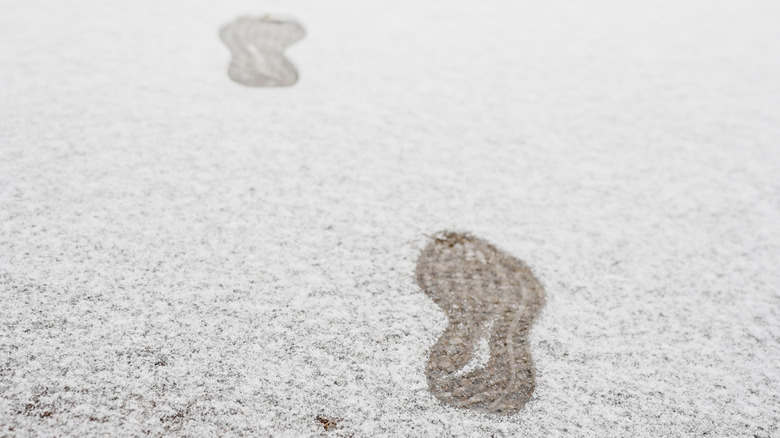
The best way to avoid damaging your grass from walking on it is to not walk on it — at least not while it's frozen. On days when the sun comes out and the temperatures rise, waiting until the grass and ground have thawed is a simple solution. Should you be expecting company during a period of freezing conditions, it's also a good idea to advise any guests you invite to avoid walking on the grass as well.
If waiting to walk on the grass is not an option, try your best to stick to sidewalks, stepping stones, and walking paths. However, that also means you need to prepare ahead to make sure those surfaces are safe to walk on during a freeze or snow event. When steps in snowy lawns are completely unavoidable, do your best to minimize the amount of walking and not overly tread on any one spot. Additionally, wearing soft-soled shoes as opposed to rigid bottom boots can lessen the impact of each step.
Of course, there are times when walking on frozen grass is unavoidable. For activities such as pet walking or snowman building, which typically will require quite a bit of stepping in a small area, it is often better to utilize a singular area rather than harm your entire lawn. For that, it's a good idea to pick a spot that is somewhat obscure and won't be as noticeable should you wind up with post-snow grass damage. Once the weather warms in the spring, these areas can easily be repaired with Scott's EZ Seed Patch & Repair or a similar product.