

Avoid These Snow Blower Mistakes For Easy Snow Removal
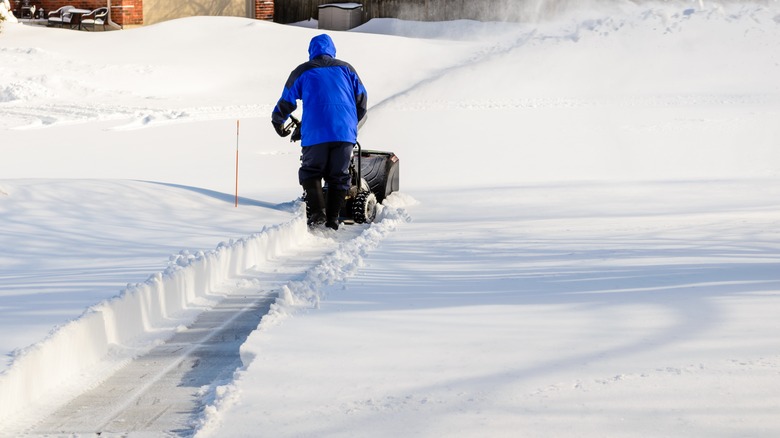
When it comes to the snow blower vs. shovel debate, a snow blower definitely gets the job done faster.... sometimes. But a snow blower requires far more maintenance and general upkeep than a shovel, plus it only works well if you're using it correctly (and even then, not always, especially if dealing with wet, deep snow). Whether you have a gas or electric snow blower, the time you spend caring for it ahead of any predicted snowfall may help you avoid common mistakes that could stop you in your tracks the next time you're trying to clear a path through the snow.
Failing to clean the inner parts of a snow blower after use, forgetting to fuel up or charge the battery, and even opting not to read the manual are all blunders that could make snow removal more difficult, ultimately making you consider switching back to your trusty shovel. Some of these must-avoid mistakes also apply if you're using your riding lawn mower to remove snow. On the bright side, no matter which powered device you use to clear snow, all of these mistakes are easy to overcome.
Preventing mistakes to make snow blowing easier
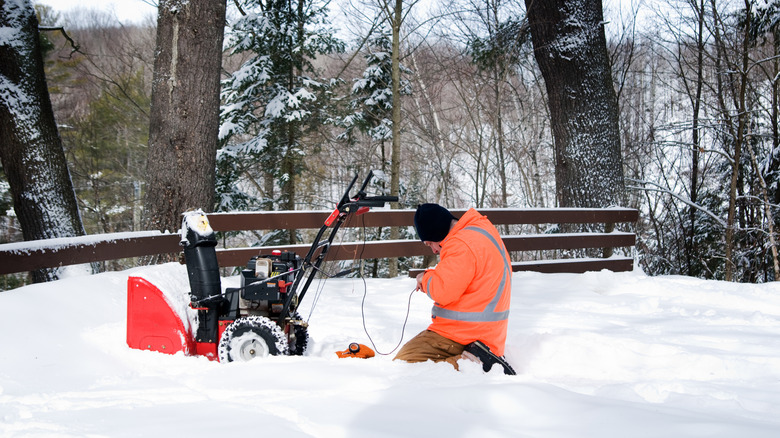
After using your snow blower, the best thing you can do to make your next session run smoothly is to clean out all of the areas that draw in and blow out snow before putting the blower away. The auger, impeller, and every area surrounding them could have caked-on snow, stray bits of rock salt, or even twigs and random debris mucking them up. When the blower is completely off and no parts are moving, use a snow brush or similar tool to remove snow and anything else clinging to the inner workings of the snow blower. Otherwise when you put the blower away, any melting snow could refreeze and prevent it from working properly the next time you start it. Also clear the chute after use to ensure there are no clogs before you even get started the next time, especially if you store the blower in a cold environment. When the blower is dry, applying a lubricant or wax to the moving parts and underside areas around them is one of those hacks that make snow removal easier than ever, as this helps prevent clogs.
Check the fuel and oil levels in your gas-powered blower before heading out to blow snow. For an electric blower, make sure the battery is fully charged. Keep the charger and the battery in a moderately warm environment when you're not using the battery, and while you're charging it. For either type, but especially gas-powered snow blowers, read the manual thoroughly. This is where you'll find crucial information about oil changes, spark plugs, or even the ideal tire pressure, as well as any intricacies specific to your particular snow blower model.
When the season ends, washing and hand-drying the snow blower before storing it is also a good idea, especially if you've plowed over salted, icy areas at some point. This helps prevent corrosion.