

How To Stay Safe And Secure Your Tent When Camping During High Winds
We may receive a commission on purchases made from links.
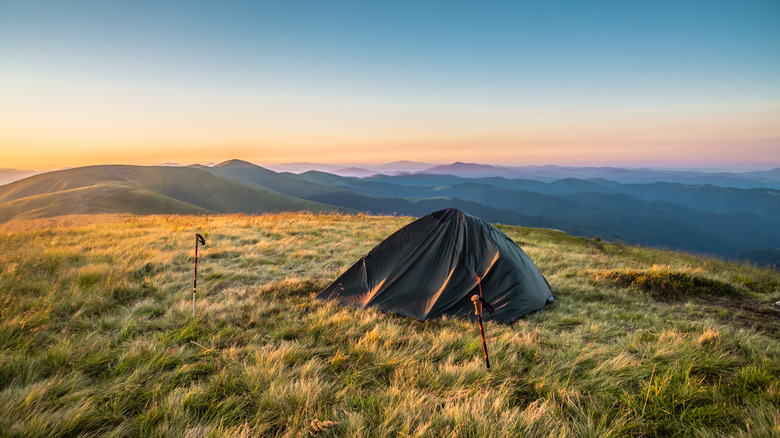
While adventuring far from the road will bring you to some of the most pristine vistas in the United States, hilly and mountaintop locations are susceptible to high winds and can be hazardous if you are unprepared. Wind can be catastrophic, picking up tents and blowing them away or destroying them altogether. While camping in national parks means rangers will watch out for you, closing any dangerous roads or campsites, any travelers exploring deeper into the backcountry probably won't have the benefit of diligent National Park Service staff.
The right gear will significantly reduce the risk of camping during high winds. Find out about real-time weather conditions with a Garmin inReach device, which provides weather updates via satellite. This is particularly useful when camping in desert climates, as the high variation between daytime and nighttime temperatures can cause rapid weather shifts. Having a reliable forecast is critical when camping in more remote locations, as it will significantly influence where you pitch your tent.
Your choice of tent is also essential, as some popular camping tents (like luxurious geodesic domes) fail miserably on more remote trips. Choosing a smaller tent can limit the amount of surface area exposed to the wind and decrease the pressure put on it. Investing in a quality multi-season tent, like the NEMO Draginfly Osomo, which offers lightweight and high-quality materials, will limit the risk of ripping your rain fly or breaking a pole. Tents that come equipped with multiple tie-in points for guy lines will be more sturdy. Stake your tent in tightly, and use paracord to fix these points to a tree or solid rock. A tent pole splint will help keep your tent functional if it bends or breaks under heavy winds.
Finding the right campsite for a high-wind situation
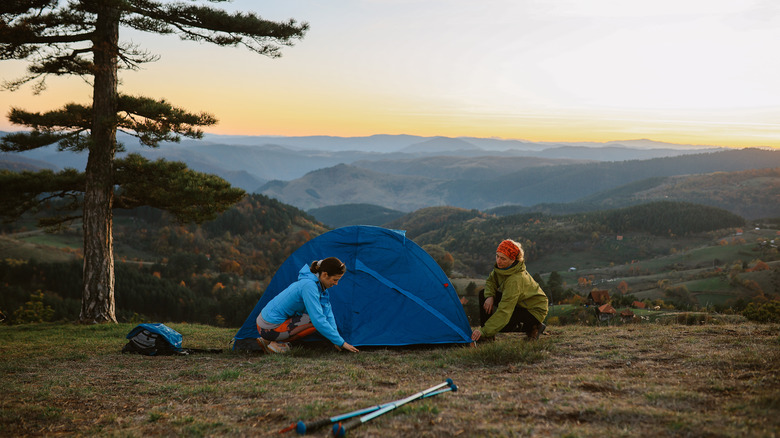
Selecting your campsite both during and leading up to high-wind situations is an essential safety skill. A significant part of this decision-making process is remembering cardinal camping rules before setting up your tent. Camping under large standing trees that are either dead or have shallow root systems is one of the most dangerous things you can do during heavy winds. Making sure to camp under green leafy trees will help limit this risk, but in really bad wind conditions, it's safest to not have any trees immediately above the tent at all. In situations where space is limited and I have to camp near or under a questionable tree, I will set a rope guide, tied to a neighboring healthy tree, to pull the tree away from my tent in case it were to fall during a storm.
Another consideration when selecting a campsite is to examine the topography of the surrounding area. Setting up camp in a canyon can be risky, as winds tend to be higher in these environments. Those looking to camp on a summit should descend and camp at a safer lower elevation during a storm. While there is no way to completely eliminate the risk of camping during windy nights, there are many things you can do to limit this risk. Know your surroundings, have an accurate forecast, and have a sturdy, reliable tent. Ultimately, the most important thing you can do is have the wherewithal to either cancel or abort a trip if the weather is getting too dangerous.