

Sow The Seeds Of This Gorgeous Flower During Fall For A Lush Spring Garden
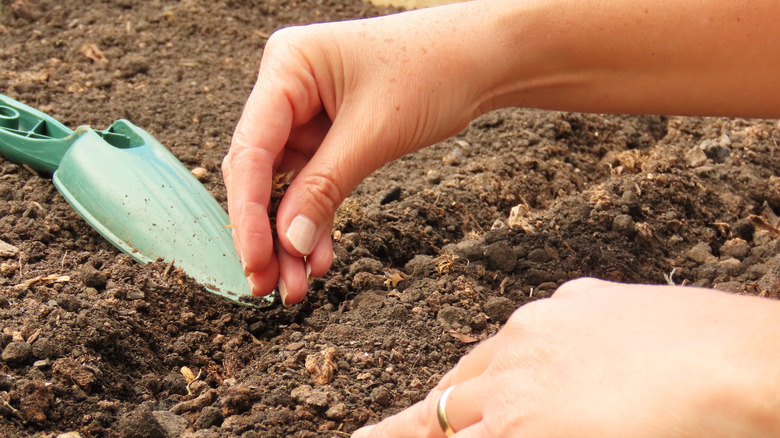
When it comes to planting flowers late in the year, the first item on your to-do list is likely planting spring-blooming bulbs in fall. It's a great way to get early spring flowers, but if you're only planting bulbs, you might be skipping over a gorgeous and unique flower. Nigella (Nigella damascena), also known as love-in-a-mist for its wispy leaves, is an easy-to-grow annual in the ranunculaceae family alongside buttercup. It thrives in USDA Hardiness zones 2 through 11 and is known for its beautiful blue, purple, or white flowers. This, coupled with its thin, feathery foliage, makes this flower an excellent addition to most gardens.
While gardeners typically sow nigella seeds in spring, you can actually plant them in fall for earlier spring flowers! This is best done in places with more mild winter weather. If you live in an area with harsher winters, you can still plant your nigella in the autumn using a greenhouse or an area protected from the elements . Nigella does well in containers, but doesn't always transplant well, so you may need to keep it in the pot. If you don't have a warm winters space, consider making this budget-friendly DIY greenhouse for your nigella to grow in.
Nigella flowers tend to be short-lived, so successive planting can keep your garden colorful all year long. Do this by planting a group of seeds every few weeks throughout late summer and early to mid fall. The method ensures that by the time the first flowers start to fade, there are other flowers ready to bloom!
How to plant and care for nigella seeds
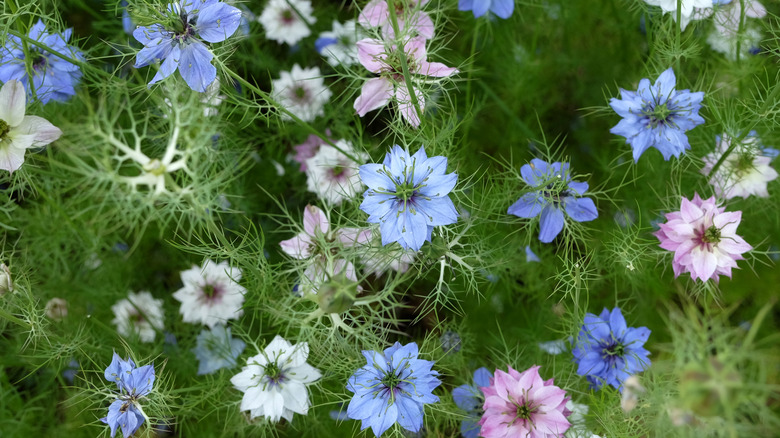
Before you begin, consider the average winter temperatures in your area. Nigella plants love cool weather, and the seeds can handle temperatures as low as 25 degrees Fahrenheit. If you live in an area that gets colder than that or is prone to heavy snow, a greenhouse is the better option. Whether in your garden, a container, or a greenhouse, find an area that has full sun or morning sun with afternoon shade. Nigella seeds need light to germinate, so avoid planting them in full shade or burying them too deeply. Ideally, the soil should be of average nutrient density to rich, as long as it's also well-draining.
Space your seeds so they're roughly 8 to 10 inches apart, or plant them more densely and thin them once they sprout. If you're using consecutive plantings, be sure to mark where seeds have already been planted so you don't accidentally crowd them! After planting, keep the soil consistently moist. If nigella alone isn't enough for your garden, consider pairing them with low-maintenance calendula flowers or gorgeous blue bachelor's buttons, which will thrive in the same conditions.