

Help Your Hostas Come Back Thriving In Spring With A Late Fall Garden Task
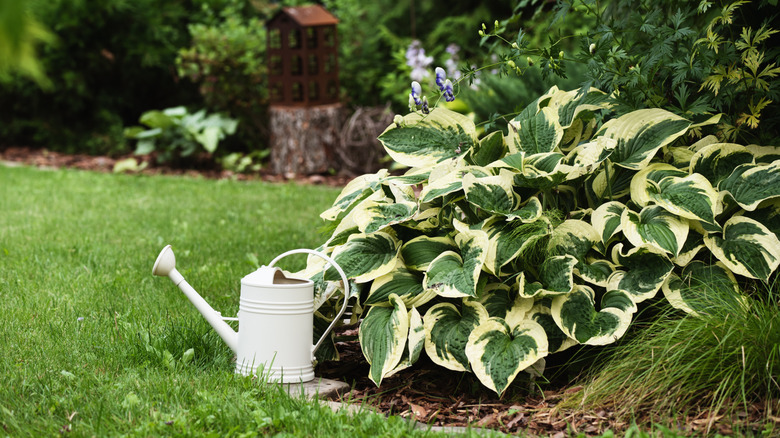
Hostas (Hosta spp.) have been a perennial favorite for gardeners since they were first imported into the United States nearly 200 years ago. Though they are native to parts of Asia, these plants do quite well halfway around the world from their original homelands, provided they receive some cold winter weather. Hostas, which thrive in USDA plant hardiness zones 3 through 9, actually require extended periods of cold weather for dormancy. When temperatures drop below freezing, the hosta's lovely leaves start to die. Once that happens, the plant is ready for some serious pruning. Cutting them back after the first hard frosts of the season helps prevent diseases and pests that could plague the plants otherwise; this in turn helps them thrive next spring. The ideal timing may vary depending upon where you live, but it's generally sometime between the middle of October and the end of November.
Hostas are one of a group of perennials you should prune in fall. You'll know the plants are ready to be cut back when many of their leaves have turned yellow or brown, or just look limp and not nearly as vital and vibrant as they look during prime growing season. They might even turn mushy, making them more attractive homes for the pests you don't want in the garden. If you find any dead leaves before that first frost, it's perfectly fine to remove them as you find them. Other than that, hostas require almost no maintenance all year, so they're among those fuss-free plants that are great for beginning gardeners.
How to cut back hostas to help them thrive next year
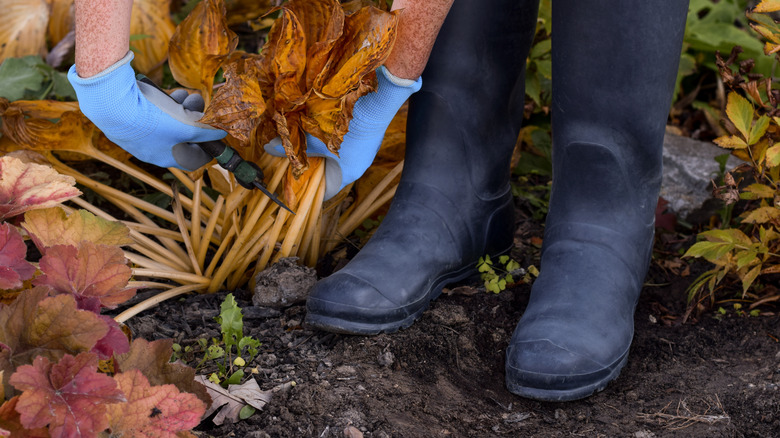
After your hostas have been exposed to a hard frost, cut them across the stems, leaving about 2 inches above ground. Use sanitized, sharp shears to keep the plant healthy. Sanitizing the shears with hydrogen peroxide is one of the unexpected ways to use peroxide in the garden; rubbing alcohol also works. Bleach-free Clorox wipes also make disinfecting your garden tools a breeze. Wipe off any caked-on dirt first, then wipe the shear blades down with your chosen liquid to sanitize them. It's good practice to sanitize them after or just before each time you use or store the shears to prevent the spread of plant diseases and pathogens.
Cutting back a hosta helps the plant channel its energy, focusing on the roots over the winter, so it can focus on new growth the next spring. Discard the cut stems in a yard-waste bag, or set them in the compost pile. Rake up and remove any other dead leaves or debris from the perimeter of the plant to help keep slugs away; this also helps prevent fungal issues. Add a half-inch or so of mulch to insulate the plant's roots and help retain moisture, since you'll likely be done watering.
If you enjoy hostas and want to add more to your yard and flowerbeds, fall is a good time to plant hostas, with one caveat: You'll need to do it well at least several weeks before the soil freezes to give the plant time to establish itself before it goes dormant for the season.