

The Highly-Destructive Plant To Look Out For In Your Garden (And How To Get Rid Of It)
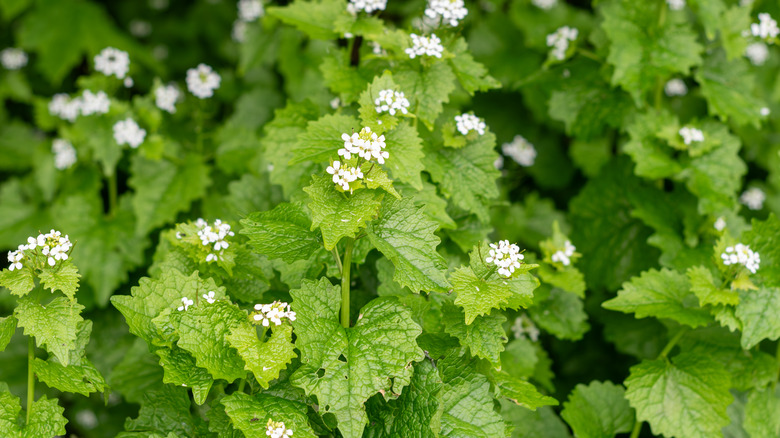
Mustard greens are one of the best plants to grow in a greenhouse, but there's one type of mustard you won't want to see in your garden. Garlic mustard (Alliaria petiolata) is an unassuming herb, with green foliage and small white flowers. The leaves smell like garlic, which is how the plant got its name. Garlic mustard is native to Eurasia, but it is currently found across most of the U.S. It can often be found along roadsides, as well as throughout fields and forests.
The danger with this invasive plant comes from how quickly it spreads, and how effective it is at outcompeting native plants. It spreads primarily through tiny seeds that can survive in the soil for up to 10 years before sprouting. Each plant can produce thousands of seeds, so it's easy to see how this plant is able to spread so effectively! Seedlings are small and easy to miss, but they grow into larger rosettes of leaves. Garlic mustard sprouts before other plants in spring, allowing it to establish itself more quickly, and its leaves cast shade over other plants, making it harder for them to thrive.
If you spot invasive garlic mustard on your own property, you can take immediate action to get rid of it. On public land, laws about removing plants can vary, so do your research before trying to remove it. If you see an invasive species in a national park you'll need to alert park rangers and let them handle it.
Getting rid of garlic mustard
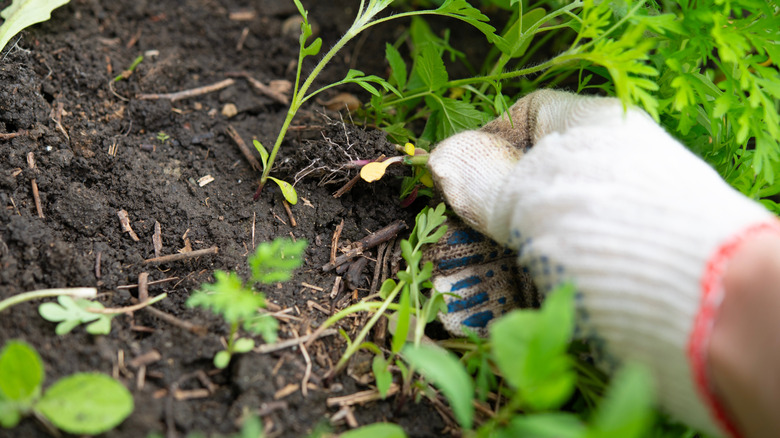
Since each plant produces so many seeds, it's vital to remove garlic mustard before they produce them. As soon as you spot garlic mustard rosettes, pull them up firmly. To be completely effective, the entire root needs to be removed. Don't leave pulled plants on the ground, as they can still grow seeds! Instead, collect them in a bag and burn them, or dispose of them at a site that takes noxious weeds. Not all landfills or other disposal sites will accept them, as there's a risk of seeds spreading from them. If there are too many seedlings to pull by hand, herbicides can be used to kill them before they can bloom. Because garlic mustard is so prolific, you'll likely have to do multiple treatments over a few years.
In certain areas, a controlled or prescribed burn can be effective at eradicating garlic mustard. Practice good fire safety to prevent wildfires by avoiding starting a fire when it is too dry and by following local laws and regulations regarding burns. This fire removal method is most effective in areas where natural fires occur, as fire in other places may do more harm than good. Because fire will also remove any fallen leaves on the ground, garlic mustard seeds under the soil may start to germinate, necessitating a secondary removal tactic. No matter which control method you choose, it's important to watch the area closely for new garlic mustard plants, so you can get rid of them as soon as they sprout.
What to do if the garlic mustard already has seed pods
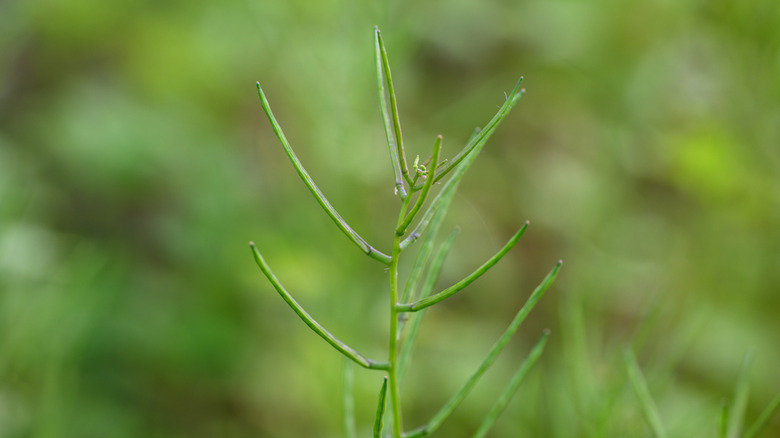
Garlic mustard seed pods are thin, green, and stiff, usually sticking up and away from the plant. They form in late spring to early summer, and the seeds are released a month or two later. If the seed pods have already begun to form, you'll need to be more careful when removing the plant. Pulling garlic mustard can cause the seed pods to break open, scattering the seeds and making your job much harder.
If there aren't many plants, you may be able to keep seeds in check by gently placing a bag over the plant, tying it in place, and then pulling it up or cutting it down. While cutting doesn't remove the roots, the most important thing is to stop the seeds from spreading. Since there is a risk of the seeds spreading even after the plant has been removed, do not leave the plants on the ground, compost them, or send them to a landfill. Instead, the plants should be burned. Burn the plants before they dry out, as dry seed pods are more likely to open and disperse the seeds.
If there are too many plants to bag, it might be better to leave them alone. Disturbing the pods can cause them to open and disperse their seeds. Seeds can also be carried from place to place on your clothes and shoes, so limit the amount of time you or anyone else spends in the area. It's best to come back in the spring to remove new plants as they emerge.